


Regulation of dopaminergic transmission and cocaine reward by the Clock gene
- PMID: 15967985
- PMCID: PMC1166621
- DOI: 10.1073/pnas.0503584102
Regulation of dopaminergic transmission and cocaine reward by the Clock gene
Abstract
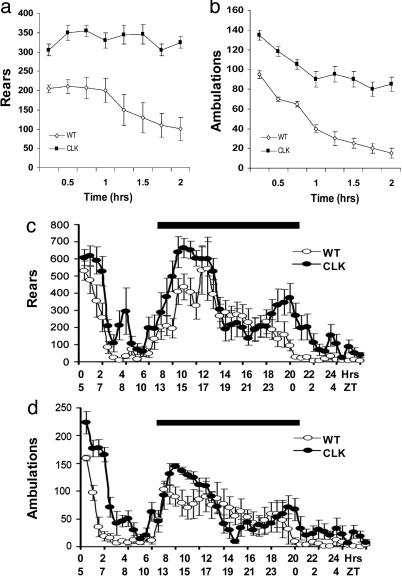
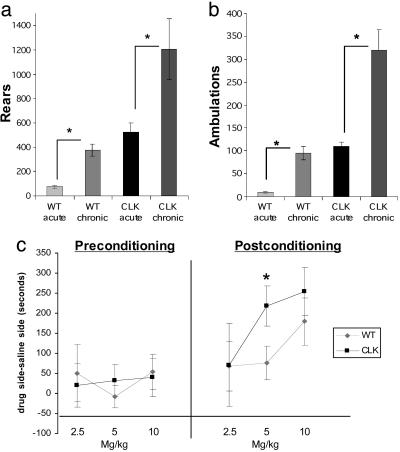
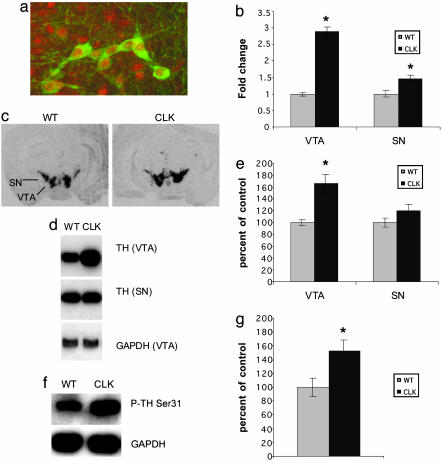
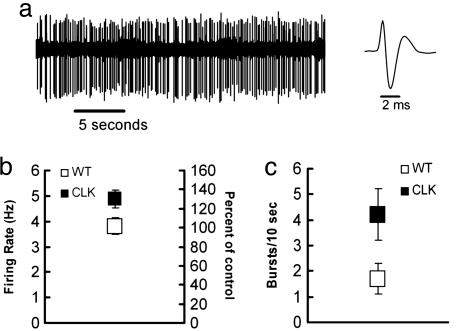
Although there are clear interactions between circadian rhythms and drug addiction, mechanisms for such interactions remain unknown. Here we establish a role for the Clock gene in regulating the brain's reward circuit. Mice lacking a functional Clock gene display an increase in cocaine reward and in the excitability of dopamine neurons in the midbrain ventral tegmental area, a key brain reward region. These phenotypes are associated with increased expression and phosphorylation of tyrosine hydroxylase (the rate-limiting enzyme in dopamine synthesis), as well as changes in several genes known to regulate dopamine activity in the ventral tegmental area. These findings demonstrate the involvement of a circadian-associated gene, Clock, in regulating dopamine function and cocaine reward.
Figures
References
-
- Kowatch, R. A., Schnoll, S. S., Knisely, J. S., Green, D. & Elswick, R. K. (1992) J. Addict. Dis. 11, 21-45. - PubMed
-
- Watson, R., Bakos, L., Compton, P. & Gawin, F. (1992) Am. J. Drug Alcohol Abuse 18, 21-28. - PubMed
-
- Johanson, C.E., Roehrs, T., Schuh, K. & Warbasse, L. (1999) Exp. Clin. Psychopharmacol. 7, 338-346. - PubMed
-
- Baird, T. J. & Gauvin, D. (2000) Pharmacol. Biochem. Behav. 65, 289-299. - PubMed
-
- Roberts, D. C., Brebner, K., Vincler, M. & Lynch, W. J. (2002) Drug Alcohol Depend. 67, 291-299. - PubMed
Publication types
MeSH terms
Substances
Grants and funding
LinkOut - more resources
Full Text Sources
Other Literature Sources
Medical
Molecular Biology Databases
