Epidemiology and Prevention of Hepatitis B Virus Infection
- PMID: 15968340
- PMCID: PMC1142225
- DOI: 10.7150/ijms.2.50
Epidemiology and Prevention of Hepatitis B Virus Infection
Abstract
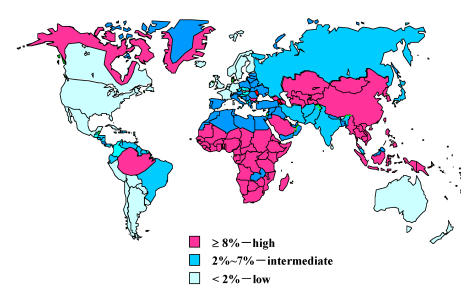
Hepatitis B is one of the most common infectious diseases globally. It has been estimated that there are 350 million chronic hepatitis B virus (HBV) carriers worldwide. The prevalence of chronic HBV infection varies geographically, from high (>8%), intermediate (2-7%) to low (<2%) prevalence. HBeAg-negative chronic hepatitis B (e-CHB) and occult HBV infection are two special clinical entities, and the prevalence and clinical implications remain to be explored. The predominant routes of transmission vary according to the endemicity of the HBV infection. In areas with high HBV endemicity, perinatal transmission is the main route of transmission, whereas in areas with low HBV endemicity, sexual contact amongst high-risk adults is the predominant route. HBV has been classified into 7 genotypes, i.e. A to G, based on the divergence of entire genome sequence and HBV genotypes have distinct geographical distributions. Three main strategies have been approved to be effective in preventing HBV infection. They are behavior modification, passive immunoprophylaxis, and active immunization. The implement of mass HBV immunization program is recommended by the WHO since 1991, and has dramatically decreased the prevalence of HBV infection and HCC in many countries.
Conflict of interest statement
Figures
References
-
- Hepatitis B: World Health Organization Fact Sheet 204. World Health Organization; [2000]. http://www.who.int/mediacentre/factsheets/fs204/en/
-
- Lok AS. Chronic hepatitis B. N Engl J Med. 2002;346:1682–1683. - PubMed
-
- Lee WM. Hepatitis B infection. N Engl J Med. 1997;337:1733–1745. - PubMed
LinkOut - more resources
Full Text Sources
Other Literature Sources