


Uniform overexpression and rapid accessibility of alpha5beta1 integrin on blood vessels in tumors
- PMID: 15972964
- PMCID: PMC1603436
- DOI: 10.1016/s0002-9440(10)62965-3
Uniform overexpression and rapid accessibility of alpha5beta1 integrin on blood vessels in tumors
Abstract
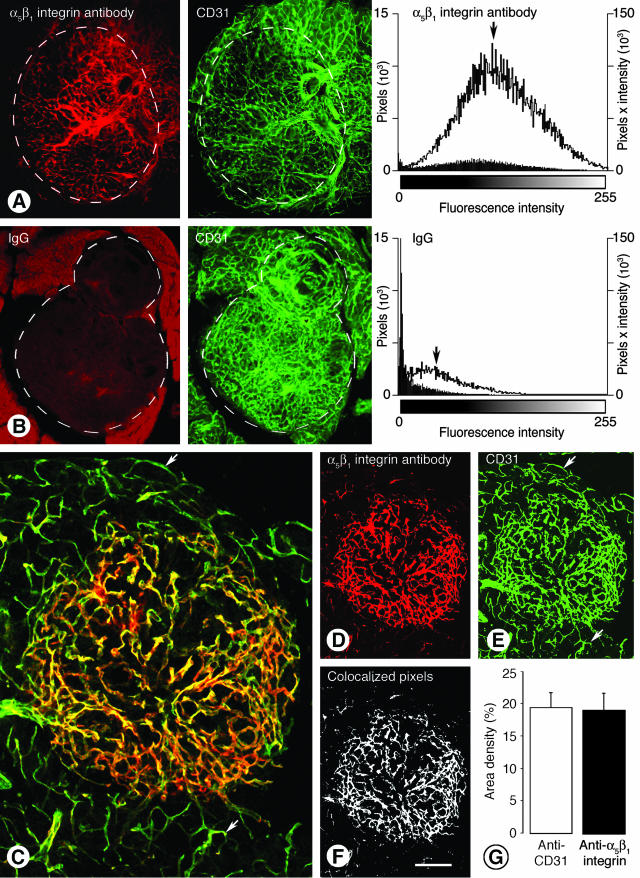
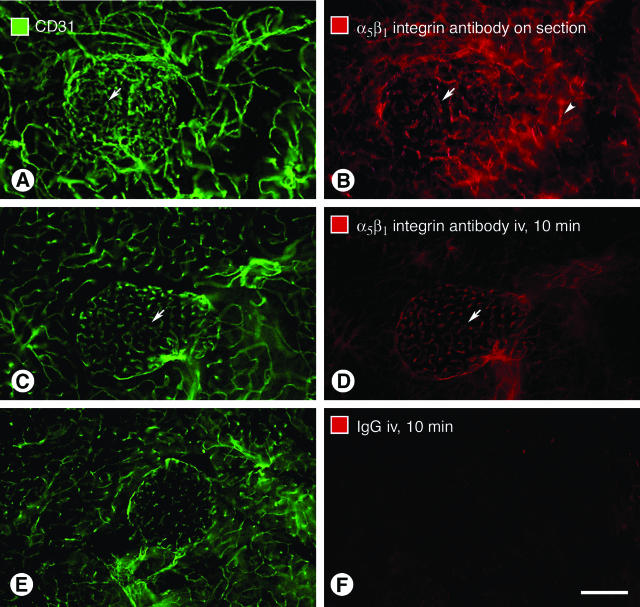
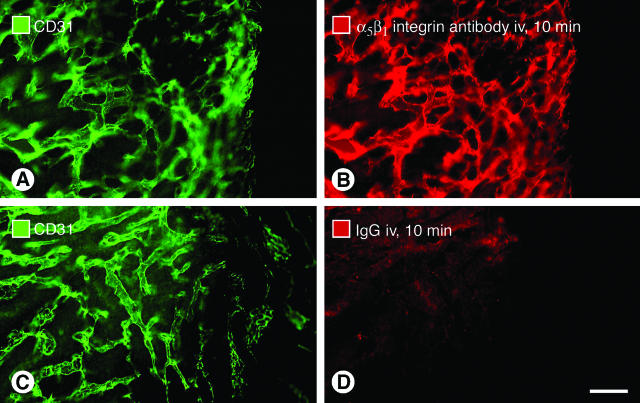
Integrin alpha5beta1 is among the proteins overexpressed on tumor vessels and is a potential target for diagnostics and therapeutics. Here, we mapped the distribution of alpha5beta1 integrin in three murine tumor models and identified sites of expression that are rapidly accessible to intravascular antibodies. When examined by conventional immunohistochemistry, alpha5beta1 integrin expression was strong on most blood vessels in RIP-Tag2 transgenic mouse tumors, adenomatous polyposis coli (apc) mouse adenomas, and implanted MCa-IV mammary carcinomas. Expression increased during malignant progression in RIP-Tag2 mice. However, immunoreactivity was also strong in normal pancreatic ducts, intestinal smooth muscle, and several other sites. To determine which sites of expression were rapidly accessible from the bloodstream, we intravenously injected anti-alpha5beta1 integrin antibody and 10 minutes to 24 hours later examined the amount and distribution of labeling. The injected antibody strongly labeled tumor vessels at all time points but did not label most normal blood vessels or gain access to pancreatic ducts or intestinal smooth muscle. Intense vascular labeling by anti-alpha5beta1 integrin antibody co-localized with the uniform CD31 immunoreactivity of tumor vessels and contrasted sharply with the patchy accumulation of nonspecific IgG at sites of leakage. This strategy of injecting antibodies revealed the uniform overexpression and rapid accessibility of alpha5beta1 integrin on tumor vessels and may prove useful in assessing other potential therapeutic targets in cancer.
Figures





References
-
- Hurwitz H, Fehrenbacher L, Novotny W, Cartwright T, Hainsworth J, Heim W, Berlin J, Baron A, Griffing S, Holmgren E, Ferrara N, Fyfe G, Rogers B, Ross R, Kabbinavar F. Bevacizumab plus irinotecan, fluorouracil, and leucovorin for metastatic colorectal cancer. N Engl J Med. 2004;350:2335–2342. - PubMed
-
- Yuan F, Chen Y, Dellian M, Safabakhsh N, Ferrara N, Jain RK. Time-dependent vascular regression and permeability changes in established human tumor xenografts induced by an anti-vascular endothelial growth factor/vascular permeability factor antibody. Proc Natl Acad Sci USA. 1996;93:14765–14770. - PMC - PubMed
-
- Shaheen RM, Davis DW, Liu W, Zebrowski BK, Wilson MR, Bucana CD, McConkey DJ, McMahon G, Ellis LM. Antiangiogenic therapy targeting the tyrosine kinase receptor for vascular endothelial growth factor receptor inhibits the growth of colon cancer liver metastasis and induces tumor and endothelial cell apoptosis. Cancer Res. 1999;59:5412–5416. - PubMed
-
- Huang J, Frischer JS, Serur A, Kadenhe A, Yokoi A, McCrudden KW, New T, O’Toole K, Zabski S, Rudge JS, Holash J, Yancopoulos GD, Yamashiro DJ, Kandel JJ. Regression of established tumors and metastases by potent vascular endothelial growth factor blockade. Proc Natl Acad Sci USA. 2003;100:7785–7790. - PMC - PubMed
Publication types
MeSH terms
Substances
Grants and funding
LinkOut - more resources
Full Text Sources
Other Literature Sources
Molecular Biology Databases
Miscellaneous
