


A randomised controlled trial to explore attitudes to routine scale and polish and compare manual versus ultrasonic scaling in the general dental service in Scotland [ISRCTN99609795]
- PMID: 15975140
- PMCID: PMC1183219
- DOI: 10.1186/1472-6831-5-3
A randomised controlled trial to explore attitudes to routine scale and polish and compare manual versus ultrasonic scaling in the general dental service in Scotland [ISRCTN99609795]
Abstract
Background: To investigate, within general dental practice, patients' and vocational dental practitioners' (VDP) attitudes towards the benefits and costs of a simple scale and polish and to compare the experience of using manual versus ultrasonic instruments to scale teeth.
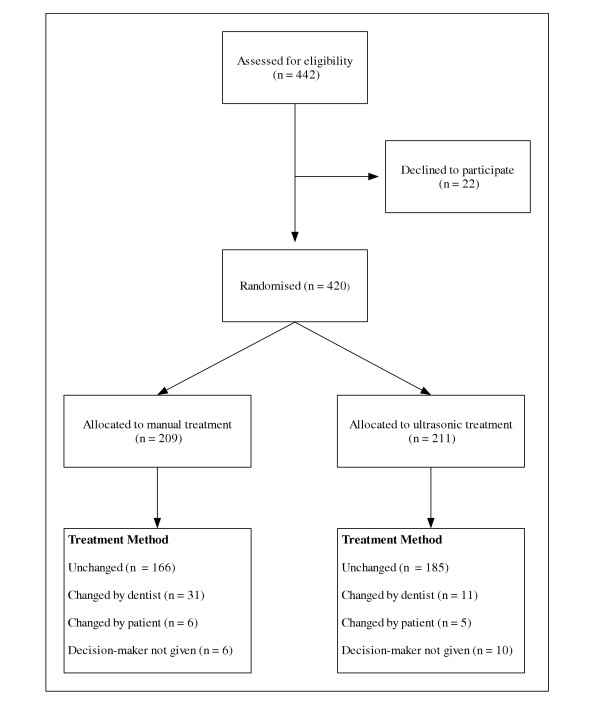
Methods: 28 VDPs and 420 patients participated. Patients were randomly allocated to either group. Patients' and VDPs' attitudes towards, and experience of, the scale and polish were elicited by means of self-administered questionnaires.
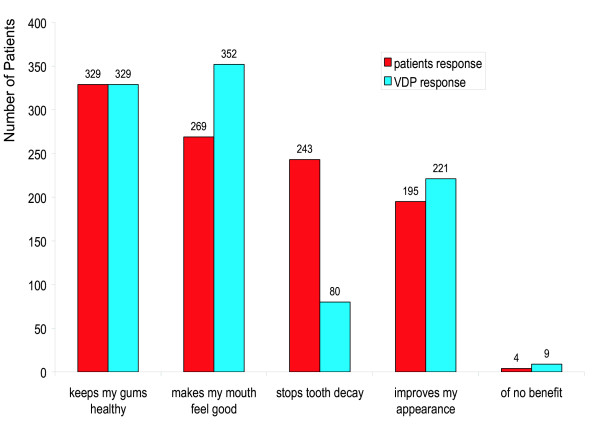
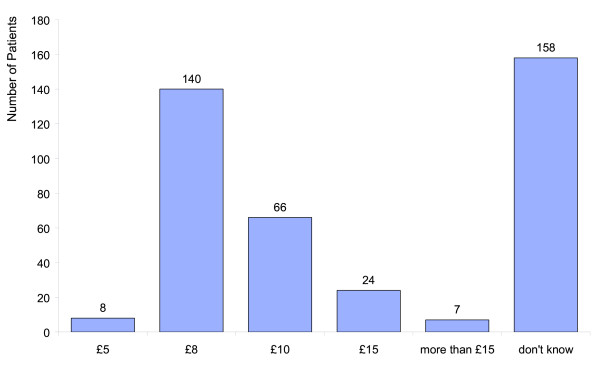
Results: The majority of patients (99%) believed a scale and polish was beneficial. VDPs considered ultrasonic treatment to be appropriate on significantly more occasions than they did for manual scale and polish (P < 0.001). Patient discomfort: with ultrasonic scaling 69.2% felt 'a little uncomfortable' or worse compared with 60% of those undergoing manual treatment (P = 0.072). VDPs considered treatment charges were appropriate for 77% of patients.
Conclusion: Routine scaling and polishing is considered beneficial by both patients and vocational trainees. The majority of patients, regardless of treatment method, experience some degree of discomfort when undergoing a scale and polish. VDPs showed a preference for the ultrasonic treatment method.
Figures
References
-
- Vocational Dental Practitioner Trials, Scottish Dental Practice-Based Research Network, avaliable from the Mackenzie Building, Dundee, DD2 4BF. 2003. http://www.tuith.co.uk/webpages/documents/VT TRIALS.doc
-
- Bonner BC, Clarkson JE, McCombes W. General dental practitioners views on the pursuit and practice of evidence-based dentistry: The results of a questionnaire. 2001. http://www.dundee.ac.uk/tuith/Articles/rt05.htm
-
- Scottish Dental Practice Board Annual Report 2001/02. Edinburgh, UK; 2002.
-
- Adult Dental Health Survey. Office for National Statistics, London, UK; 1998.
LinkOut - more resources
Full Text Sources
Miscellaneous
