


Behavioral mechanisms underlying the link between smoking and drinking
- PMID: 15986716
- PMCID: PMC6709747
Behavioral mechanisms underlying the link between smoking and drinking
Abstract
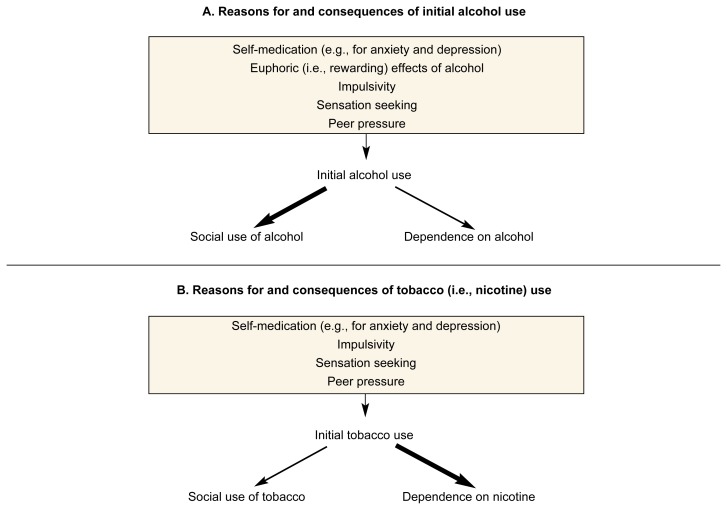
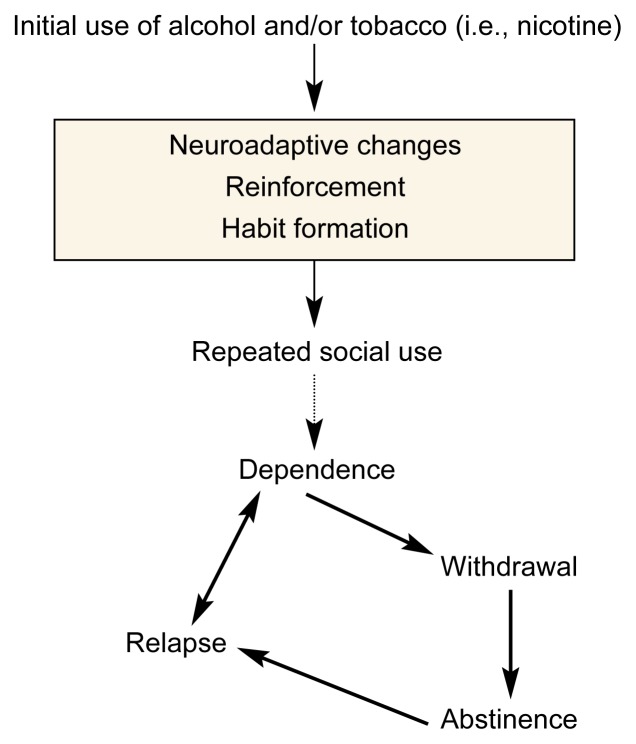
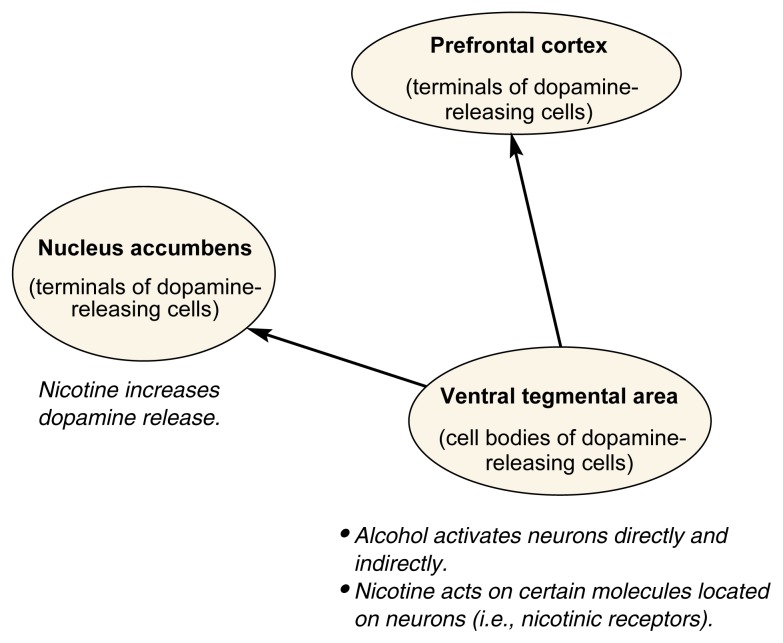
Many people use both alcohol and nicotine (i.e., cigarettes and other tobacco products). The behavioral effects of these two drugs differ, and they do not act on the same target sites in the brain, although they may share, or partly share, certain properties. The initiation of alcohol or nicotine use may be precipitated by similar personality characteristics in the user, such as impulsivity and sensation seeking. Moreover, the mechanisms underlying the development of dependence may be similar for alcohol and nicotine. Thus, certain factors, such as reinforcing drug effects, conditioning processes, automatic behavior, and stress, may influence the development of dependence on both drugs. Other factors, such as tolerance and sensitization to the drugs' actions and the development of withdrawal symptoms, may also contribute to dependence. This review discusses the actions of the two drugs on certain brain chemical (i.e., neurotransmitter) systems and the extent to which the effects of the two drugs may interact.
Figures
References
-
- American Psychiatric Association (APA) Diagnostic and Statistical Manual of Mental Disorders. Fourth Edition. Washington, DC: APA; 1994.
-
- Bailey CP, Manley SJ, Watson WP, Wonnacott S, Molleman A, Little HJ. Chronic ethanol administration alters activity in ventral tegmental area neurons after cessation of withdrawal hyperexcitability. Brain Research. 1998;803:144–152. - PubMed
-
- Benjamin D, Grant ER, Pohorecky LA. Naltrexone reverses ethanol-induced dopamine release in the nucleus accumbens in awake, freely moving, rats. Brain Research. 1993;621:137–140. - PubMed
-
- Blomqvist O, Nissbrandt H, Engel JA, Soderpalm B. The mesolimbic dopamine-activating effects of ethanol are antagonized by mecamylamine. European Journal of Pharmacology. 1993;249:207–213. - PubMed
-
- Blomqvist O, Ericson M, Engel JA, Soderpalm B. Accumbal dopamine overflow after ethanol: Localization of the antagonizing effect of mecamylamine. European Journal of Pharmacology. 1997;249:207–213. - PubMed
Publication types
MeSH terms
LinkOut - more resources
Full Text Sources
Medical