


Effects of milk fermented by Lactobacillus helveticus R389 on a murine breast cancer model
- PMID: 15987453
- PMCID: PMC1175061
- DOI: 10.1186/bcr1032
Effects of milk fermented by Lactobacillus helveticus R389 on a murine breast cancer model
Abstract
Introduction: Antitumour activity is one of the health-promoting effects attributed to the lactic acid bacteria and their products of fermentation. Previous studies in mice demonstrated that bioactive compounds released in milk fermented by Lactobacillus helveticus R389 contribute to its immunoenhancing and antitumour properties. The aim of the present work was to study the effects of the consumption of milk fermented by L. helveticus R389 or its proteolytic-deficient variant, L. helveticus L89, on a murine hormone-dependent breast cancer model.
Methods: Mice were fed with milk fermented by L. helveticus R389 or L. helveticus L89, during 2 or 7 days. The tumour control group received no special feeding. At the end of the feeding period, the mice were challenged by a subcutaneous injection of tumour cells in the mammary gland. Four days post-injection, the mice received fermented milk on a cyclical basis. The rate of tumour development and the cytokines in serum, mammary gland tissue and tumour-isolated cells were monitored. Bcl-2-positive cells in mammary glands and cellular apoptosis in tumour tissue were also studied.
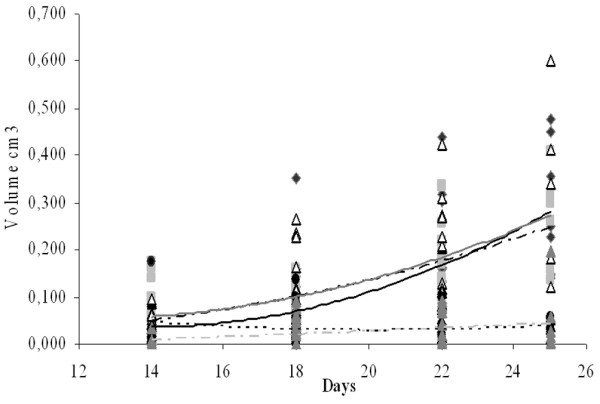
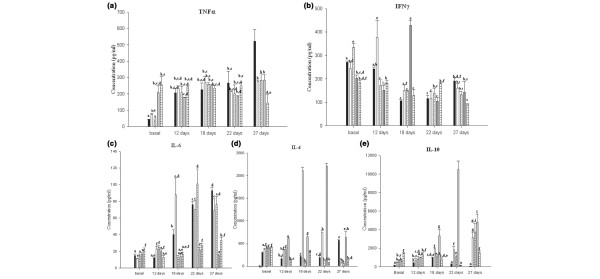
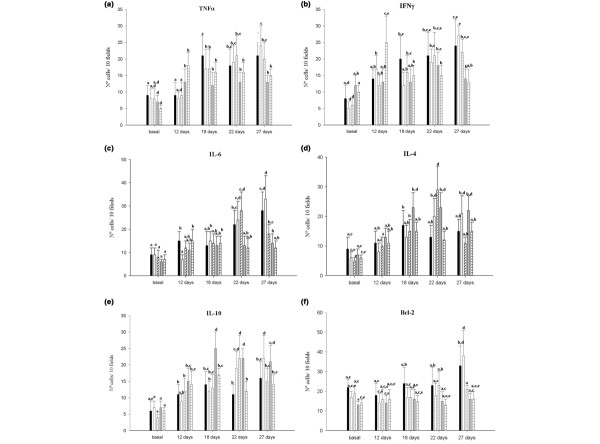
Results: Seven days of cyclical administration of milk fermented by either bacterial strain delayed or stopped the tumour development. Cytokines demonstrated that L. helveticus R389 modulated the immune response challenged by the tumour. IL-10 and IL-4 were increased in all the samples from this group. In comparison with the tumour control, all test groups showed a decrease of IL-6, a cytokine involved in oestrogen synthesis. Seven days of cyclical feeding with milk fermented by L. helveticus R389 produced an increase in the number of apoptotic cells, compared with all other groups.
Conclusion: This study demonstrated that 7 days of cyclical administration of milk fermented by both strains of L. helveticus diminishes tumour growth, stimulating an antitumour immune response. Compounds released during milk fermentation with L. helveticus R389 would be implicated in its immunoregulatory capacity on the immune response in mammary glands and tumour, which were correlated with the cytokines found at the systemic level. The milk fermented by L. helveticus R389 was able to modulate the relationship between immune and endocrine systems (by IL-6 diminution), which is very important in oestrogen-dependent tumour and induced cellular apoptosis.
Figures
References
-
- Fuller R. Probiotics in man and animals. J Appl Bacteriol. 1989;66:365–378. - PubMed
-
- Kato I. Antitumor activity of lactic acid bacteria. In: Fuller R, Perdigón G, editor. Probiotics 3: Immunomodulation by the Gut Microflora and Probiotics. London: Kluwer Academic Publishers; 2000. pp. 115–138.
-
- Perdigón G, Vintini E, Alvarez S, Medina M, Medici M. Study of the possible mechanisms involved in the mucosal immune system activation by lactic acid bacteria. J Dairy Sci. 1999;82:1108–1114. - PubMed
-
- Perdigón G, Fuller R, Raya R. Lactic acid bacteria and their effect on the immune system. Curr Issues Intest Microbiol. 2001;2:27–42. - PubMed
-
- de Moreno de LeBlanc A, Maldonado Galdeano C, Chaves S, Perdigón G. Oral administration of L. casei CRL 431 increases immunity in bronchus and mammary glands. European J Inflamm. 2005;3(1):23–28.
Publication types
MeSH terms
LinkOut - more resources
Full Text Sources
Medical
