


Dynamic changes in fat oxidation in human primary myocytes mirror metabolic characteristics of the donor
- PMID: 16007256
- PMCID: PMC1159139
- DOI: 10.1172/JCI24332
Dynamic changes in fat oxidation in human primary myocytes mirror metabolic characteristics of the donor
Abstract
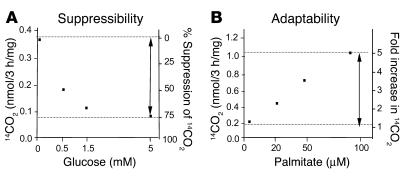
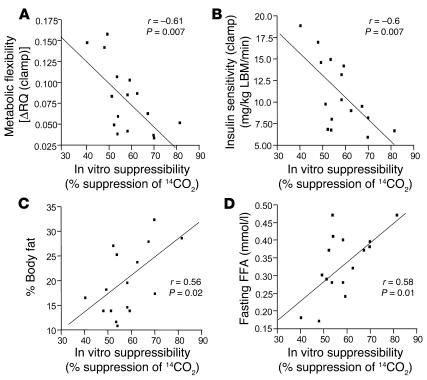
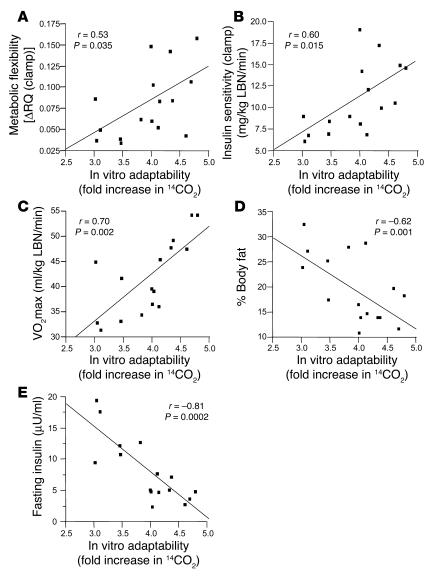
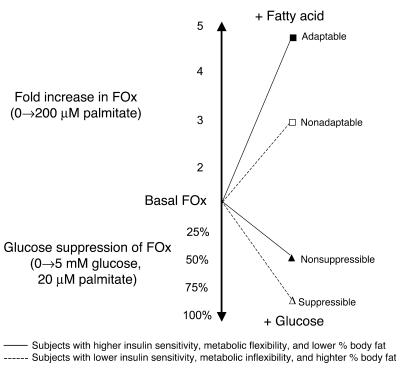
Metabolic flexibility of skeletal muscle, that is, the preference for fat oxidation (FOx) during fasting and for carbohydrate oxidation in response to insulin, is decreased during insulin resistance. The aim of this study was to test the hypothesis that the capacity of myotubes to oxidize fat in vitro reflects the donor's metabolic characteristics. Insulin sensitivity (IS) and metabolic flexibility of 16 healthy, young male subjects was determined by euglycemic hyperinsulinemic clamp. Muscle samples were obtained from vastus lateralis, cultured, and differentiated into myotubes. In human myotubes in vitro, we measured suppressibility (glucose suppression of FOx) and adaptability (an increase in FOx in the presence of high palmitate concentration). We termed these dynamic changes in FOx metabolic switching. In vivo, metabolic flexibility was positively correlated with IS and maximal oxygen uptake and inversely correlated with percent body fat. In vitro suppressibility was inversely correlated with IS and metabolic flexibility and positively correlated with body fat and fasting FFA levels. Adaptability was negatively associated with percent body fat and fasting insulin and positively correlated with IS and metabolic flexibility. The interindividual variability in metabolic phenotypes was preserved in human myotubes separated from their neuroendocrine environment, which supports the hypothesis that metabolic switching is an intrinsic property of skeletal muscle.
Figures
Comment in
-
Skeletal muscle fat oxidation: timing and flexibility are everything.J Clin Invest. 2005 Jul;115(7):1699-702. doi: 10.1172/JCI25758. J Clin Invest. 2005. PMID: 16007246 Free PMC article. Review.
References
-
- Simoneau JA, Kelley DE. Altered glycolytic and oxidative capacities of skeletal muscle contribute to insulin resistance in NIDDM. J. Appl. Physiol. 1997;83:166–171. - PubMed
-
- He J, Watkins S, Kelley DE. Skeletal muscle lipid content and oxidative enzyme activity in relation to muscle fiber type in type 2 diabetes and obesity. Diabetes. 2001;50:817–823. - PubMed
-
- Doucet E, Tremblay A, Simoneau JA, Joanisse DR. Skeletal muscle enzymes as predictors of 24-h energy metabolism in reduced-obese persons. Am. J. Clin. Nutr. 2003;78:430–435. - PubMed
-
- Kelley DE, Goodpaster B, Wing RR, Simoneau JA. Skeletal muscle fatty acid metabolism in association with insulin resistance, obesity, and weight loss. Am. J. Physiol. 1999;277:E1130–E1141. - PubMed
Publication types
MeSH terms
Substances
LinkOut - more resources
Full Text Sources
Other Literature Sources
Medical
