


Endogenous PACAP acts as a stress response peptide to protect cerebellar neurons from ethanol or oxidative insult
- PMID: 16009465
- PMCID: PMC4183202
- DOI: 10.1016/j.peptides.2005.05.015
Endogenous PACAP acts as a stress response peptide to protect cerebellar neurons from ethanol or oxidative insult
Abstract
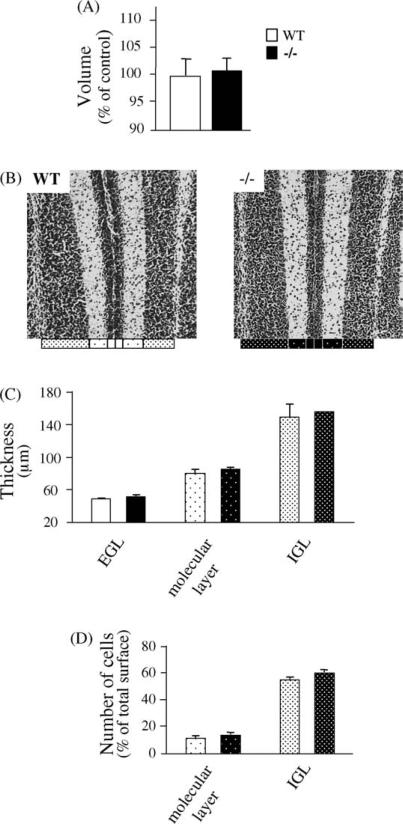
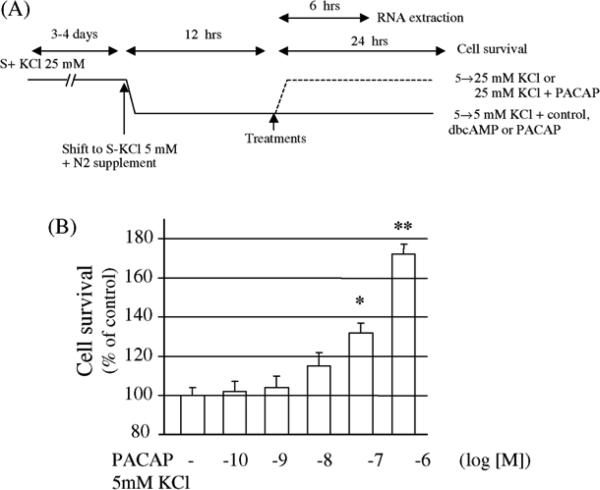
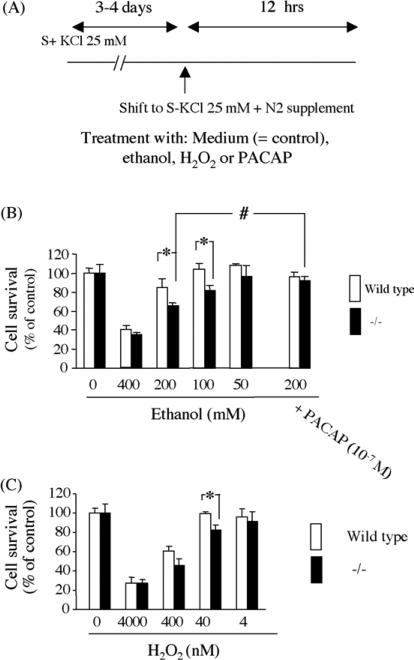
The rodent cerebellum is richly supplied with PACAPergic innervation. Exogenous pituitary adenylate cyclase-activating polypeptide (PACAP) increases cerebellar granule cell survival and differentiation in culture, and enhances the number of neuroblasts in the molecular and internal granule cell layers (IGL) when injected postnatally into the cerebellum in vivo. Here, we have investigated the role of endogenous PACAP during cerebellar development by comparing the morphology of normal and PACAP-deficient mouse cerebellum, and the response of cerebellar granule cells from normal and PACAP-deficient mice subjected to neurotoxic insult in culture. There was no difference in cerebellar volume or granule cell number, in 11-day-old wild type versus PACAP-deficient mice. Cultured cerebellar neurons from PACAP-deficient and wild type mice also showed no apparent differences in survival and differentiation either under depolarizing conditions, or non-depolarizing conditions in the presence or absence of either dibutyryl cAMP or 100 nM PACAP. However, cultured cerebellar neurons from PACAP-deficient mice were significantly more sensitive than wild type neurons to ethanol- or hydrogen peroxide-induced toxicity. Differential ethanol toxicity was reversed by addition of 100 nM exogenous PACAP, suggesting that endogenous PACAP has neuroprotective activity in the context of cellular insult or stress. The neuroprotective action of PACAP was mimicked by dibutryl cAMP, indicating that it occurred via activation of adenylate cyclase. These results indicate that PACAP might act to protect the brain from paraphysiological insult, including exposure to toxins or hypoxia.
Figures
References
-
- Altman J. Postnatal development of the cerebellar cortex in the rat 3. Maturation of the components of the granular layer. J Comp Neurol. 1972;145:465–513. - PubMed
-
- Arimura A, Shioda S. Pituitary adenylate cyclase activating polypeptide (PACAP) and its receptors: neuroendocrine and endocrine interaction. Front Neuroendocrinol. 1995;16:53–88. - PubMed
-
- Basille M, Gonzalez BJ, Leroux P, Jeandel L, Fournier A, Vaudry H. Localization and characterization of PACAP receptors in the rat cerebellum during development: evidence for a stimulatory effect of PACAP on immature cerebellar granule cells. Neuroscience. 1993;57:329–38. - PubMed
-
- Cavallaro S, Copani A, D'Agata V, Musco S, Petralia S, Ventra C, et al. Pituitary adenylate cyclase activating polypeptide prevents apoptosis in cultured cerebellar granule neurons. Mol Pharmacol. 1996;50:60–6. - PubMed
-
- Fukuchi M, Sakuragawa S, Tabuchi A, Tsuda M. Calcium signal-mediated expression of the vasoactive intestinal polypeptide gene and its small contribution to activity-dependent survival of mouse cerebellar granule cells. J Neurosci Res. 2004;77:26–34. - PubMed
MeSH terms
Substances
Grants and funding
LinkOut - more resources
Full Text Sources
Molecular Biology Databases
