


Are alcoholism treatments effective? The Project MATCH data
- PMID: 16018798
- PMCID: PMC1185549
- DOI: 10.1186/1471-2458-5-75
Are alcoholism treatments effective? The Project MATCH data
Abstract
Background: Project MATCH was the largest and most expensive alcoholism treatment trial ever conducted. The results were disappointing. There were essentially no patient-treatment matches, and three very different treatments produced nearly identical outcomes. These results were interpreted post hoc as evidence that all three treatments were quite effective. We re-analyzed the data in order to estimate effectiveness in relation to quantity of treatment.
Methods: This was a secondary analysis of data from a multisite clinical trial of alcohol dependent volunteers (N = 1726) who received outpatient psychosocial therapy. Analyses were confined to the primary outcome variables, percent days abstinent (PDA) and drinks per drinking day (DDD). Overall tests between treatment outcome and treatment quantity were conducted. Next, three specific groups were highlighted. One group consisted of those who dropped out immediately; the second were those who dropped out after receiving only one therapy session, and the third were those who attended 12 therapy sessions.
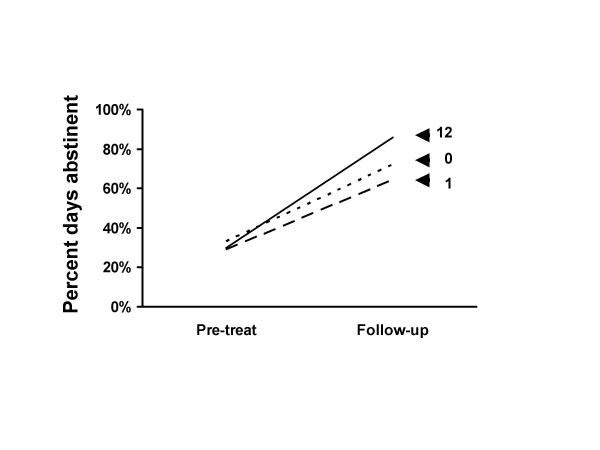
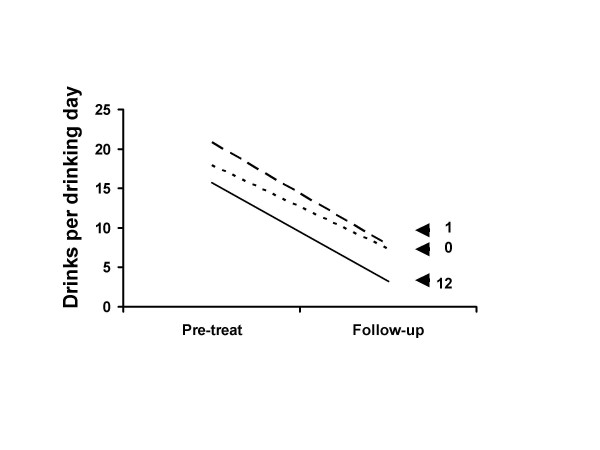
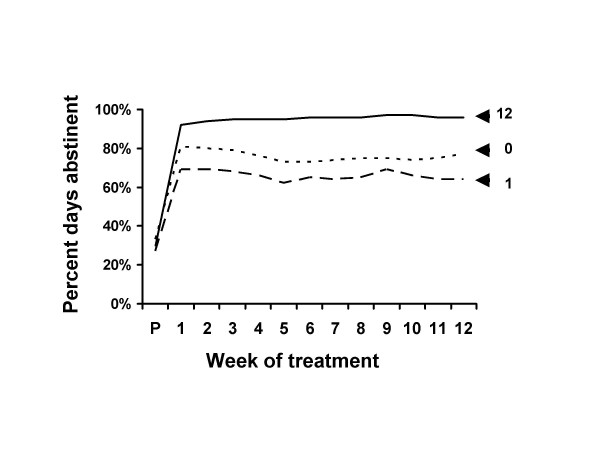
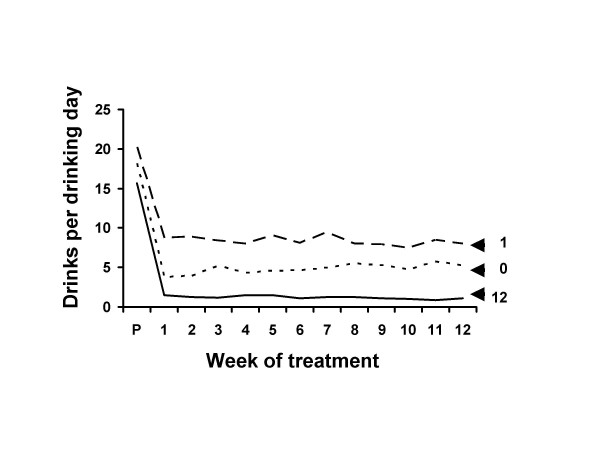
Results: Overall, a median of only 3% of the drinking outcome at follow-up could be attributed to treatment. However this effect appeared to be present at week one before most of the treatment had been delivered. The zero treatment dropout group showed great improvement, achieving a mean of 72 percent days abstinent at follow-up. Effect size estimates showed that two-thirds to three-fourths of the improvement in the full treatment group was duplicated in the zero treatment group. Outcomes for the one session treatment group were worse than for the zero treatment group, suggesting a patient self selection effect. Nearly all the improvement in all groups had occurred by week one. The full treatment group had improved in PDA by 62% at week one, and the additional 11 therapy sessions added only another 4% improvement.
Conclusion: The results suggest that current psychosocial treatments for alcoholism are not particularly effective. Untreated alcoholics in clinical trials show significant improvement. Most of the improvement which is interpreted as treatment effect is not due to treatment. Part of the remainder appears to be due to selection effects.
Figures
Comment in
-
Are alcoholism treatments effective? The Project MATCH data: response.BMC Public Health. 2005 Jul 18;5:76. doi: 10.1186/1471-2458-5-76. BMC Public Health. 2005. PMID: 16026611 Free PMC article.
References
-
- Miller WR, Wilbourne PL, Hettema JE. What works? A summary of alcohol treatment outcome research. In: Hester RK, Miller WR, editor. Handbook of Alcoholism Treatment Approaches. 3. Boston: Allyn and Bacon; 2003. pp. 13–63.
-
- Donovan DM, Dadden RM, DiClemente CC, Carroll KM, Longabaugh R, Zweben A, Rychtarik R. Issues in the selection and development of therapies in alcoholism treatment matching research. In: Donovan D, Mattson ME, editor. Alcoholism Treatment Matching Research; Methodological and Clinical Approaches Journal of Studies on Alcohol. 1994. pp. 138–148. - PubMed
-
- Nowinski J, Baker S, Carroll K. Twelve Step Facilitation Therapy Manual. NIH Publication No. 94-3722, Washington D.C; 1999.
-
- Miller WR, Zweben A, DiClemente CC, Rychtarik RG. Motivational Enhancement Therapy Manual. NIH Publication No. 94-3723, Washington D.C; 1999.
-
- Kadden R, Carroll K, Donovan D, Cooney N, Monti P, Abrams D, Litt M, Hester R. Cognitive-Behavioral Coping Skills Therapy Manual. NIH Publication No. 94-3724, Washington D.C; 1995.
MeSH terms
LinkOut - more resources
Full Text Sources
Medical
Research Materials
