


Late-life depression: a model for medical classification
- PMID: 16026764
- PMCID: PMC7124284
- DOI: 10.1016/j.biopsych.2005.04.055
Late-life depression: a model for medical classification
Abstract
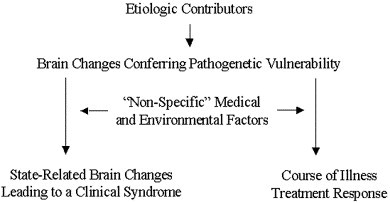
Geriatric psychiatric syndromes might serve as the starting point for a medical classification of psychiatric disorders, because their medical and neurological comorbidity and their clinical, neuropsychological, and neuroimaging features often reflect specific brain abnormalities. Geriatric syndromes, however, consist of complex behaviors that are unlikely to be caused by single lesions. We propose a model in which aging-related changes in specific brain structures increase the propensity for the development of certain psychiatric syndromes. The predisposing factors are distinct from the mechanisms mediating the expression of a syndromic state, much like hypertension is distinct from stroke, but constitutes a morbid vulnerability. We argue that research seeking to identify both brain abnormalities conferring vulnerability as well as the mediating mechanisms of symptomatology has the potential to lead to a medical classification of psychiatric disorders. In addition, a medical classification can guide the effort to improve treatment and prevention of psychiatric disorders as it can direct therapeutic efforts to the underlying predisposing abnormalities, the syndrome-mediating mechanisms, and to development of behavioral skills needed for coping with adversity and disability.
Figures
References
-
- Aarsland D., Litvan I., Larsen J.P. Neuropsychiatric symptoms of patients with progressive supranuclear palsy and Parkinson’s disease. J Neuropsychiatry Clin Neurosci. 2001;13:42–49. - PubMed
-
- Aizenstein H.J., Nebes R.D., Meltzer C.C., Fukui M.B., Williams R.L., Saxton J. The relation of white matter hyperintensities to implicit learning in healthy older adults. Int J Geriatr Psychiatry. 2002;17 664–649. - PubMed
-
- Alexopoulos G.S. “The depression-executive dysfunction syndrome of late life”: A specific target for D3 agonists? Am J Geriatr Psychiatry. 2001;9:22–29. - PubMed
-
- Alexopoulos G.S. Frontostriatal and limbic dysfunction in late-life depression. Am J Geriatr Psychiatry. 2002;10:687–695. - PubMed
-
- Alexopoulos G.S., Bruce M.L., Hull J., Sirey J.A., Kakuma T. Clinical determinants of suicidal ideation and behavior in geriatric depression. Arch Gen Psychiatry. 1999;56:1048–1053. - PubMed
Publication types
MeSH terms
Grants and funding
LinkOut - more resources
Full Text Sources
