


Short-term insulin and nutritional energy provision do not stimulate muscle protein synthesis if blood amino acid availability decreases
- PMID: 16030064
- PMCID: PMC3192464
- DOI: 10.1152/ajpendo.00170.2005
Short-term insulin and nutritional energy provision do not stimulate muscle protein synthesis if blood amino acid availability decreases
Abstract
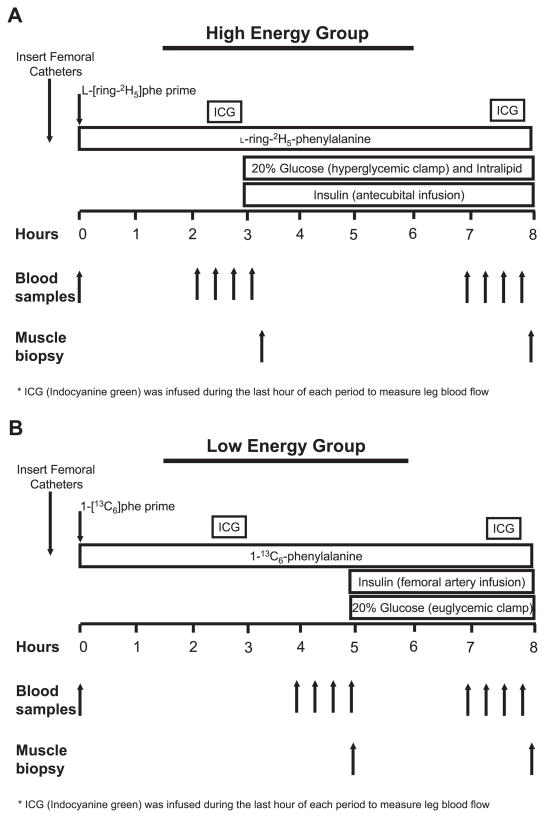
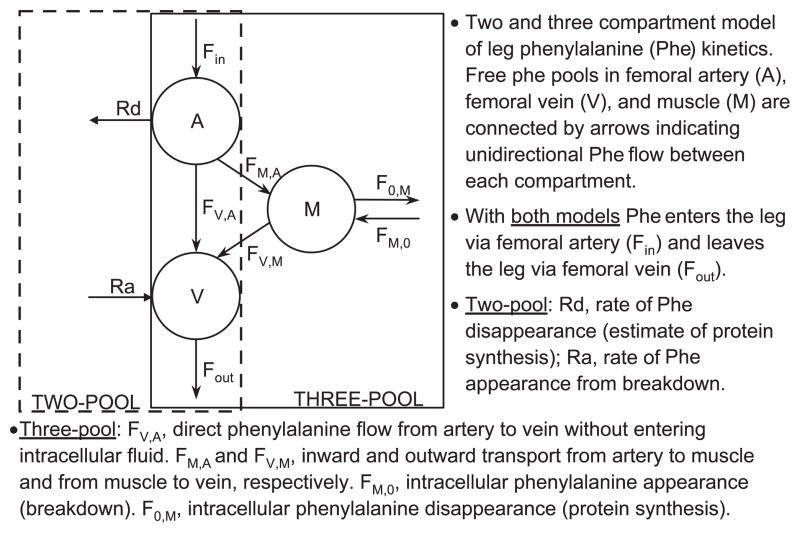
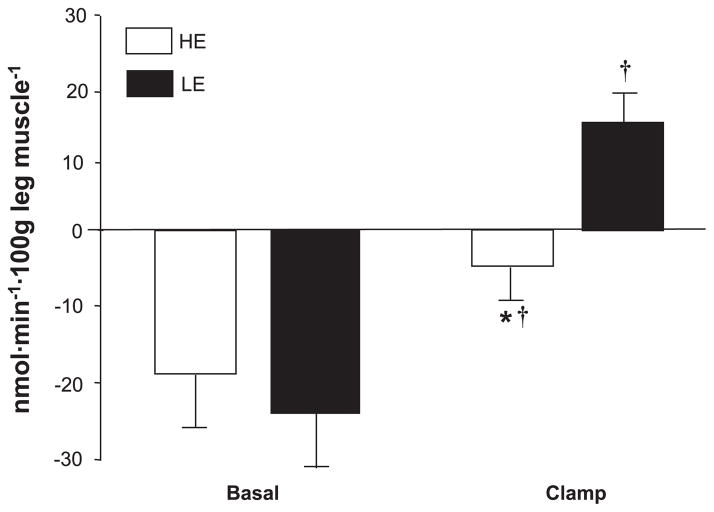
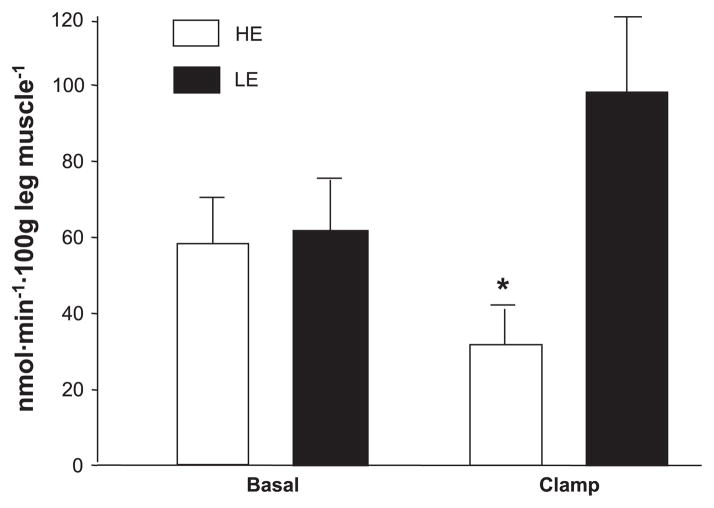
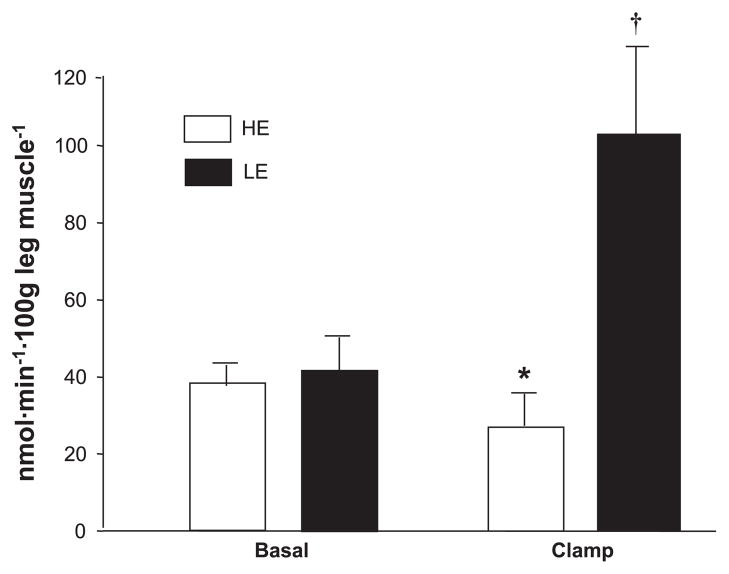
Muscle protein synthesis requires energy and amino acids to proceed and can be stimulated by insulin under certain circumstances. We hypothesized that short-term provision of insulin and nutritional energy would stimulate muscle protein synthesis in healthy subjects only if amino acid availability did not decrease. Using stable isotope techniques, we compared the effects on muscle phenylalanine kinetics across the leg of an amino acid-lowering, high-energy (HE, n = 6, 162 +/- 20 kcal/h) hyperglycemic hyperlipidemic hyperinsulinemic clamp with systemic insulin infusion to a low-energy (LE, n = 6, 35 +/- 3 kcal/h, P < 0.05 vs. HE) euglycemic hyperinsulinemic clamp with local insulin infusion in the femoral artery. Basal blood phenylalanine concentrations and phenylalanine net balance, muscle protein breakdown, and synthesis (nmol.min(-1).100 g leg muscle(-1)) were not different between groups. During insulin infusion, femoral insulinemia increased to a similar extent between groups and blood phenylalanine concentration decreased 27 +/- 3% in the HE group but only 9 +/- 2% in the LE group (P < 0.01 HE vs. LE). Phenylalanine net balance increased in both groups, but the change was greater (P < 0.05) in the LE group. Muscle protein breakdown decreased in the HE group (58 +/- 12 to 35 +/- 7 nmol.min(-1).100 g leg muscle(-1)) and did not change in the LE group. Muscle protein synthesis was unchanged in the HE group (39 +/- 6 to 30 +/- 7 nmol.min(-1).100 g leg muscle(-1)) and increased (P < 0.05) in the LE group (41 +/- 9 to 114 +/- 26 nmol.min(-1).100 g leg muscle(-1)). We conclude that amino acid availability is an important factor in the regulation of muscle protein synthesis in response to insulin, as decreased blood amino acid concentrations override the positive effect of insulin on muscle protein synthesis even if excess energy is provided.
Figures
References
-
- Bennet WM, Connacher AA, Scrimgeour CM, Jung RT, Rennie MJ. Euglycemic hyperinsulinemia augments amino acid uptake by human leg tissues during hyperaminoacidemia. Am J Physiol Endocrinol Metab. 1990;259:E185–E194. - PubMed
-
- Biolo G, Fleming RY, Maggi SP, Wolfe RR. Transmembrane transport and intracellular kinetics of amino acids in human skeletal muscle. Am J Physiol Endocrinol Metab. 1995;268:E75–E84. - PubMed
-
- Biolo G, Tipton KD, Klein S, Wolfe RR. An abundant supply of amino acids enhances the metabolic effect of exercise on muscle protein. Am J Physiol Endocrinol Metab. 1997;273:E122–E129. - PubMed
-
- Boirie Y, Short KR, Ahlman B, Charlton M, Nair KS. Tissue-specific regulation of mitochondrial and cytoplasmic protein synthesis rates by insulin. Diabetes. 2001;50:2652–2658. - PubMed
Publication types
MeSH terms
Substances
Grants and funding
LinkOut - more resources
Full Text Sources
Medical
Miscellaneous
