


Habitat complexity and sex-dependent predation of mosquito larvae in containers
- PMID: 16041612
- PMCID: PMC3334868
- DOI: 10.1007/s00442-005-0198-x
Habitat complexity and sex-dependent predation of mosquito larvae in containers
Abstract
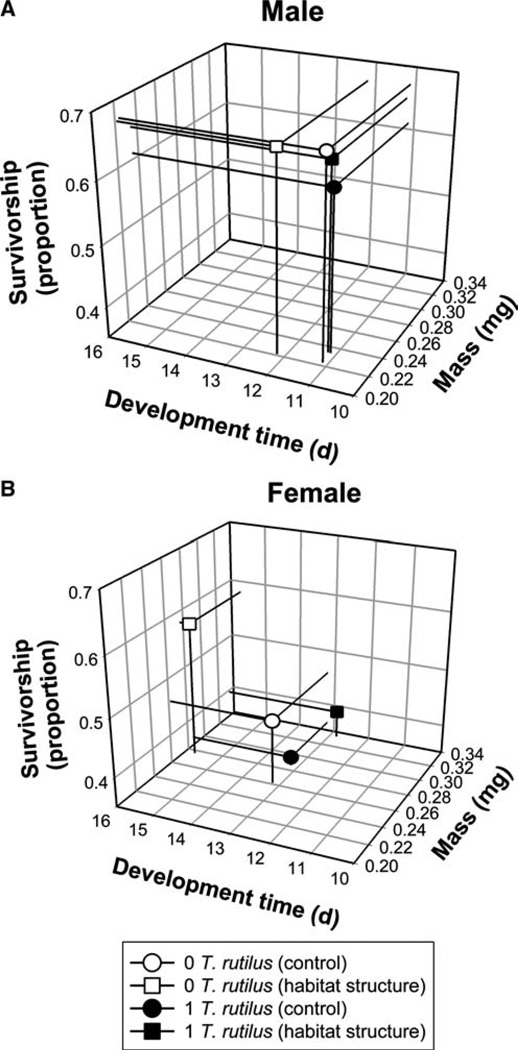
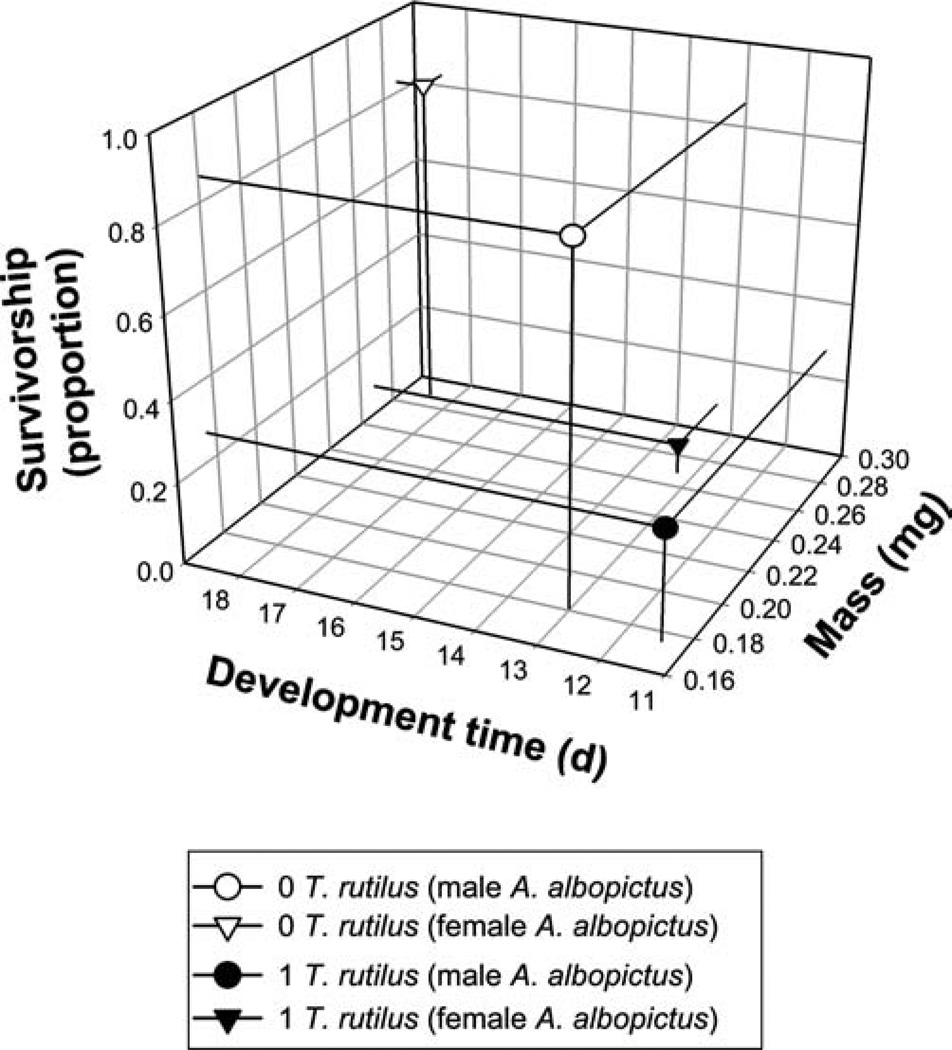
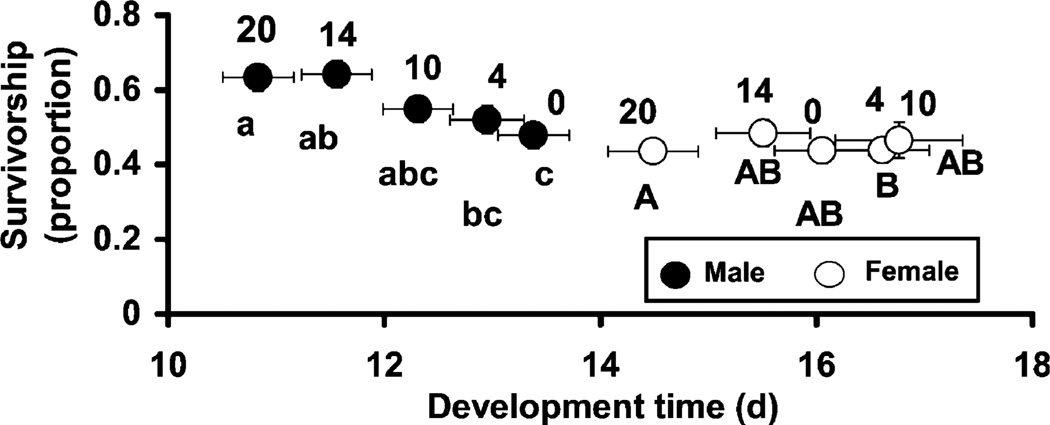
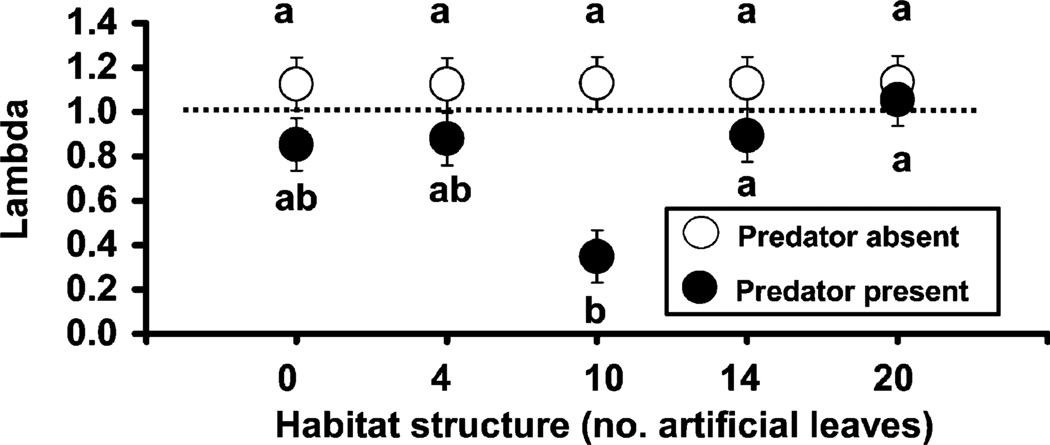
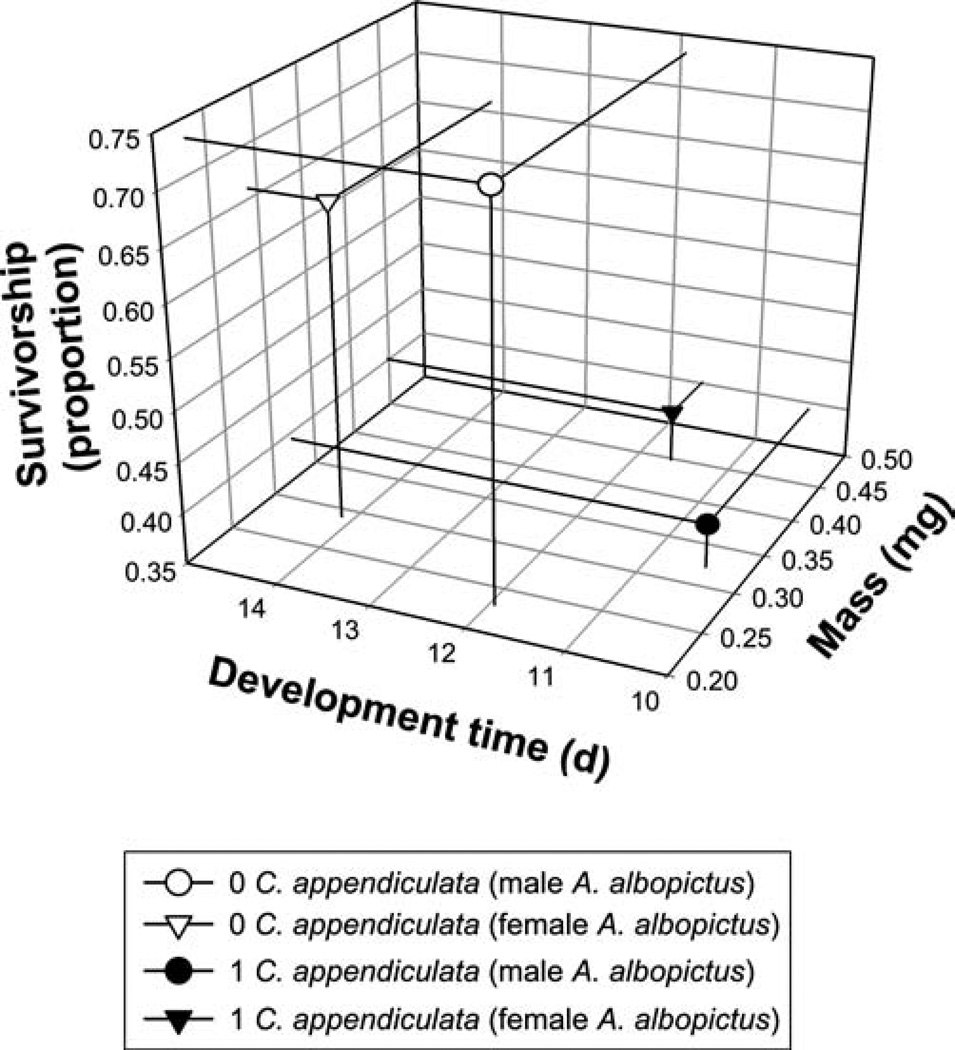
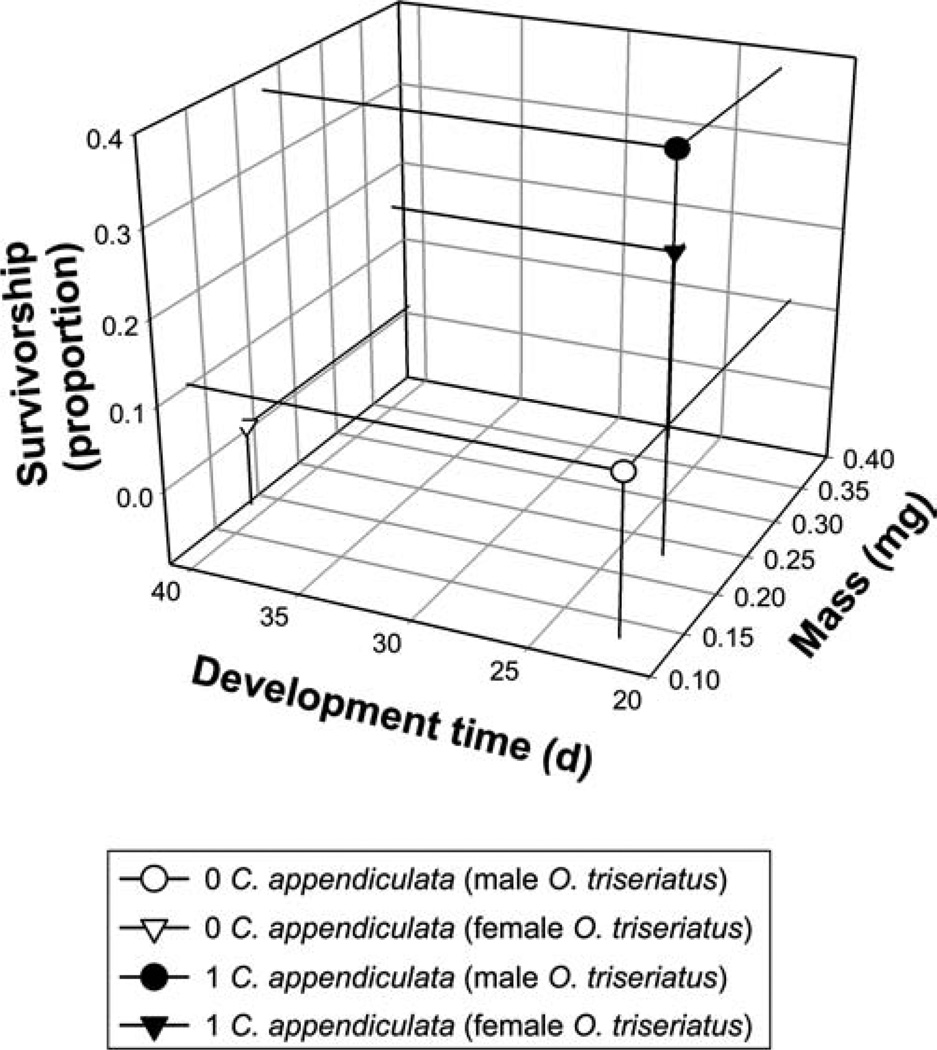
Studies in aquatic systems have shown that habitat complexity may provide refuge or reduce the number of encounters prey have with actively searching predators. For ambush predators, habitat complexity may enhance or have no effect on predation rates because it conceals predators, reduces prey detection by predators, or visually impairs both predators and prey. We investigated the effects of habitat complexity and predation by the ambush predators Toxorhynchites rutilus and Corethrella appendiculata on their mosquito prey Aedes albopictus and Ochlerotatus triseriatus in container analogs of treeholes. As in other ambush predator-prey systems, habitat complexity did not alter the effects of T. rutilus or C. appendiculata whose presence decreased prey survivorship, shortened development time, and increased adult size compared to treatments where predators were absent. Faster growth and larger size were due to predator-mediated release from competition among surviving prey. Male and female prey survivorship were similar in the absence of predators, however when predators were present, survivorship of both prey species was skewed in favor of males. We conclude that habitat complexity is relatively unimportant in shaping predator-prey interactions in this treehole community, where predation risk differs between prey sexes.
Figures
References
-
- Bedhomme S, Agnew P, Sidobre C, Michalakis Y. Sex-specific reaction norms to intraspecific larval competition in the mosquito Aedes aegypti. J Evol Biol. 2003;16:721–730. - PubMed
-
- Bradshaw WE, Holzapfel CM. Predator-mediated, non-equilibrium coexistence of tree-hole mosquitoes in southeastern North America. Oecologia. 1983;57:239–256. - PubMed
-
- Briegel H, Timmermann SE. Aedes albopictus (Diptera: Culicidae): physiological aspects of development and reproduction. J Med Entomol. 2001;38:566–571. - PubMed
-
- Broadie KS, Bradshaw WE. Mechanisms of interference competition in the western treehole mosquito, Aedes sierrensis. Ecol Entomol. 1991;16:145–154.
Publication types
MeSH terms
Grants and funding
LinkOut - more resources
Full Text Sources
Medical
Research Materials
