Testing a model of pain appraisal and coping in children with chronic abdominal pain
- PMID: 16045372
- PMCID: PMC3144700
- DOI: 10.1037/0278-6133.24.4.364
Testing a model of pain appraisal and coping in children with chronic abdominal pain
Abstract
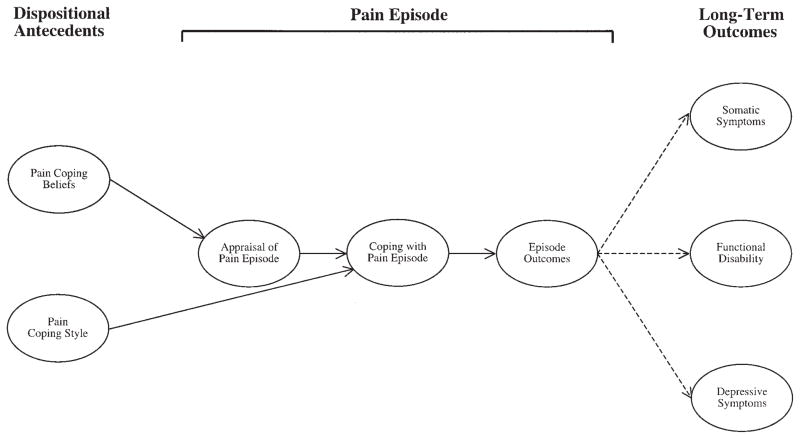
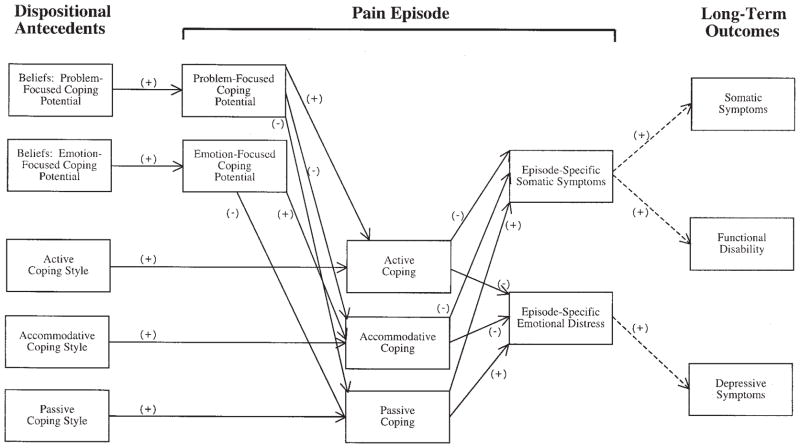
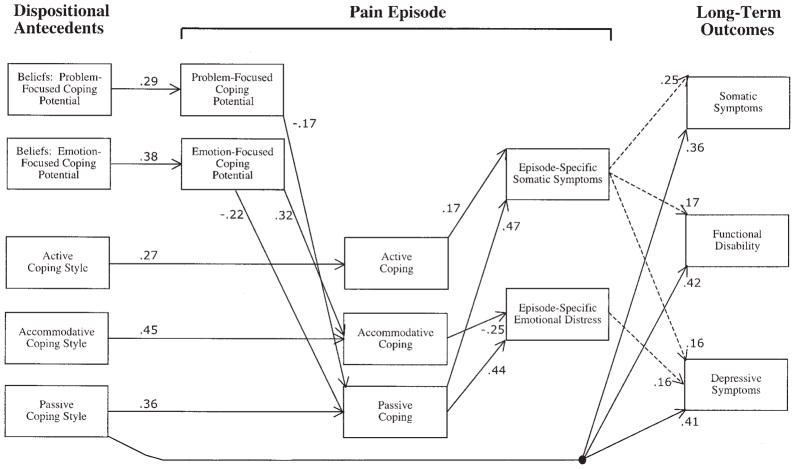
This prospective study of children with recurrent abdominal pain (N=133; ages 8--15 years) used path analysis to examine relations among dispositional pain beliefs and coping styles, cognitions and behavior related to a specific pain episode, and short- and long-term outcomes. Children believing they could not reduce or accept pain appraised their episode-specific coping ability as low and reported passive coping behavior. Dispositional passive coping had direct effects on both episode-specific passive coping and long-term symptoms and disability. Accommodative coping (acceptance and self-encouragement) was associated with reduced episode-specific distress, which itself predicted reduced depressive symptoms 3 months later. Results suggest that coping-skill interventions for children with chronic pain should target reductions in passive coping and consider the potential benefits of accommodative coping strategies.
Figures
References
-
- Apley J. The child with abdominal pains. London: Blackwell; 1975.
-
- Bentler PM. Comparative fit indexes in structural models. Psychological Bulletin. 1990;107:238–246. - PubMed
-
- Bentler PM, Wu EJC. EQS for Macintosh: User’s guide [Computer software manual] Encino, CA: Multivariate Software; 1995.
-
- Bollen KA. Structural equations with latent variables. Oxford, England: Wiley; 1989.
-
- Brown GK, Nicassio PM. Development of a questionnaire for the assessment of active and passive coping strategies in chronic pain patients. Pain. 1987;31:53–63. - PubMed