


Establishment of a diabetic mouse model with progressive diabetic nephropathy
- PMID: 16049320
- PMCID: PMC1603579
- DOI: 10.1016/s0002-9440(10)62978-1
Establishment of a diabetic mouse model with progressive diabetic nephropathy
Abstract
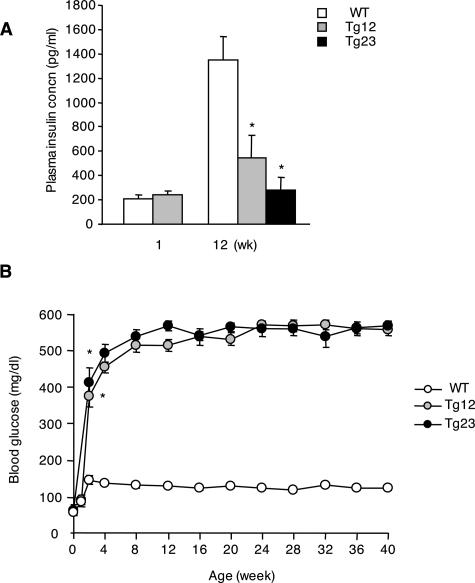
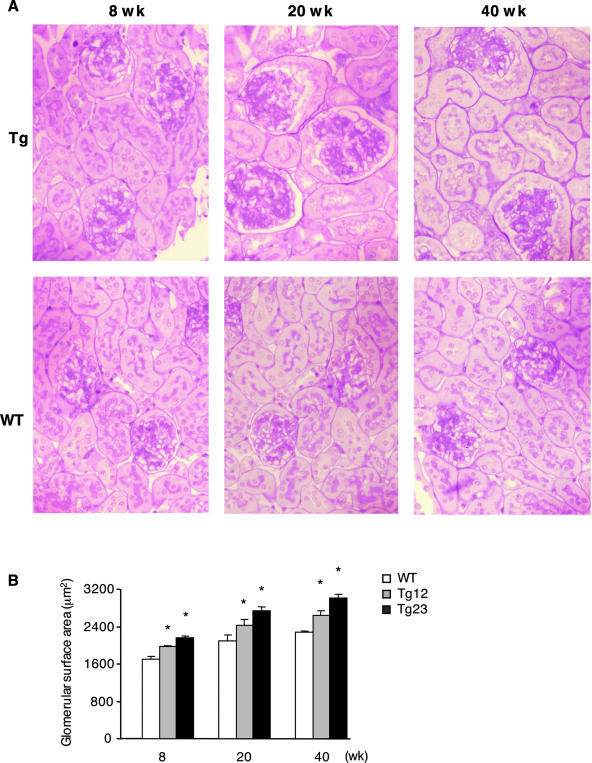
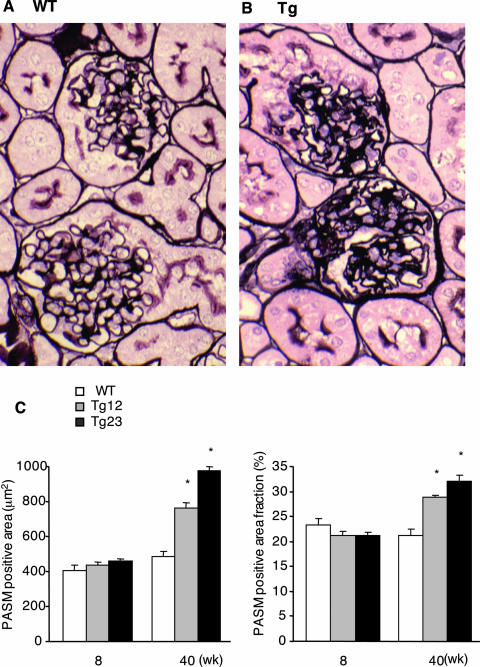
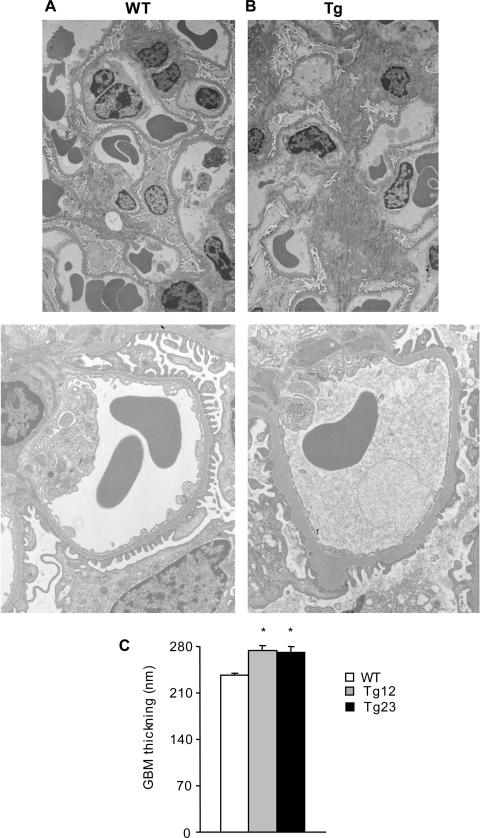
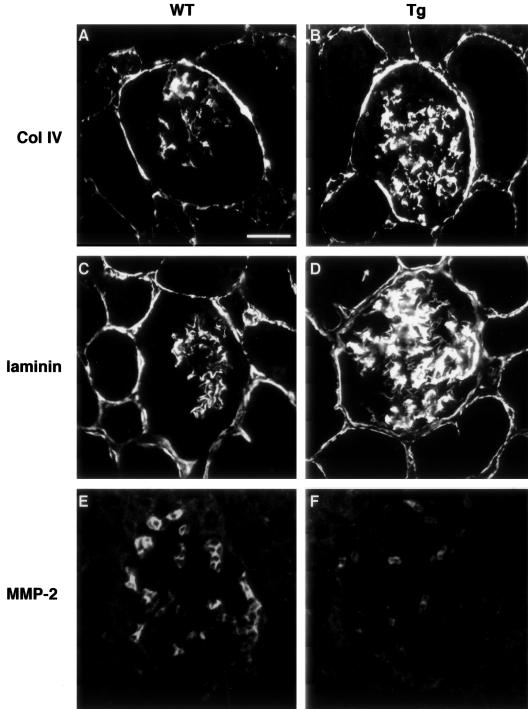
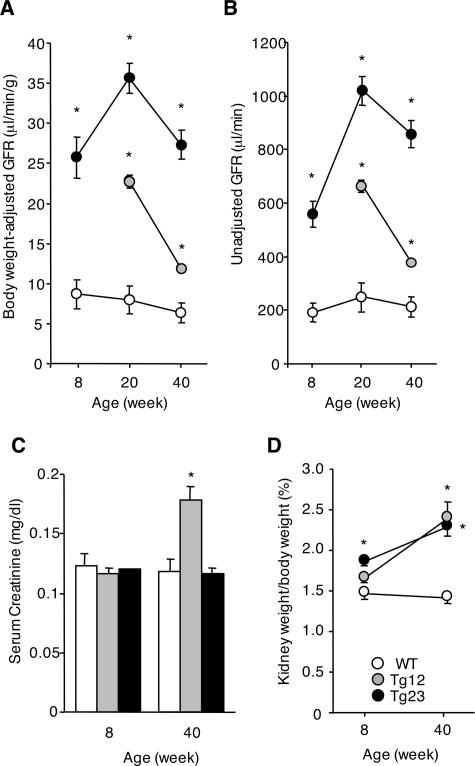
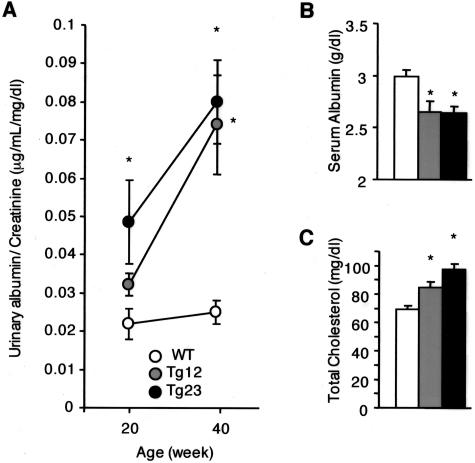
Although diabetic animal models exist, no single animal model develops renal changes identical to those seen in humans. Here we show that transgenic mice that overexpress inducible cAMP early repressor (ICER Igamma) in pancreatic beta cells are a good model to study the pathogenesis of diabetic nephropathy. Although ICER Igamma transgenic mice exhibit extremely high blood glucose levels throughout their lives, they survive long enough to develop diabetic nephropathy. Using this model we followed the progress of diabetic renal changes compared to those seen in humans. By 8 weeks of age, the glomerular filtration rate (GFR) was already increased, and glomerular hypertrophy was prominent. At 20 weeks, GFR reached its peak, and urine albumin excretion rate was elevated. Finally, at 40 weeks, diffuse glomerular sclerotic lesions were prominently accompanied by increased expression of collagen type IV and laminin and reduced expression of matrix metalloproteinase-2. Nodular lesions were absent, but glomerular basement membrane thickening was prominent. At this point, GFR declined and urinary albumin excretion rate increased, causing a nephrotic state with lower serum albumin and higher serum total cholesterol. Thus, similar to human diabetic nephropathy, ICER Igamma transgenic mice exhibit a stable and progressive phenotype of diabetic kidney disease due solely to chronic hyperglycemia without other modulating factors.
Figures
References
-
- Krolewski AS, Warram JH, Rand LI, Kahn CR. Epidemiologic approach to the etiology of type I diabetes mellitus and its complications. N Engl J Med. 1987;317:1390–1398. - PubMed
-
- Bojestig M, Arnqvist HJ, Hermansson G, Karlberg BE, Ludvigsson J. Declining incidence of nephropathy in insulin-dependent diabetes mellitus. N Engl J Med. 1994;330:15–18. - PubMed
-
- Krolewski M, Eggers PW, Warram JH. Magnitude of end-stage renal disease in IDDM: a 35 year follow-up study. Kidney Int. 1996;50:2041–2046. - PubMed
-
- Velasquez MT, Kimmel PL, Michaelis OE., IV Animal models of spontaneous diabetic kidney disease. FASEB J. 1990;4:2850–2589. - PubMed
-
- Tochino Y. The NOD mouse as a model of type I diabetes. Crit Rev Immunol. 1987;8:49–81. - PubMed
Publication types
MeSH terms
Substances
LinkOut - more resources
Full Text Sources
Other Literature Sources
Medical
Molecular Biology Databases
