


Cost-related skipping of medications and other treatments among Medicare beneficiaries between 1998 and 2000. Results of a national study
- PMID: 16050880
- PMCID: PMC1490185
- DOI: 10.1111/j.1525-1497.2005.0128.x
Cost-related skipping of medications and other treatments among Medicare beneficiaries between 1998 and 2000. Results of a national study
Abstract
Objective: To report rates of cost-related skipping of medications and other treatments, assess correlates of skipping, examine changes in skipping between 1998 and 2000, and identify factors associated with changes in skipping.
Design, setting, and participants: Cross-sectional and longitudinal analyses of surveys of a probability sample of Medicare beneficiaries in 13 states in 1998 and 2000.
Main outcome measure: Self-reported rates of skipping medications and other treatments.
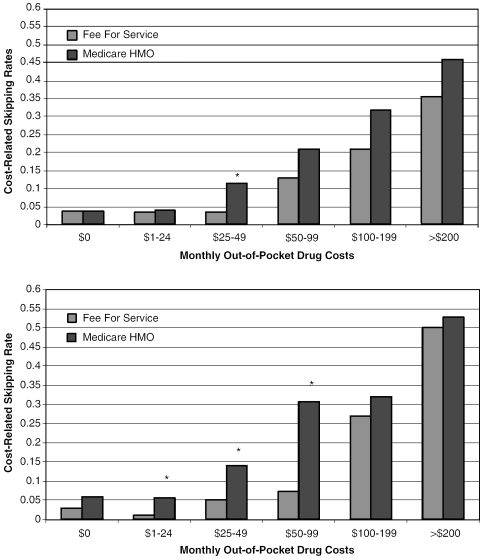
Results: Cost-related skipping rates increased from 9.5% in 1998 to 13.1% in 2000. In separate multivariable models using 1998 and 2000 data, higher out-of-pocket costs, lower physician-patient relationship quality, low income, and lacking prescription drug coverage were associated with more skipping (P<.05 for all). Better physical and mental health, and greater age were associated with less skipping (P<.05). HMO membership was not associated with higher rates of skipping in 1998 (P=.84), but was in 2000 (P<.0004). In longitudinal analyses, increased medication costs and HMO membership were associated with the observed increase cost-related skipping between 1998 and 2000.
Conclusions: Cost-related skipping was associated with several factors, including drug coverage, poverty, poor health, and physician-patient relationship quality. The important role of physician-patient relationships in cost-related skipping has not been shown previously. Physicians should be aware of these risk factors for cost-related skipping, and initiate dialogue about problems paying for prescription medications and other treatments.
Figures
References
-
- Myers LB, Midence K. Concepts and issues in adherence. In: Myers LB, Midence K, editors. Adherence to Treatment in Medical Conditions. Amsterdam: Harwood Academic Publishers; 1998. pp. 1–24.
-
- Shumaker SA, Schron EB, Ockene JK, McBee WL, editors. The Handbook of Health Behavior Change. 2nd ed. New York: Springer Publishing Company, Inc.; 1998.
-
- Haynes RB. Strategies to improve compliance with referrals, appointments, and prescribed medical regimens. In: Haynes RB, Taylor DW, Sackett DL, editors. Compliance in Health Care. Baltimore, Md: The Johns Hopkins University Press; 1979. pp. 121–43.
-
- Poisal JA, Murray L. Growing differences between Medicare beneficiaries with and without drug coverage. Health Aff (Millwood) 2001;20:74–85. - PubMed
-
- Stuart B, Grana J. Ability to pay and the decision to medicate. Med Care. 1998;36:202–11. - PubMed
Publication types
MeSH terms
Grants and funding
LinkOut - more resources
Full Text Sources
Medical