


Ecological approaches to self-management: the case of diabetes
- PMID: 16051929
- PMCID: PMC1449392
- DOI: 10.2105/AJPH.2005.066084
Ecological approaches to self-management: the case of diabetes
Abstract
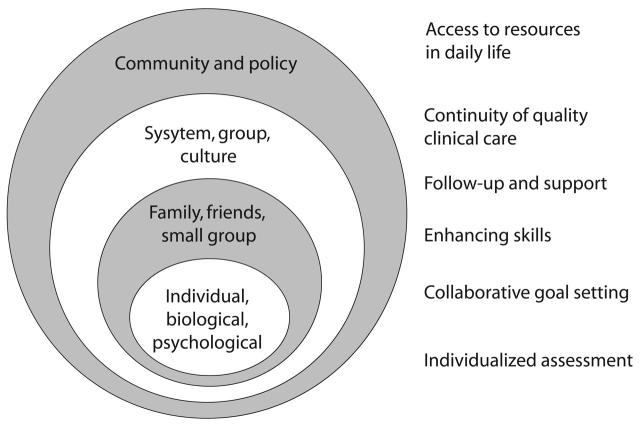
In the Diabetes Initiative of The Robert Wood Johnson Foundation, an ecological perspective helped identify the following key resources and supports for self-management (RSSM): individualized assessment, collaborative goal setting, skills enhancement, follow-up and support, access to resources, and continuity of quality clinical care. These RSSM reflect the grounding of diabetes self-management in the context of social and environmental influences. Research supports the value of each of these key resources and supports. Differences among self-management interventions may be seen as complementary, rather than conflicting, ways of providing RSSM. This way of understanding differences among interventions may aid development of varied programs to reach diverse audiences. In contrast to the "5 A's" model of key provider services (Assess, Advise, Agree, Assist, and Arrange), RSSM articulate self-management from the perspective of individuals' needs. Both approaches emphasize identification of goals, teaching of skills, and facilitation and reinforcement of the use of those skills.
Figures
References
-
- Mahoney MJ, Thoresen CE. Self-Control: Power to the Person. Monterey, Calif: Brooks/Cole; 1974.
-
- Stuart RB. Behavioral control of overeating. Behav Res Ther. 1967;5:357–365.
-
- Lando H. Successful treatment of smokers with a broad-spectrum behavioral approach. J Consult Clin Psychol. 1977;45:361–366. - PubMed
-
- Etzwiler DD. Teaching allied health professionals about self-management. Diabetes Care. 1980;3:121–123. - PubMed
-
- Etzwiler DD. Diabetes management. The importance of patient education and participation. Postgrad Med. 1986;80:67–72. - PubMed
Publication types
MeSH terms
Grants and funding
LinkOut - more resources
Full Text Sources
Medical
