


RPGR is mutated in patients with a complex X linked phenotype combining primary ciliary dyskinesia and retinitis pigmentosa
- PMID: 16055928
- PMCID: PMC2563225
- DOI: 10.1136/jmg.2005.034868
RPGR is mutated in patients with a complex X linked phenotype combining primary ciliary dyskinesia and retinitis pigmentosa
Abstract
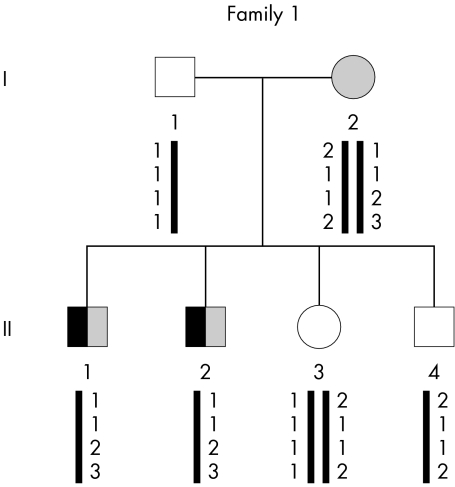
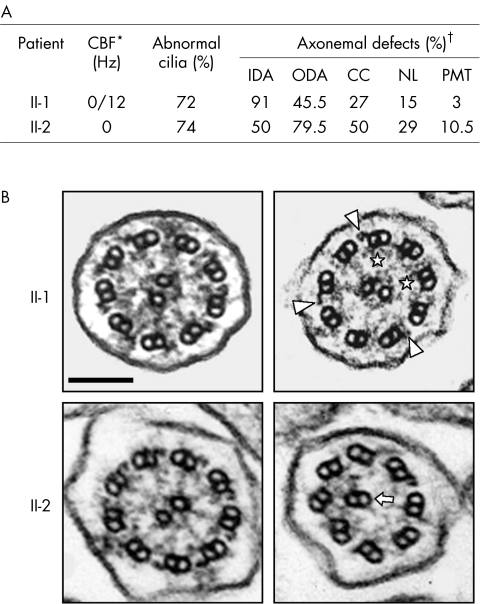
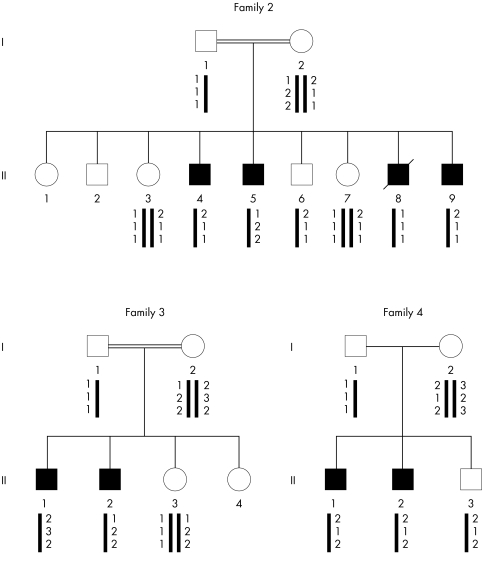
Introduction: Primary ciliary dyskinesia (PCD) is a rare disease classically transmitted as an autosomal recessive trait and characterised by recurrent airway infections due to abnormal ciliary structure and function. To date, only two autosomal genes, DNAI1 and DNAH5 encoding axonemal dynein chains, have been shown to cause PCD with defective outer dynein arms. Here, we investigated one non-consanguineous family in which a woman with retinitis pigmentosa (RP) gave birth to two boys with a complex phenotype combining PCD, discovered in early childhood and characterised by partial dynein arm defects, and RP that occurred secondarily. The family history prompted us to search for an X linked gene that could account for both conditions.
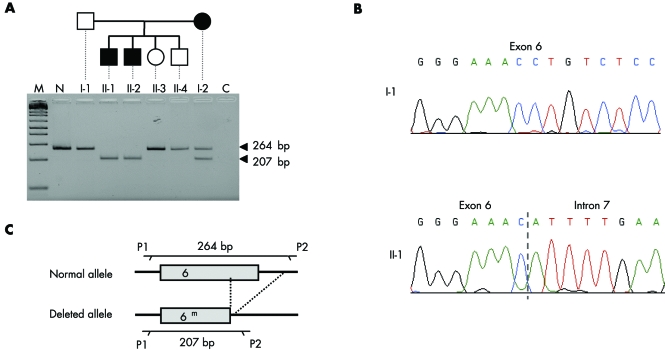
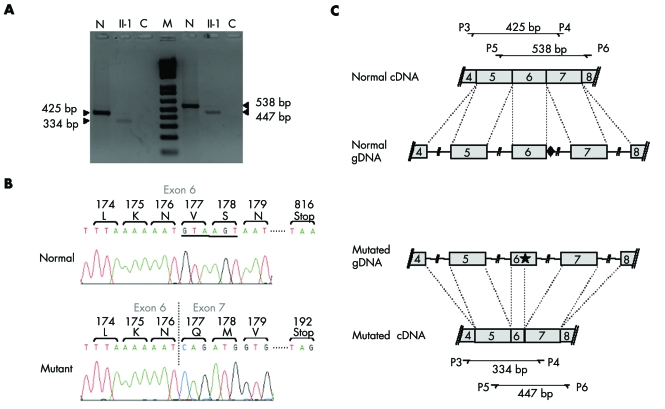
Results: We found perfect segregation of the disease phenotype with RP3 associated markers (Xp21.1). Analysis of the retinitis pigmentosa GTPase regulator gene (RPGR) located at this locus revealed a mutation (631_IVS6+9del) in the two boys and their mother. As shown by study of RPGR transcripts expressed in nasal epithelial cells, this intragenic deletion, which leads to activation of a cryptic donor splice site, predicts a severely truncated protein.
Conclusion: These data provide the first clear demonstration of X linked transmission of PCD. This unusual mode of inheritance of PCD in patients with particular phenotypic features (that is, partial dynein arm defects and association with RP), which should modify the current management of families affected by PCD or RP, unveils the importance of RPGR in the proper development of both respiratory ciliary structures and connecting cilia of photoreceptors.
Conflict of interest statement
Competing interests: none declared
References
-
- Krawczynski M R, Dmenska H, Witt M. Apparent X‐linked primary ciliary dyskinesia associated with retinitis pigmentosa and a hearing loss. J Appl Genet 200445(1)107–110. - PubMed
-
- Afzelius B A. A human syndrome caused by immotile cilia. Science 1976193(4250)317–319. - PubMed
-
- Rossman C M, Forrest J B, Lee R M, Newhouse M T. The dyskinetic cilia syndrome. Ciliary motility in immotile cilia syndrome. Chest 198078(4)580–582. - PubMed
-
- Afzelius B A. The immotile‐cilia syndrome: a microtubule‐associated defect. CRC Crit Rev Biochem 198519(1)63–87. - PubMed
Publication types
MeSH terms
Substances
LinkOut - more resources
Full Text Sources
Medical
Research Materials
