


Insulin infusion in acute illness
- PMID: 16075050
- PMCID: PMC1180564
- DOI: 10.1172/JCI26045
Insulin infusion in acute illness
Abstract
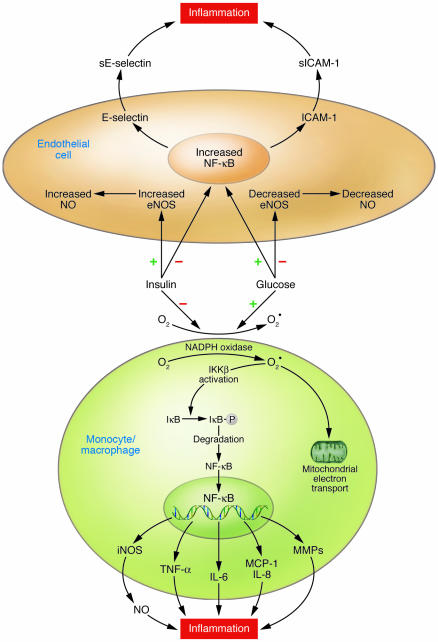
The discovery of the antiinflammatory effect of insulin and the proinflammatory effect of glucose has not only provided novel insight into the mechanisms underlying several disease states but has also provided a rationale for the treatment of hyperglycemia in several acute clinical conditions. Van den Berghe et al. previously showed the benefits of intensive glycemic control with insulin in patients admitted to intensive care units. In this issue of the JCI, the same group of investigators now demonstrates that infusion of insulin to restore euglycemia in these patients results in a marked reduction in inflammatory indices such as adhesion molecules, hepatic iNOS, and plasma NO metabolites. The reduction in the mediators of inflammation may thus be responsible for the impressive improvement in clinical outcomes following insulin therapy, and the results suggest a new paradigm in which glucose and insulin are related not only through their metabolic actions but also through their opposite effects on inflammatory mechanisms.
Figures
Comment on
-
Intensive insulin therapy protects the endothelium of critically ill patients.J Clin Invest. 2005 Aug;115(8):2277-86. doi: 10.1172/JCI25385. J Clin Invest. 2005. PMID: 16075063 Free PMC article. Clinical Trial.
References
-
- Mohanty P, et al. Glucose challenge stimulates reactive oxygen species (ROS) generation by leucocytes. J. Clin. Endocrinol. Metab. 2000;85:2970–2973. - PubMed
-
- Tripathy D, et al. Elevation of free fatty acids induces inflammation and impairs vascular reactivity in healthy subjects. Diabetes. 2003;52:2882–2887. - PubMed
-
- Dhindsa S, et al. Differential effects of glucose and alcohol on reactive oxygen species generation and intranuclear nuclear factor-kappaB in mononuclear cells. Metabolism. 2004;53:330–334. - PubMed
-
- Dandona P, et al. Insulin inhibits intranuclear nuclear factor kappaB and stimulates IkappaB in mononuclear cells in obese subjects: evidence for an anti-inflammatory effect? J. Clin. Endocrinol. Metab. 2001;86:3257–3265. - PubMed
-
- Aljada A, Ghanim H, Mohanty P, Kapur N, Dandona P. Insulin inhibits the pro-inflammatory transcription factor early growth response gene-1 (Egr)-1 expression in mononuclear cells (MNC) and reduces plasma tissue factor (TF) and plasminogen activator inhibitor-1 (PAI-1) concentrations. J. Clin. Endocrinol. Metab. 2002;87:1419–1422. - PubMed
