


Comparison of the in vitro estrogenic activities of compounds from hops (Humulus lupulus) and red clover (Trifolium pratense)
- PMID: 16076101
- PMCID: PMC1815392
- DOI: 10.1021/jf050448p
Comparison of the in vitro estrogenic activities of compounds from hops (Humulus lupulus) and red clover (Trifolium pratense)
Abstract
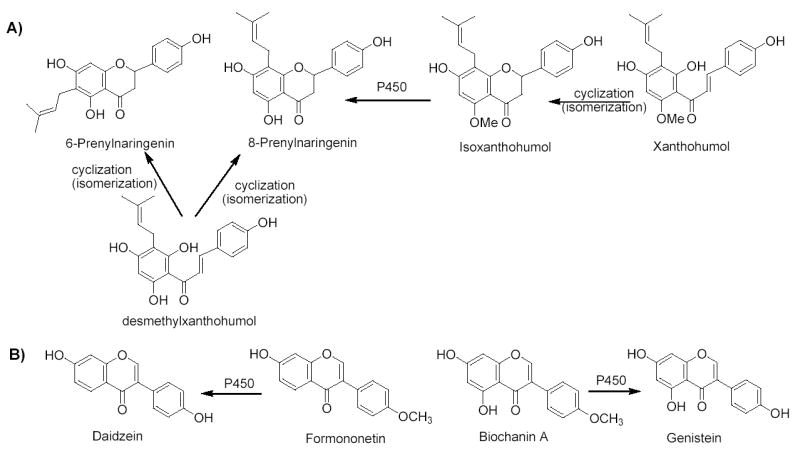
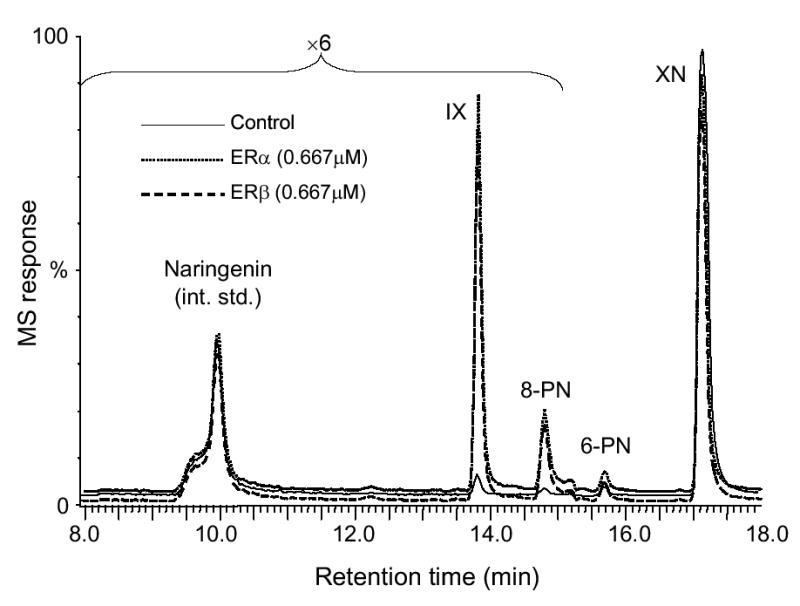
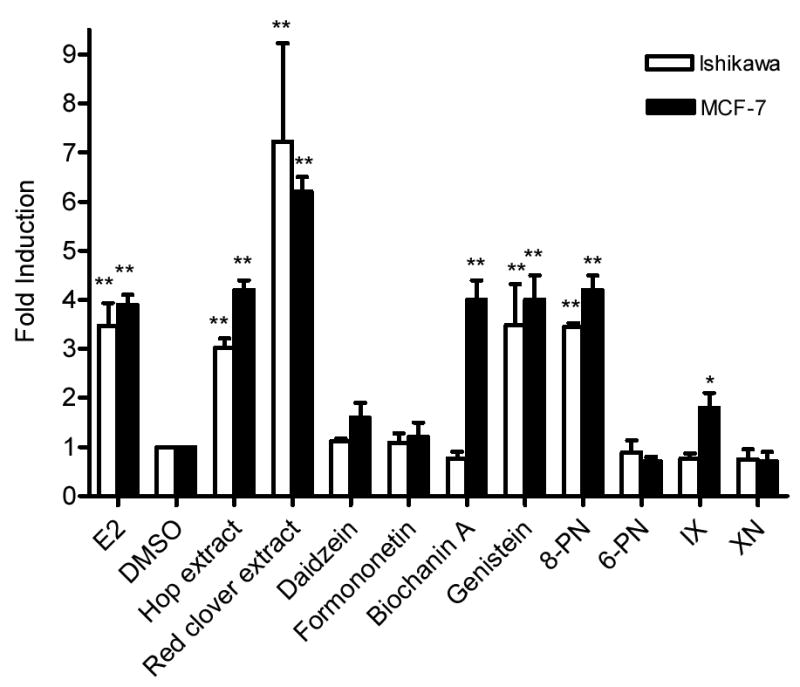
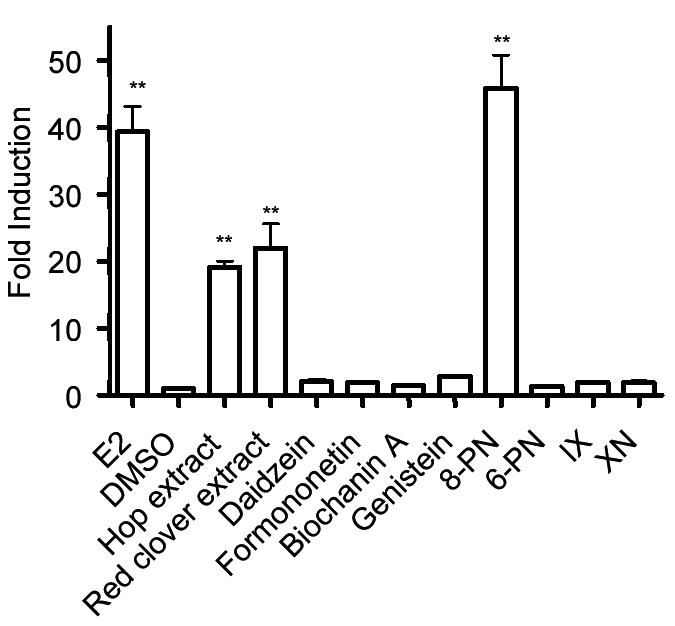
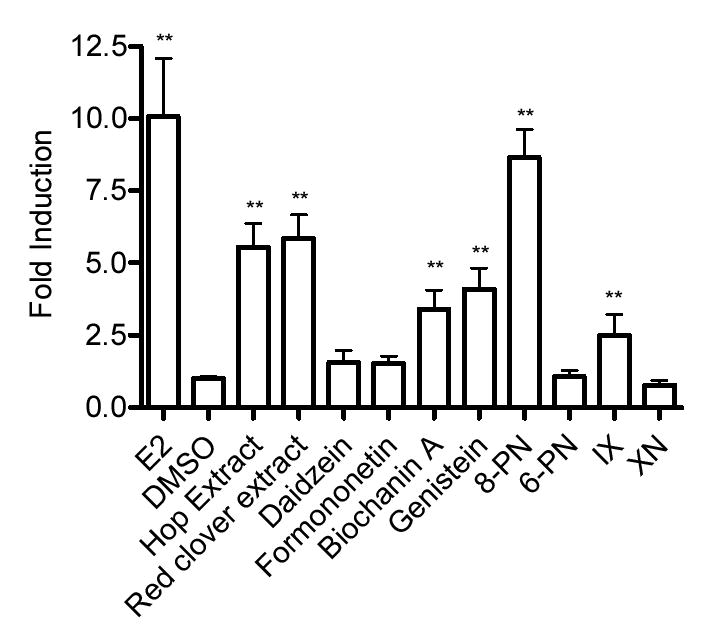
Because the prevailing form of hormone replacement therapy is associated with the development of cancer in breast and endometrial tissues, alternatives are needed for the management of menopausal symptoms. Formulations of Trifolium pratense L. (red clover) are being used to alleviate menopause-associated hot flashes but have shown mixed results in clinical trials. The strobiles of Humulus lupulusL. (hops) have been reported to contain the prenylflavanone, 8-prenylnaringenin (8-PN), as the most estrogenic constituent, and this was confirmed using an estrogen receptor ligand screening assay utilizing ultrafiltration mass spectrometry. Extracts of hops and red clover and their individual constituents including 8-PN, 6-prenylnaringenin (6-PN), isoxanthohumol (IX), and xanthohumol (XN) from hops and daidzein, formononetin, biochanin A, and genistein from red clover were compared using a variety of in vitro estrogenic assays. The IC50 values for the estrogen receptor alpha and beta binding assays were 15 and 27 microg/mL, respectively, for hops and 18.0 and 2.0 microg/mL, respectively, for the red clover extract. Both of the extracts, genistein, and 8-PN activated the estrogen response element (ERE) in Ishikawa cells while the extracts, biochanin A, genistein, and 8-PN, significantly induced ERE-luciferase expression in MCF-7 cells. Hop and red clover extracts as well as 8-PN up-regulated progesterone receptor (PR) mRNA in the Ishikawa cell line. In the MCF-7 cell line, PR mRNA was significantly up-regulated by the extracts, biochanin A, genistein, 8-PN, and IX. The two extracts had EC50 values of 1.1 and 1.9 microg/mL, respectively, in the alkaline phosphatase induction assay. On the basis of these data, hops and red clover could be attractive for the development as herbal dietary supplements to alleviate menopause-associated symptoms.
Figures
References
-
- Shaver JL, Giblin E, Paulsen V. Sleep quality subtypes in midlife women. Sleep. 1991;14:18–23. - PubMed
-
- Barlow DH. Who understands the menopause? Br J Obstet Gynaecol. 1997;104:879–880. - PubMed
-
- Kronenberg F. Hot flashes: phenomenology, quality of life, and search for treatment options. Exp Gerontol. 1994;29:319–336. - PubMed
-
- Genazzani AR, Gambacciani M. HRT in the third millennium. Maturitas. 2001;38 Suppl 1:S49–55. - PubMed
-
- Murkies AL, Wilcox G, Davis SR. Clinical review 92: Phytoestrogens. Clin Endocrinol Metab. 1998;83:297–303. - PubMed
Publication types
MeSH terms
Substances
Grants and funding
LinkOut - more resources
Full Text Sources
Other Literature Sources
Research Materials
