


Absence of behavioral abnormalities and neurodegeneration in vivo despite widespread neuronal huntingtin inclusions
- PMID: 16076956
- PMCID: PMC1183566
- DOI: 10.1073/pnas.0503634102
Absence of behavioral abnormalities and neurodegeneration in vivo despite widespread neuronal huntingtin inclusions
Abstract
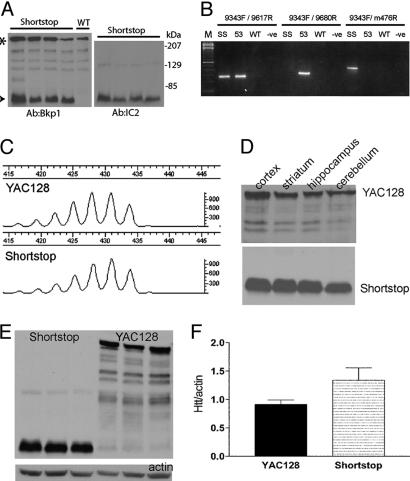
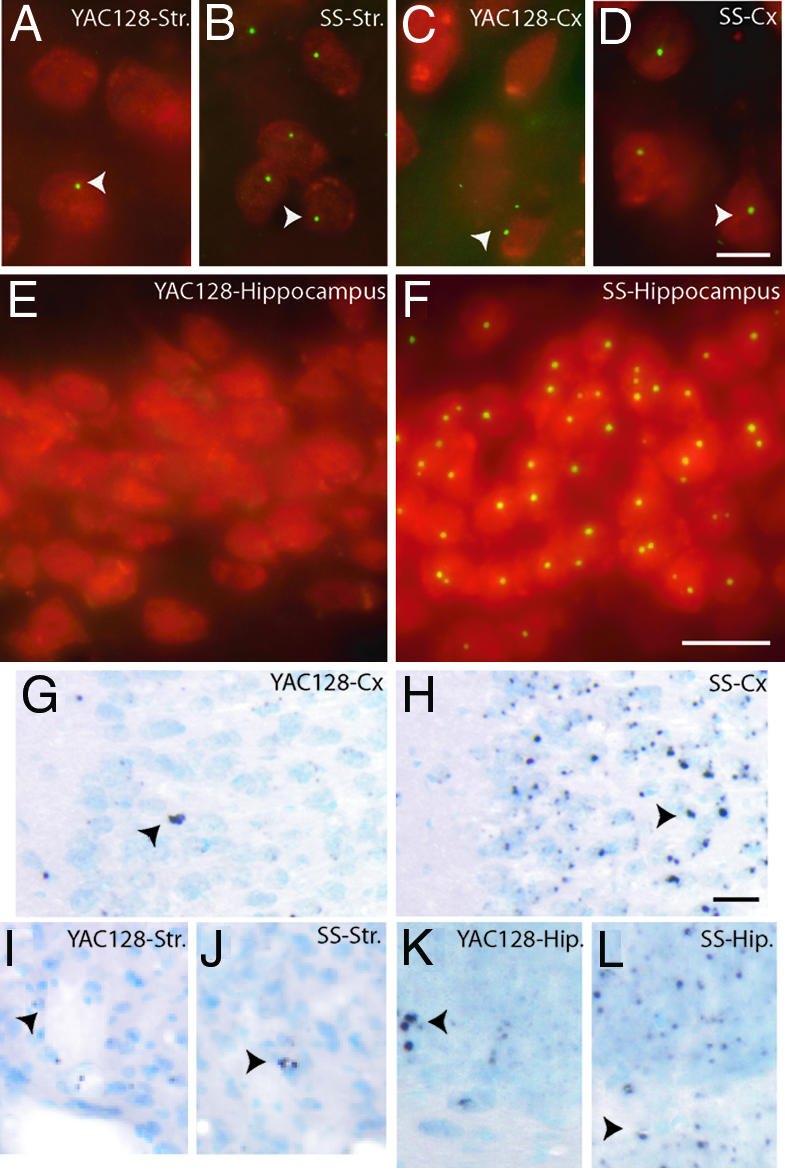
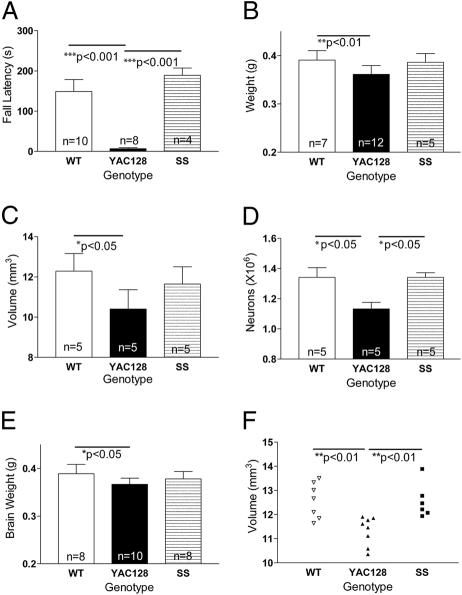
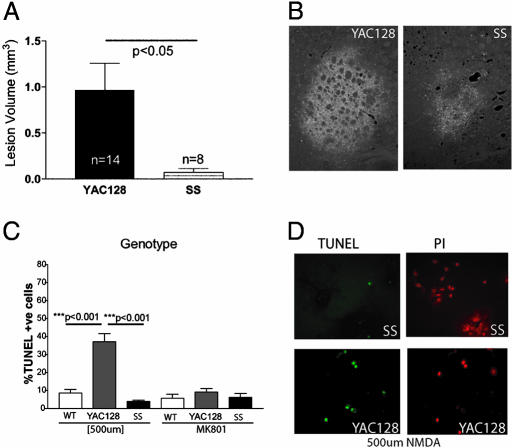
We have serendipitously established a mouse that expresses an N-terminal human huntingtin (htt) fragment with an expanded polyglutamine repeat (approximately 120) under the control of the endogenous human promoter (shortstop). Frequent and widespread htt inclusions occur early in shortstop mice. Despite these inclusions, shortstop mice display no clinical evidence of neuronal dysfunction and no neuronal degeneration as determined by brain weight, striatal volume, and striatal neuronal count. These results indicate that htt inclusions are not pathogenic in vivo. In contrast, the full-length yeast artificial chromosome (YAC) 128 model with the identical polyglutamine length and same level of transgenic protein expression as the shortstop demonstrates significant neuronal dysfunction and loss. In contrast to the YAC128 mouse, which demonstrates enhanced susceptibility to excitotoxic death, the shortstop mouse is protected from excitotoxicity, providing in vivo evidence suggesting that neurodegeneration in Huntington disease is mediated by excitotoxic mechanisms.
Figures
References
-
- Davies, S. W., Turmaine, M., Cozens, B. A., DiFiglia, M., Sharp, A. H., Ross, C. A., Scherzinger, E., Wanker, E. E., Mangiarini, L. & Bates, G. P. (1997) Cell 90, 537-548. - PubMed
-
- Slow, E. J., van Raamsdonk, J., Rogers, D., Coleman, S. H., Graham, R. K., Deng, Y., Oh, R., Bissada, N., Hossain, S. M., Yang, Y. Z., et al. (2003) Hum. Mol. Genet. 12, 1555-1567. - PubMed
-
- Arrasate, M., Mitra, S., Schweitzer, E. S., Segal, M. R. & Finkbeiner, S. (2004) Nature 431, 805-810. - PubMed
Publication types
MeSH terms
Substances
LinkOut - more resources
Full Text Sources
Medical
Molecular Biology Databases
