


COPASAAR--a database for proteomic analysis of single amino acid repeats
- PMID: 16078990
- PMCID: PMC1199582
- DOI: 10.1186/1471-2105-6-196
COPASAAR--a database for proteomic analysis of single amino acid repeats
Abstract
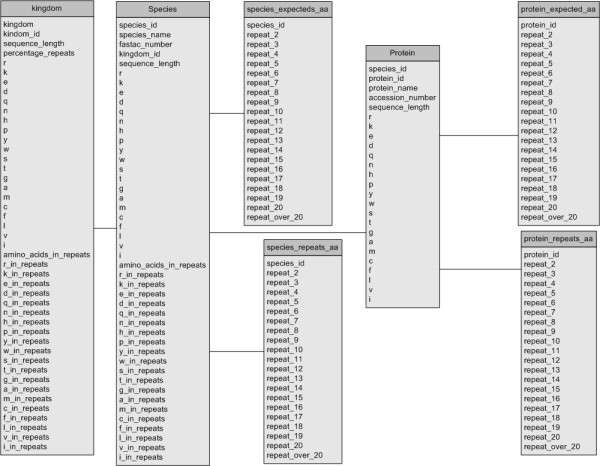
Background: Single amino acid repeats make up a significant proportion in all of the proteomes that have currently been determined. They have been shown to be functionally and medically significant, and are associated with cancers and neuro-degenerative diseases such as Huntington's Chorea, where a poly-glutamine repeat is responsible for causing the disease. The COPASAAR database is a new tool to facilitate the rapid analysis of single amino acid repeats at a proteome level. The database aims to simplify the comparison of repeat distributions between proteomes in order to provide a better understanding of their function and evolution.
Results: A comparative analysis of all proteomes in the database (currently 244) shows that single amino acid repeats account for about 12-14% of the proteome of any given species. They are more common in eukaryotes (14%) than in either archaea or bacteria (both 13%). Individual analyses of proteomes show that long single amino acid repeats (6+ residues) are much more common in the Eukaryotes and that longer repeats are usually made up of hydrophilic amino acids such as glutamine, glutamic acid, asparagine, aspartic acid and serine.
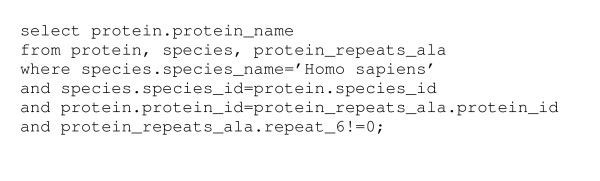
Conclusion: COPASAAR is a useful tool for comparative proteomics that provides rapid access to amino acid repeat data that can be readily data-mined. The COPASAAR database can be queried at the kingdom, proteome or individual protein level. As the amount of available proteome data increases this will be increasingly important in order to automate proteome comparison. The insights gained from these studies will give a better insight into the evolution of protein sequence and function.
Figures
References
-
- Kruglyak S, Durrett R, Schug MD, Aquadro CF. Distribution and abundance of microsatellites in the yeast genome can be explained by a balance between slippage events and point mutations. Mol Biol Evol. 2000;17:1210–1219. - PubMed
-
- Alba MM, Santibanez-Koref MF, Hancock JM. Conservation of polyglutamine tract size between mice and humans depends on codon interruption. Mol Biol Evol. 1999;16:1641–1644. - PubMed
Publication types
MeSH terms
Substances
LinkOut - more resources
Full Text Sources
Research Materials
