


Genetic interactions between polymorphisms that affect gene expression in yeast
- PMID: 16079846
- PMCID: PMC1409747
- DOI: 10.1038/nature03865
Genetic interactions between polymorphisms that affect gene expression in yeast
Abstract
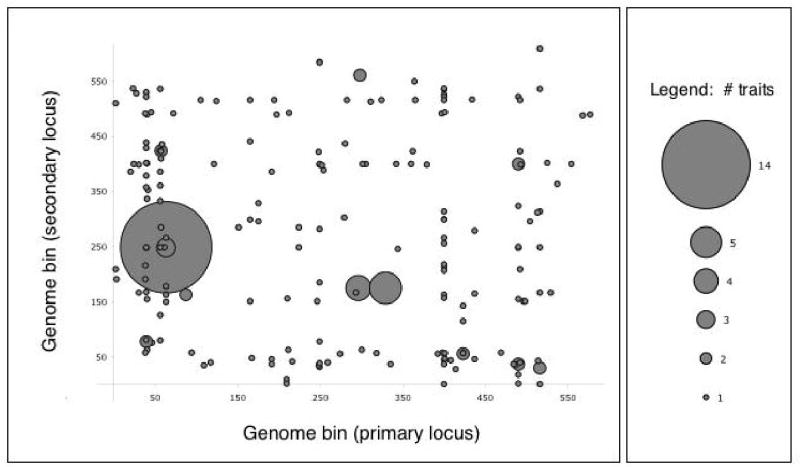
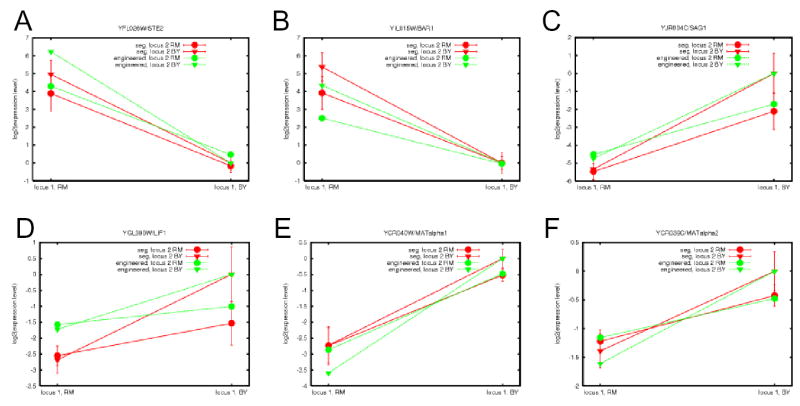
Interactions between polymorphisms at different quantitative trait loci (QTLs) are thought to contribute to the genetics of many traits, and can markedly affect the power of genetic studies to detect QTLs. Interacting loci have been identified in many organisms. However, the prevalence of interactions, and the nucleotide changes underlying them, are largely unknown. Here we search for naturally occurring genetic interactions in a large set of quantitative phenotypes--the levels of all transcripts in a cross between two strains of Saccharomyces cerevisiae. For each transcript, we searched for secondary loci interacting with primary QTLs detected by their individual effects. Such locus pairs were estimated to be involved in the inheritance of 57% of transcripts; statistically significant pairs were identified for 225 transcripts. Among these, 67% of secondary loci had individual effects too small to be significant in a genome-wide scan. Engineered polymorphisms in isogenic strains confirmed an interaction between the mating-type locus MAT and the pheromone response gene GPA1. Our results indicate that genetic interactions are widespread in the genetics of transcript levels, and that many QTLs will be missed by single-locus tests but can be detected by two-stage tests that allow for interactions.
Figures
References
-
- Carlborg O, Haley CS. Epistasis: too often neglected in complex trait studies? Nat Rev Genet. 2004;5:618–25. - PubMed
-
- Leamy LJ, Workman MS, Routman EJ, Cheverud JM. An epistatic genetic basis for fluctuating asymmetry of tooth size and shape in mice. Heredity. 2005;94:316–25. - PubMed
-
- Lynch, M. & Walsh, B. Genetics and analysis of quantitative traits (Sinauer Associates, Inc., Sunderland, MA, 1998).
Publication types
MeSH terms
Substances
Grants and funding
LinkOut - more resources
Full Text Sources
Other Literature Sources
Molecular Biology Databases
