


Ability of the vector tick Boophilus microplus to acquire and transmit Babesia equi following feeding on chronically infected horses with low-level parasitemia
- PMID: 16081906
- PMCID: PMC1233951
- DOI: 10.1128/JCM.43.8.3755-3759.2005
Ability of the vector tick Boophilus microplus to acquire and transmit Babesia equi following feeding on chronically infected horses with low-level parasitemia
Abstract
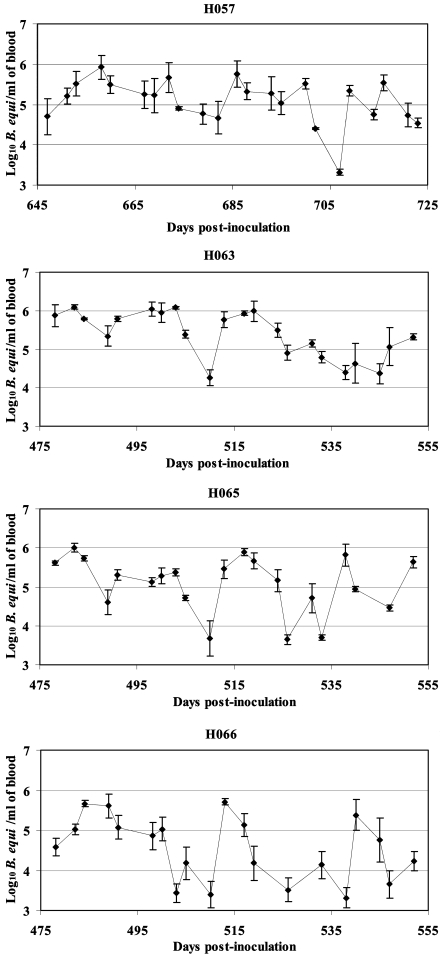
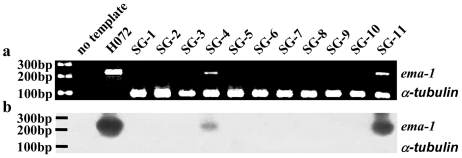
The protozoan parasite Babesia equi replicates within erythrocytes. During the acute phase of infection, B. equi can reach high levels of parasitemia, resulting in a hemolytic crisis. Horses that recover from the acute phase of the disease remain chronically infected. Subsequent transmission is dependent upon the ability of vector ticks to acquire B. equi and, following development and replication, establishment of B. equi in the salivary glands. Although restriction of the movement of chronically infected horses with B. equi is based on the presumption that ticks can acquire and transmit the parasite at low levels of long-term infection, parasitemia levels during the chronic phase of infection have never been quantified, nor has transmission been demonstrated. To address these epidemiologically significant questions, we established long-term B. equi infections (>1 year), measured parasitemia levels over time, and tested whether nymphal Boophilus microplus ticks could acquire and, after molting to the adult stage, transmit B. equi to naive horses. B. equi levels during the chronic phase of infection ranged from 10(3.3) to 10(6.0)/ml of blood, with fluctuation over time within individual horses. B. microplus ticks fed on chronically infected horses with mean parasite levels of 10(5.5) +/- 10(0.48)/ml of blood acquired B. equi, with detection of B. equi in the salivary glands of 7 to 50% of fed ticks, a range encompassing the percentage of positive ticks that had been identically fed on a horse in the acute phase of infection with high parasitemia levels. Ticks that acquired B. equi from chronically infected horses, as well as those fed during the acute phase of infection, successfully transmitted the parasite to naive horses. The results unequivocally demonstrated that chronically infected horses with low-level parasitemia are competent mammalian reservoirs for tick transmission of B. equi.
Figures

References
-
- Allred, D. R., and B. Al-Khedery. 2004. Antigenic variation and cytoadhesion in Babesia bovis and Plasmodium falciparum: different logics achieve the same goal. Mol. Biochem. Parasitol. 134:27-35. - PubMed
-
- Crampton, A. L., C. Miller, G. D. Baxter, and S. C. Barker. 1998. Expressed sequenced tags and new genes from the cattle tick, Boophilus microplus. Exp. Appl. Acarol. 22:177-186. - PubMed
Publication types
MeSH terms
LinkOut - more resources
Full Text Sources
