


Role of MKK3 and p38 MAPK in cytokine-induced death of insulin-producing cells
- PMID: 16097952
- PMCID: PMC1383671
- DOI: 10.1042/BJ20050814
Role of MKK3 and p38 MAPK in cytokine-induced death of insulin-producing cells
Abstract
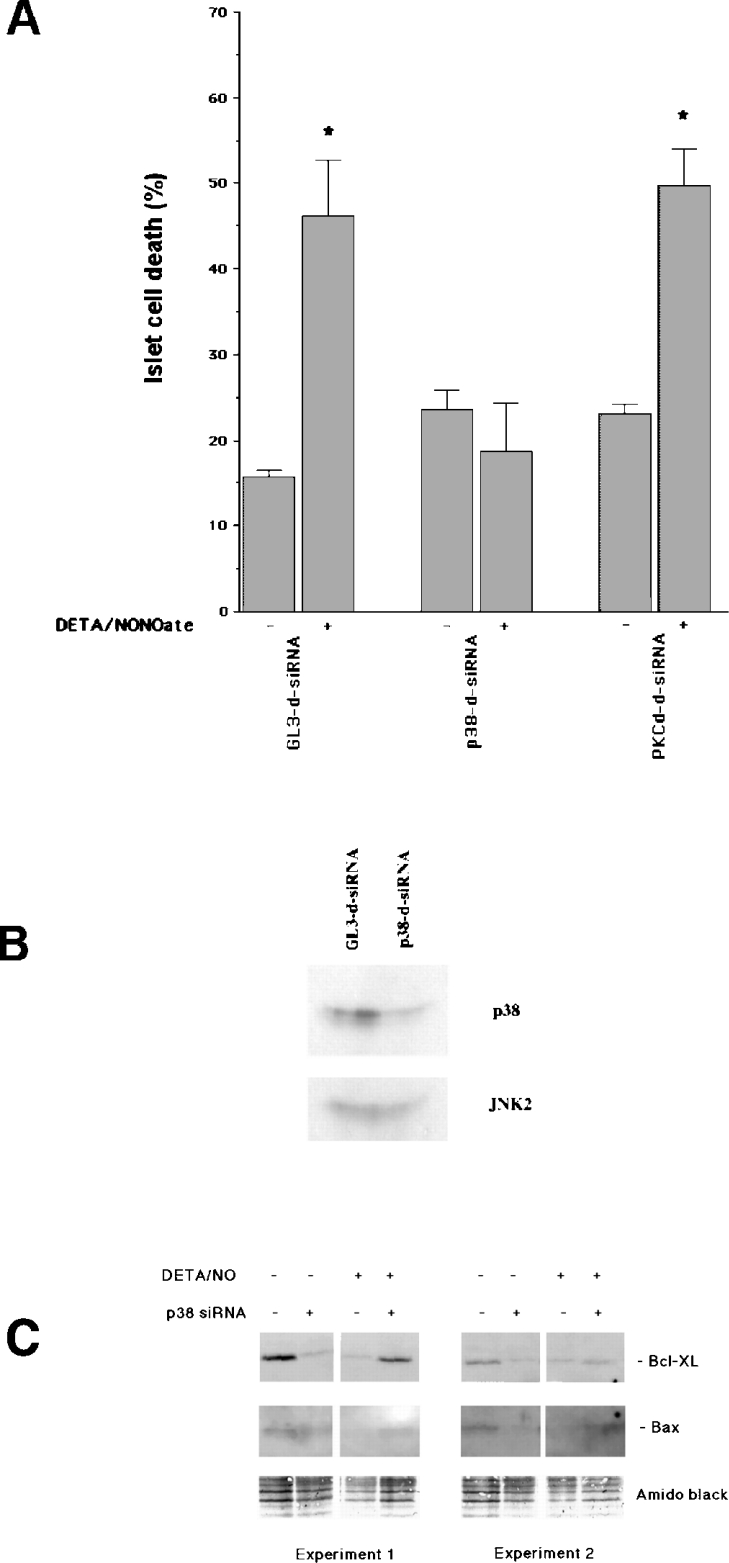
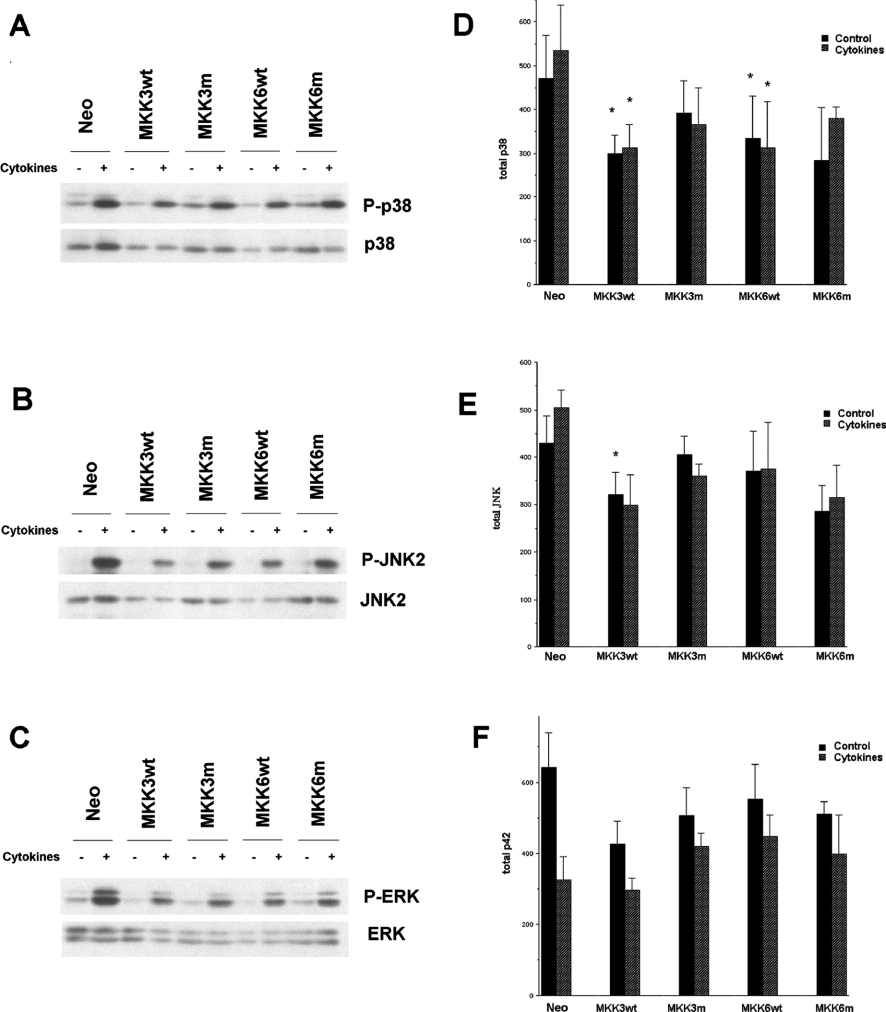
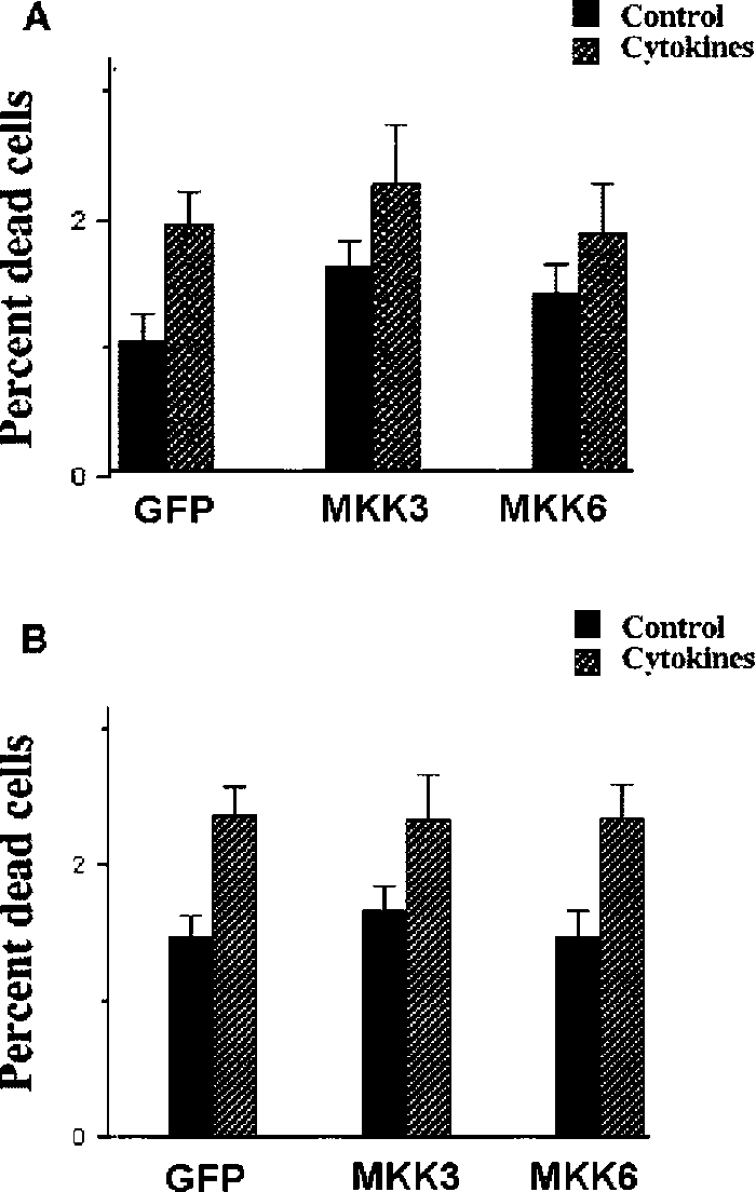
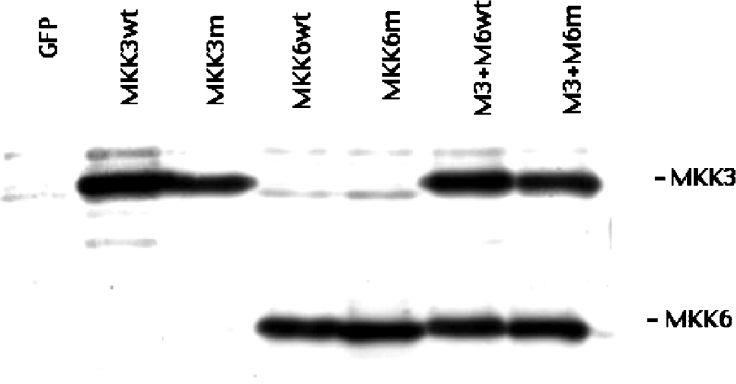
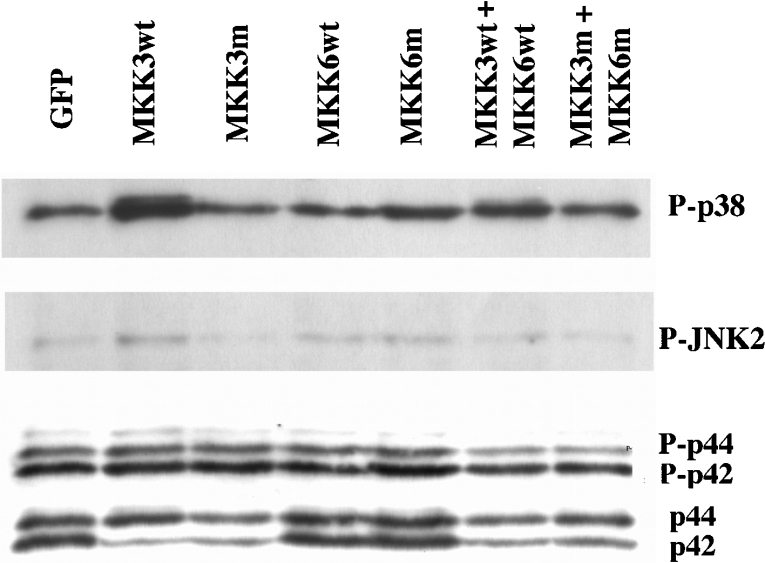
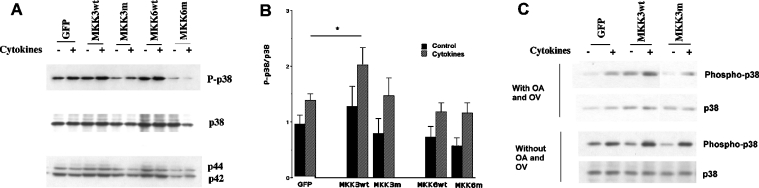
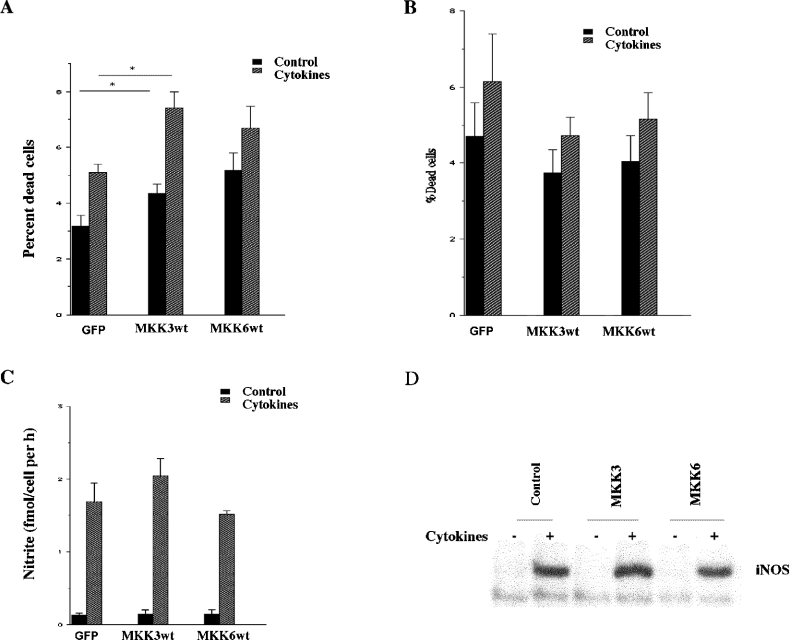
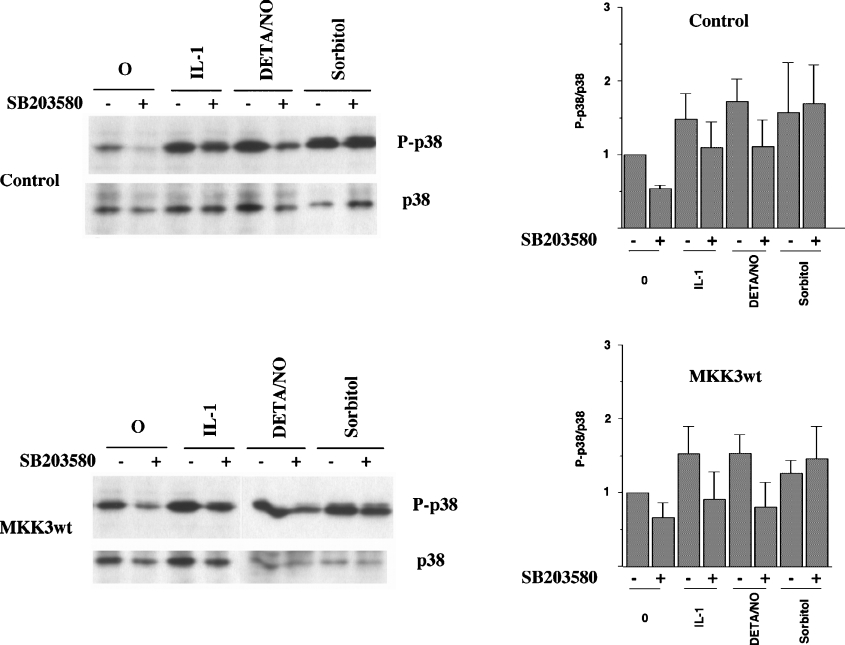
The aim of the present investigation was to elucidate further the importance of p38 MAPK (mitogen-activated protein kinase) in nitric oxide- and cytokine-induced beta-cell death. For this purpose, isolated human islets were treated with d-siRNA (diced small interfering RNA) and then exposed to the nitric oxide donor DETA/NONOate [2,2'-(hydroxynitrosohydrazono)bis-ethanamine]. We observed that cells treated with p38alpha-specific d-siRNA, but not with d-siRNA targeting GL3 (a firefly luciferase siRNA plasmid) or PKCdelta (protein kinase Cdelta), were protected against nitric oxide-induced death. This was paralleled by an increased level of Bcl-XL (B-cell leukaemia/lymphoma-X long). For an in-depth study of the mechanisms of p38 activation, MKK3 (MAPK kinase 3), MKK6 and their dominant-negative mutants were overexpressed in insulin-producing RIN-5AH cells. In transient transfections, MKK3 overexpression resulted in increased p38 phosphorylation, whereas in stable MKK3-overexpressing RIN-5AH clones, the protein levels of p38 and JNK (c-Jun N-terminal kinase) were decreased, resulting in unaffected phospho-p38 levels. In addition, a long-term MKK3 overexpression did not affect cell death rates in response to the cytokines interleukin-1beta and interferon-gamma, whereas a short-term MKK3 expression resulted in increased cytokine-induced RIN-5AH cell death. The MKK3-potentiating effect on cytokine-induced cell death was abolished by a nitric oxide synthase inhibitor, and MKK3-stimulated p38 phosphorylation was enhanced by inhibitors of phosphatases. Finally, as the dominant-negative mutant of MKK3 did not affect cytokine-induced p38 phosphorylation, and as wild-type MKK3 did not influence p38 autophosphorylation, it may be that p38 is activated by MKK3/6-independent pathways in response to cytokines and nitric oxide. In addition, it is likely that a long-term increase in p38 activity is counteracted by both a decreased expression of the p38, JNK and p42 genes as well as an increased dephosphorylation of p38.
Figures
References
-
- Bendtzen K., Mandrup-Poulsen T., Nerup J., Nielsen J. H., Dinarello C. A., Svenson M. Cytotoxicity of human pI 7 interleukin-1 for pancreatic islets of Langerhans. Science. 1986;232:1545–1547. - PubMed
-
- Eizirik D. L., Mandrup-Poulsen T. A choice of death – the signal-transduction of immune-mediated beta-cell apoptosis. Diabetologia. 2001;44:2115–2133. - PubMed
-
- Welsh N., Eizirik D. L., Bendtzen K., Sandler S. Interleukin-1 beta-induced nitric oxide production in isolated rat pancreatic islets requires gene transcription and may lead to inhibition of the Krebs cycle enzyme aconitase. Endocrinology. 1991;129:3167–3173. - PubMed
-
- Barbu A., Welsh N., Saldeen J. Cytokine-induced apoptosis and necrosis are preceded by disruption of the mitochondrial membrane potential (Deltapsi(m)) in pancreatic RINm5F cells: prevention by Bcl-2. Mol. Cell. Endocrinol. 2002;190:75–82. - PubMed
Publication types
MeSH terms
Substances
LinkOut - more resources
Full Text Sources
Medical
Research Materials
Miscellaneous
