


Hepatitis A virus suppresses RIG-I-mediated IRF-3 activation to block induction of beta interferon
- PMID: 16103148
- PMCID: PMC1193608
- DOI: 10.1128/JVI.79.17.10968-10977.2005
Hepatitis A virus suppresses RIG-I-mediated IRF-3 activation to block induction of beta interferon
Abstract
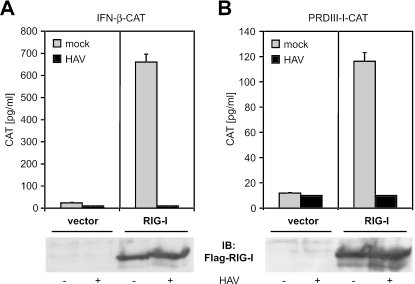
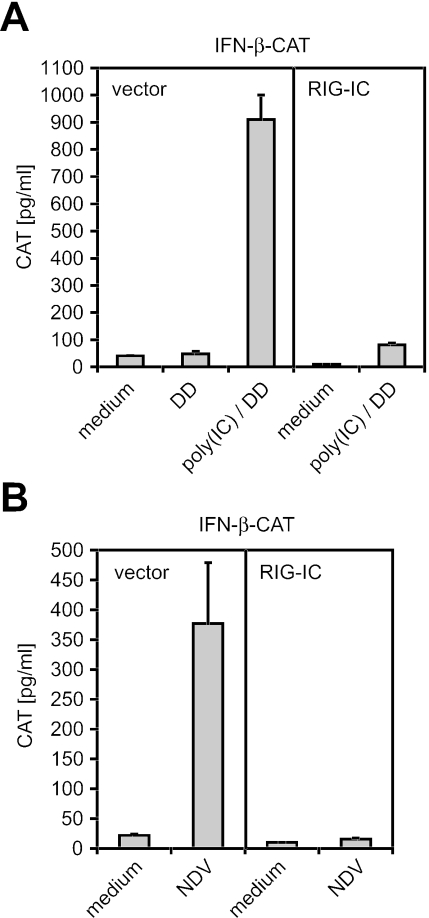
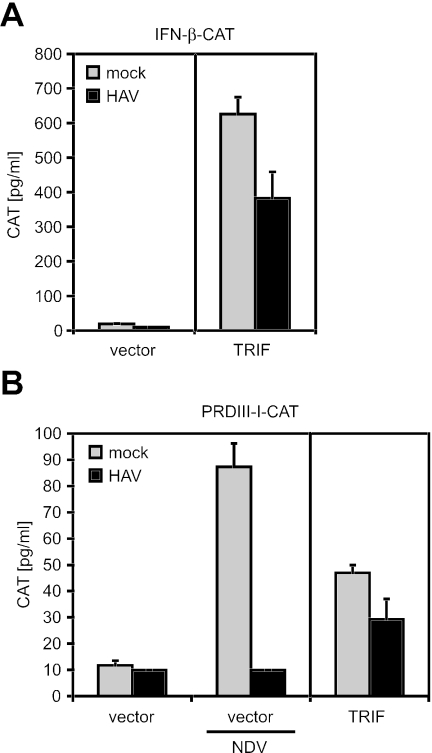
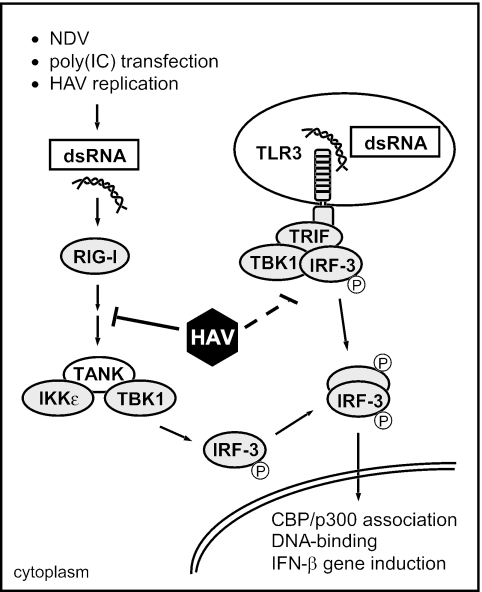
Hepatitis A virus (HAV) antagonizes the innate immune response by inhibition of double-stranded RNA (dsRNA)-induced beta interferon (IFN-beta) gene expression. In this report, we show that this is due to an interaction of HAV with the intracellular dsRNA-induced retinoic acid-inducible gene I (RIG-I)-mediated signaling pathway upstream of the kinases responsible for interferon regulatory factor 3 (IRF-3) phosphorylation (TBK1 and IKKepsilon). In consequence, IRF-3 is not activated for nuclear translocation and gene induction. In addition, we found that HAV reduces TRIF (TIR domain-containing adaptor inducing IFN-beta)-mediated IRF-3 activation, which is part of the Toll-like receptor 3 signaling pathway. As IRF-3 is necessary for IFN-beta transcription, inhibition of this factor results in efficient suppression of IFN-beta synthesis. This ability of HAV seems to be of considerable importance for HAV replication, as HAV is not resistant to IFN-beta, and it may allow the virus to establish infection and preserve the sites of virus production in later stages of the infection.
Figures
References
-
- Akira, S., and K. Takeda. 2004. Toll-like receptor signalling. Nat. Rev. Immunol. 4:499-511. - PubMed
-
- Alexopoulou, L., A. C. Holt, R. Medzhitov, and R. A. Flavell. 2001. Recognition of double-stranded RNA and activation of NF-κB by toll-like receptor 3. Nature 413:732-738. - PubMed
-
- Balachandran, S., E. Thomas, and G. N. Barber. 2004. A FADD-dependent innate immune mechanism in mammalian cells. Nature 432:401-405. - PubMed
Publication types
MeSH terms
Substances
LinkOut - more resources
Full Text Sources
Medical
Research Materials
Miscellaneous
