


Cell-specific deletion of glucosylceramide synthase in brain leads to severe neural defects after birth
- PMID: 16109770
- PMCID: PMC1194904
- DOI: 10.1073/pnas.0500893102
Cell-specific deletion of glucosylceramide synthase in brain leads to severe neural defects after birth
Abstract
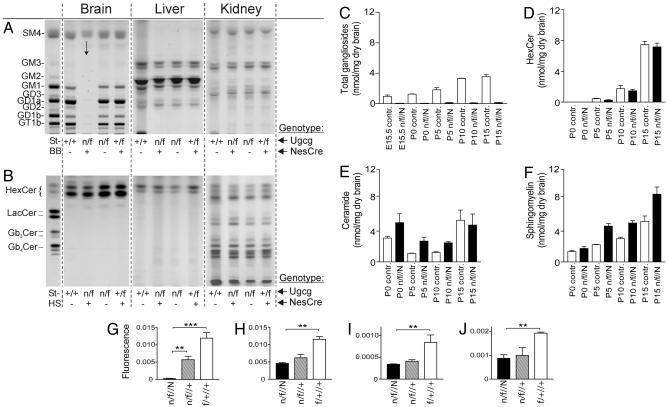
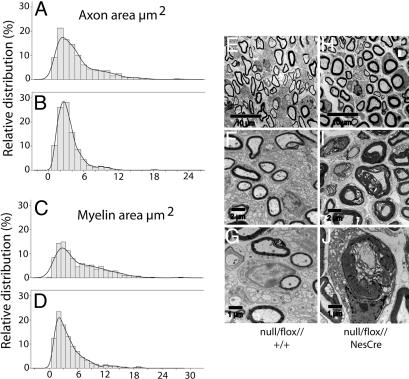
Sialic acid-containing glycosphingolipids, i.e., gangliosides, constitute a major component of neuronal cells and are thought to be essential for brain function. UDP-glucose:ceramide glucosyltransferase (Ugcg) catalyzes the initial step of glycosphingolipid (GSL) biosynthesis. To gain insight into the role of GSLs in brain development and function, a cell-specific disruption of Ugcg was performed as indicated by the absence of virtually all glucosylceramide-based GSLs. Shortly after birth, mice showed dysfunction of cerebellum and peripheral nerves, associated with structural defects. Axon branching of Purkinje cells was significantly reduced. In primary cultures of neurons, dendritic complexity was clearly diminished, and pruning occurred early. Myelin sheaths of peripheral nerves were broadened and focally severely disorganized. GSL deficiency also led to a down-regulation of gene expression sets involved in brain development and homeostasis. Mice died approximately 3 weeks after birth. These results imply that GSLs are essential for brain maturation.
Figures




References
-
- IUPAC–IUB Joint Commission on Biochemical Nomenclature of Glycolipids (1999) J. Mol. Biol. 286, 963–970. - PubMed
-
- Hakomori, S. (1990) J. Biol. Chem. 265, 18713–18716. - PubMed
-
- Nagai, Y. & Tsuji, S. (1994) Prog. Brain Res. 101, 119–126. - PubMed
-
- Hidari, K., Ichikawa, S., Fujita, T., Sakiyama, H. & Hirabayashi, Y. (1996) J. Biol. Chem. 271, 14636–14641. - PubMed
Publication types
MeSH terms
Substances
LinkOut - more resources
Full Text Sources
Other Literature Sources
Molecular Biology Databases
