


Dermal wound healing is subject to redox control
- PMID: 16126008
- PMCID: PMC1389791
- DOI: 10.1016/j.ymthe.2005.07.684
Dermal wound healing is subject to redox control
Abstract
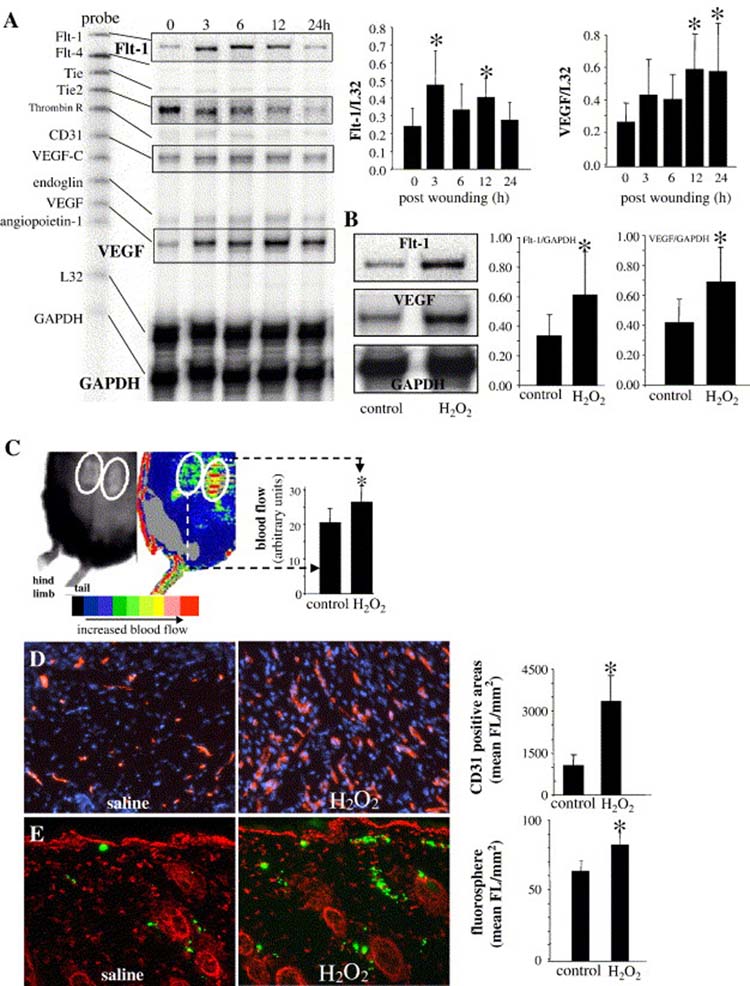
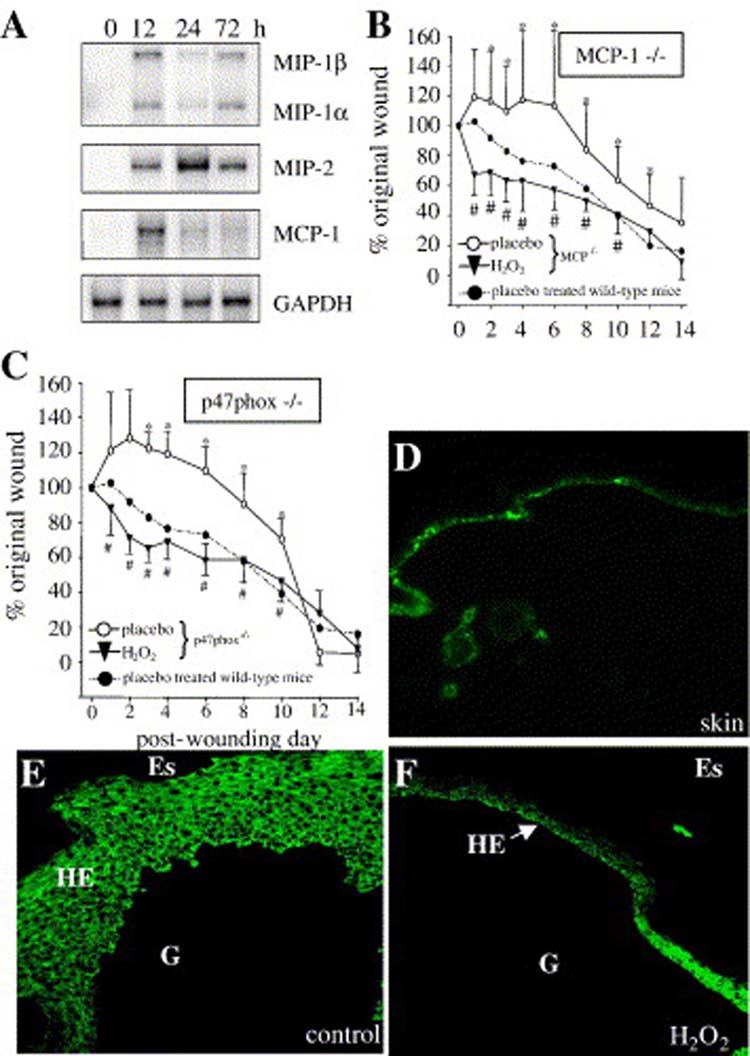
Previously we have reported in vitro evidence suggesting that that H2O2 may support wound healing by inducing VEGF expression in human keratinocytes (C. K. Sen et al., 2002, J. Biol. Chem.277, 33284-33290). Here, we test the significance of H2O2 in regulating wound healing in vivo. Using the Hunt-Schilling cylinder approach we present the first evidence that the wound site contains micromolar concentrations of H2O2. At the wound site, low concentrations of H2O2 supported the healing process, especially in p47(phox)- and MCP-1-deficient mice in which endogenous H2O2 generation is impaired. Higher doses of H2O2 adversely influenced healing. At low concentrations, H2O2 facilitated wound angiogenesis in vivo. H2O2 induced FAK phosphorylation both in wound-edge tissue in vivo and in human dermal microvascular endothelial cells. H2O2 induced site-specific (Tyr-925 and Tyr-861) phosphorylation of FAK. Other sites, including the Tyr-397 autophosphorylation site, were insensitive to H2O2. Adenoviral gene delivery of catalase impaired wound angiogenesis and closure. Catalase overexpression slowed tissue remodeling as evidenced by a more incomplete narrowing of the hyperproliferative epithelium region and incomplete eschar formation. Taken together, this work presents the first in vivo evidence indicating that strategies to influence the redox environment of the wound site may have a bearing on healing outcomes.
Figures




References
-
- Gordillo GM, Sen CK. Revisiting the essential role of oxygen in wound healing. Am J Surg. 2003;186:259–263. - PubMed
-
- Grief R, Akca O, Horn EP, Kurz A, Sessler DI. Supplemental perioperative oxygen to reduce the incidence of surgical-wound infection. Outcomes Research Group.[see comment] New England Journal of Medicine. 2000;342:161–167. - PubMed
-
- Sen CK. The general case for redox control of wound repair. Wound Repair Regen. 2003;11:431–438. - PubMed
-
- Suh YA, Arnold RS, Lassegue B, Shi J, Xu X, Sorescu D, Chung AB, Griendling KK, Lambeth JD. Cell transformation by the superoxide-generating oxidase Mox1. Nature. 1999;401:79–82. - PubMed
Publication types
MeSH terms
Substances
Grants and funding
LinkOut - more resources
Full Text Sources
Other Literature Sources
Molecular Biology Databases
Miscellaneous
