


Detection of tumor cell dissemination in pancreatic ductal carcinoma patients by CK 20 RT-PCR indicates poor survival
- PMID: 16136352
- PMCID: PMC12161178
- DOI: 10.1007/s00432-005-0008-1
Detection of tumor cell dissemination in pancreatic ductal carcinoma patients by CK 20 RT-PCR indicates poor survival
Abstract
Purpose: This prospective study evaluates the diagnostic potential of Cytokeratin 20 (CK 20) RT-PCR for the detection of disseminated tumor cells in bone marrow and blood of a large cohort of patients with ductal adenocarcinoma of the pancreas and the prognostic value on overall survival prediction.
Methods: Between 1994 and 2003, 172 patients (83 male, 89 female; 13-82 years) with pancreatic ductal adenocarcinoma underwent surgery. Bone marrow samples and venous blood were taken preoperatively and analyzed for disseminated tumor cells by nested CK 20 RT-PCR.
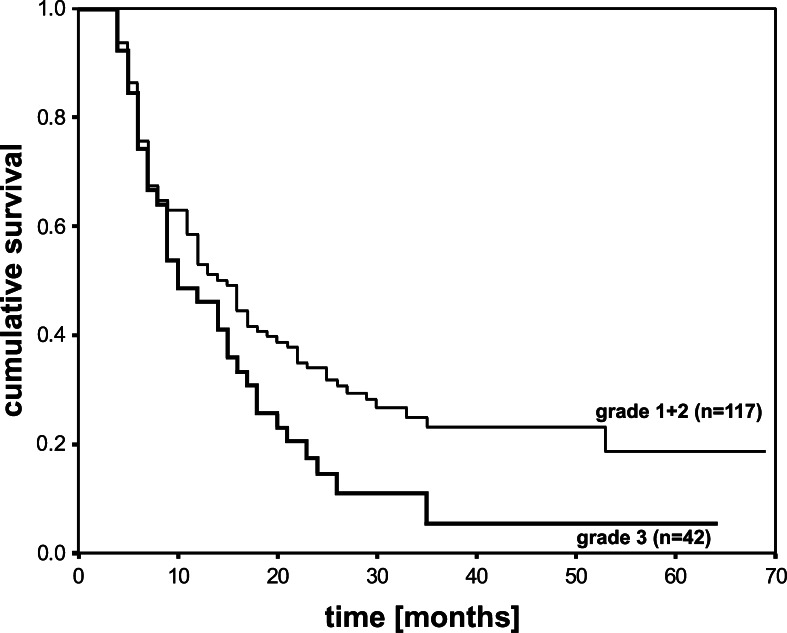
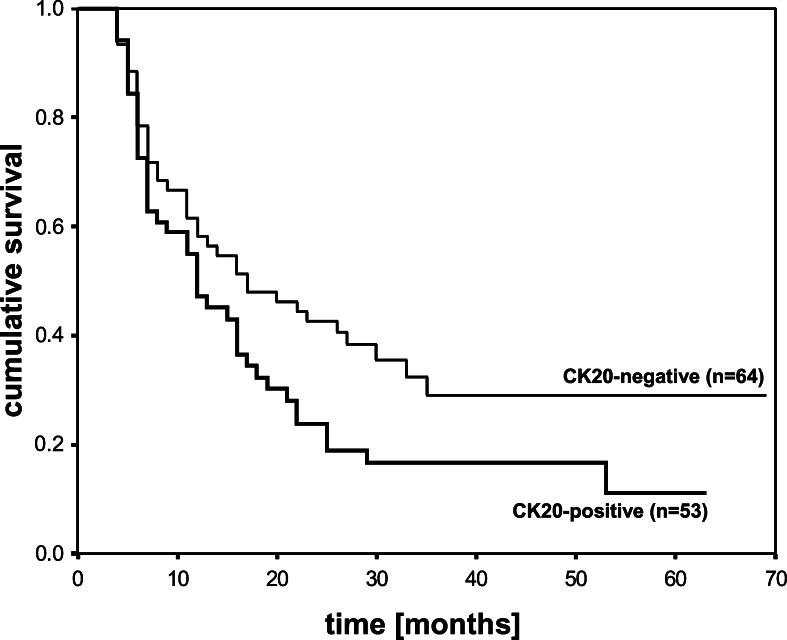
Results: Disseminated tumor cells were detected in 81 (47.1%) of the 172 patients in the bone marrow and/or the venous blood. Overall, in 45 of the 135 (33.3%) bone marrow samples and in 52 of the 154 (33.8%) blood samples, CK 20 positive cells were detected. Detection rates increased with the UICC-tumor stage. According to Kaplan-Meier, univariate survival analysis of all 172 patients (n = 78 R0-; n = 18 R1- and n = 5 R2-resected; n = 71 palliative surgery) showed a statistically significant relationship of overall survival to radicality of the operation (P < 0.0001), the UICC-stage of the tumors (P = 0.0011) and the detection of disseminated tumor cells in bone marrow and/or venous blood (P = 0.05). Patients with well- and moderately- differentiated tumors (G1 and G2) had a significantly longer survival (P = 0.045) than patients suffering from poorly differentiated tumors (G3). A positive CK 20 status in the bone marrow and/or blood within the group of patients with G1 and G2 tumors had a significantly negative prognostic impact on their survival (P = 0.046).
Conclusions: Disseminated tumor cells can be detected in patients with pancreatic ductal adenocarcinoma by CK 20 RT-PCR. Detection rates are stage dependent, and survival analysis demonstrated statistically relevant data. From a clinical point of view, this finding is especially noteworthy for the group of well- and moderately-differentiated tumors.
Figures


References
-
- Aihara T, Noguchi S, Ishikawa O, Furukawa H, Hiratsuka M, Ohigashi H, Nakamori S, Monden M, Imaoka S (1997) Detection of pancreatic and gastric cancer cells in peripheral and portal blood by amplification of keratin 19 mRNA with reverse transcriptase-polymerase chain reaction. Int J Cancer 72:408–411 - DOI - PubMed
Publication types
MeSH terms
Substances
LinkOut - more resources
Full Text Sources
Other Literature Sources
Medical
Research Materials
