


Becoming a good doctor: perceived need for ethics training focused on practical and professional development topics
- PMID: 16141129
- PMCID: PMC1599855
- DOI: 10.1176/appi.ap.29.3.301
Becoming a good doctor: perceived need for ethics training focused on practical and professional development topics
Abstract
Objective: Ethics training has become a core component of medical student and resident education. Curricula have been developed without the benefit of data regarding the views of physicians-in-training on the need for ethics instruction that focuses on practical issues and professional development topics.
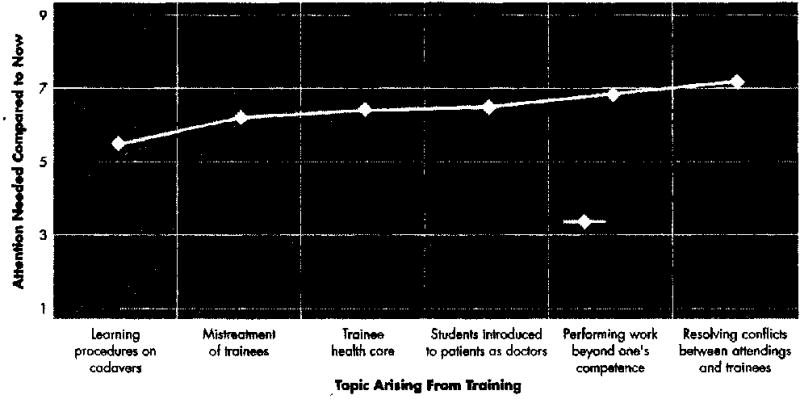
Methods: A written survey was sent to all medical students and PGY1-3 residents at the University of New Mexico School of Medicine. The survey consisted of eight demographic questions and 124 content questions in 10 domains. Responses to a set of 24 items related to ethically important dilemmas, which may occur in the training period and subsequent professional practice, are reported. Items were each rated on a 9-point scale addressing the level of educational attention needed compared to the amount currently provided.
Results: Survey respondents included 200 medical students (65% response) and 136 residents (58% response). Trainees, regardless of level of training or clinical discipline, perceived a need for more academic attention directed at practical ethical and professional dilemmas present during training and the practice of medicine. Women expressed a desire for more education directed at both training-based and practice-based ethical dilemmas when compared to men. A simple progression of interest in ethics topics related to level of medical training was not found. Residents in diverse clinical specialties differed in perceived ethics educational needs. Psychiatry residents reported a need for enhanced education directed toward training-stage ethics problems.
Conclusions: This study documents the importance placed on ethics education directed at practical real-world dilemmas and ethically important professional developmental issues by physicians-in-training. Academic medicine may be better able to fulfill its responsibilities in teaching ethics and professionalism and in serving its trainees by paying greater attention to these topics in undergraduate and graduate medical curricula.
Figures
References
-
- Drane JF. Kansas City, MO: Sheed & Ward; 1988. Becoming a Good Doctor: The Place of Virtue and Character in Medical Ethics.
-
- Wallace AG. Educating tomorrow’s doctors: the thing that really matters is that we care. Acad Med. 1997;72:253–258. - PubMed
-
- Inui TS. Association of American Medical Colleges; 2003. Flag in the Wind: Educating for Professionalism in Medicine.
-
- Feudtner C, Christakis DA. Making the rounds: the ethical development of medical students in the context of clinical rotations. Hastings Cent Rep. 1994;24:6–12. - PubMed
Publication types
MeSH terms
Grants and funding
LinkOut - more resources
Full Text Sources
Medical