


MicroRNA biogenesis and function in plants
- PMID: 16144699
- PMCID: PMC5127707
- DOI: 10.1016/j.febslet.2005.07.071
MicroRNA biogenesis and function in plants
Abstract
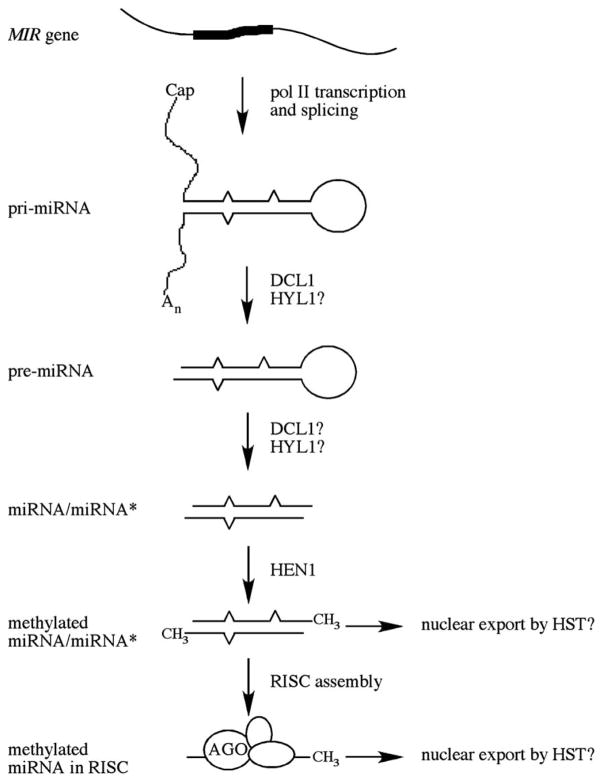
A microRNA (miRNA) is a 21-24 nucleotide RNA product of a non-protein-coding gene. Plants, like animals, have a large number of miRNA-encoding genes in their genomes. The biogenesis of miRNAs in Arabidopsis is similar to that in animals in that miRNAs are processed from primary precursors by at least two steps mediated by RNAse III-like enzymes and that the miRNAs are incorporated into a protein complex named RISC. However, the biogenesis of plant miRNAs consists of an additional step, i.e., the miRNAs are methylated on the ribose of the last nucleotide by the miRNA methyltransferase HEN1. The high degree of sequence complementarity between plant miRNAs and their target mRNAs has facilitated the bioinformatic prediction of miRNA targets, many of which have been subsequently validated. Plant miRNAs have been predicted or confirmed to regulate a variety of processes, such as development, metabolism, and stress responses. A large category of miRNA targets consists of genes encoding transcription factors that play important roles in patterning the plant form.
Figures
References
-
- Kim VN. MicroRNA biogenesis: coordinated cropping and dicing. Nat Rev Mol Cell Biol. 2005;6:376–385. - PubMed
-
- Bartel DP. MicroRNAs: genomics, biogenesis, mechanism, and function. Cell. 2004;116:281–297. - PubMed
-
- Hamilton AJ, Baulcombe DC. A species of small antisense RNA in posttranscriptional gene silencing in plants. Science. 1999;286:950–952. - PubMed
Publication types
MeSH terms
Substances
Grants and funding
LinkOut - more resources
Full Text Sources
Other Literature Sources
Molecular Biology Databases
