


Microarray analysis of Pseudomonas aeruginosa reveals induction of pyocin genes in response to hydrogen peroxide
- PMID: 16150148
- PMCID: PMC1250226
- DOI: 10.1186/1471-2164-6-115
Microarray analysis of Pseudomonas aeruginosa reveals induction of pyocin genes in response to hydrogen peroxide
Abstract
Background: Pseudomonas aeruginosa, a pathogen infecting those with cystic fibrosis, encounters toxicity from phagocyte-derived reactive oxidants including hydrogen peroxide during active infection. P. aeruginosa responds with adaptive and protective strategies against these toxic species to effectively infect humans. Despite advances in our understanding of the responses to oxidative stress in many specific cases, the connectivity between targeted protective genes and the rest of cell metabolism remains obscure.
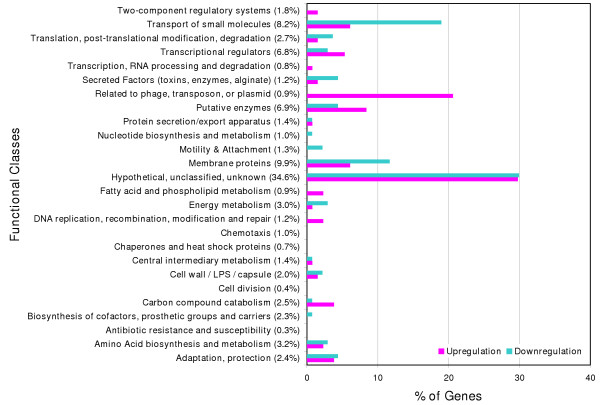
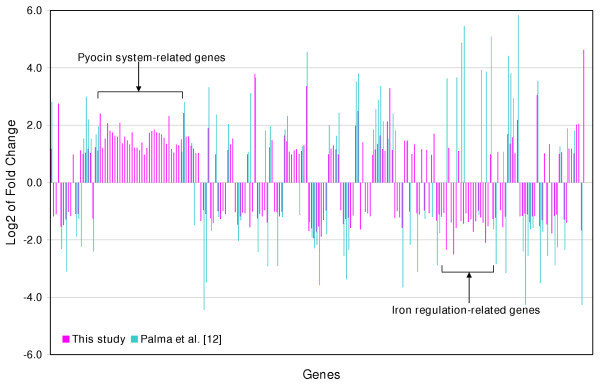
Results: Herein, we performed a genome-wide transcriptome analysis of the cellular responses to hydrogen peroxide in order to determine a more complete picture of how oxidative stress-induced genes are related and regulated. Our data reinforce the previous conclusion that DNA repair proteins and catalases may be among the most vital antioxidant defense systems of P. aeruginosa. Our results also suggest that sublethal oxidative damage reduces active and/or facilitated transport and that intracellular iron might be a key factor for a relationship between oxidative stress and iron regulation. Perhaps most intriguingly, we revealed that the transcription of all F-, R-, and S-type pyocins was upregulated by oxidative stress and at the same time, a cell immunity protein (pyocin S2 immunity protein) was downregulated, possibly leading to self-killing activity.
Conclusion: This finding proposes that pyocin production might be another novel defensive scheme against oxidative attack by host cells.
Figures

References
Publication types
MeSH terms
Substances
LinkOut - more resources
Full Text Sources
Other Literature Sources
Molecular Biology Databases
