


Pivotal role of PAI-1 in a murine model of hepatic vein thrombosis
- PMID: 16160004
- PMCID: PMC1895352
- DOI: 10.1182/blood-2005-07-2681
Pivotal role of PAI-1 in a murine model of hepatic vein thrombosis
Abstract
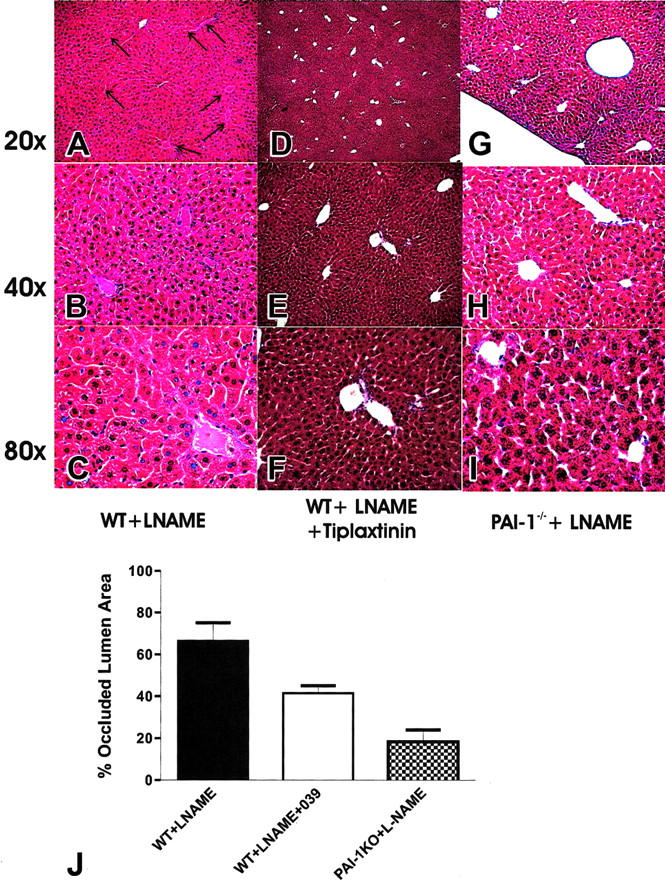
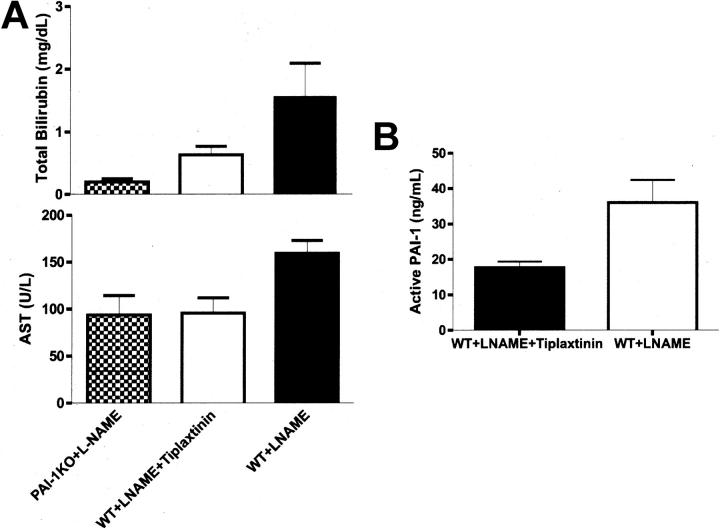
Hepatic veno-occlusive disease (VOD) is a common complication of high-dose chemotherapy associated with bone marrow transplantation. While the pathogenesis of VOD is uncertain, plasminogen activator inhibitor-1 (PAI-1) has emerged as a diagnostic marker and predictor of VOD in humans. In this study, we investigated the role of PAI-1 in a murine model of VOD produced by long-term nitric oxide synthase inhibition using L-NAME. After 6 weeks, wild-type (WT) mice developed extensive fibrinoid hepatic venous thrombi and biochemical evidence of hepatic injury and dysfunction. In contrast, PAI-1-deficient mice were largely protected from the development of hepatic vein thrombosis. Furthermore, WT mice that received tiplaxtinin, an antagonist of PAI-1, were effectively protected from L-NAME-induced thrombosis. Taken together, these data indicate that NO and PAI-1 play pivotal and antagonistic roles in hepatic vein thrombosis and that PAI-1 is a potential target in the prevention and treatment of VOD in humans.
Figures
References
-
- Richardson P, Guinan E. Hepatic veno-occlusive disease following hematopoietic stem cell transplantation. Acta Haematologica. 2001;106: 57-68. - PubMed
-
- Blostein MD, Paltiel OB, Thibault A, Rybka WB. A comparison of clinical criteria for the diagnosis of veno-occlusive disease of the liver after bone marrow transplantation. Bone Marrow Transplant. 1992;10: 439-443. - PubMed
-
- Bearman SI. The syndrome of hepatic veno-occlusive disease after marrow transplantation. Blood. 1995;85: 3005-3020. - PubMed
-
- Richardson P, Bearman SI. Prevention and treatment of hepatic venocclusive disease after high-dose cytoreductive therapy. Leuk Lymphoma. 1998;31: 267-277. - PubMed
-
- Bearman SI, Lee JL, Baron AE, McDonald GB. Treatment of hepatic venocclusive disease with recombinant human tissue plasminogen activator and heparin in 42 marrow transplant patients. Blood. 1997;89: 1501-1506. - PubMed
Publication types
MeSH terms
Substances
Grants and funding
LinkOut - more resources
Full Text Sources
Other Literature Sources
Molecular Biology Databases
Miscellaneous
