


Protection of mice against lethal infection with highly pathogenic H7N7 influenza A virus by using a recombinant low-pathogenicity vaccine strain
- PMID: 16160167
- PMCID: PMC1211531
- DOI: 10.1128/JVI.79.19.12401-12407.2005
Protection of mice against lethal infection with highly pathogenic H7N7 influenza A virus by using a recombinant low-pathogenicity vaccine strain
Abstract
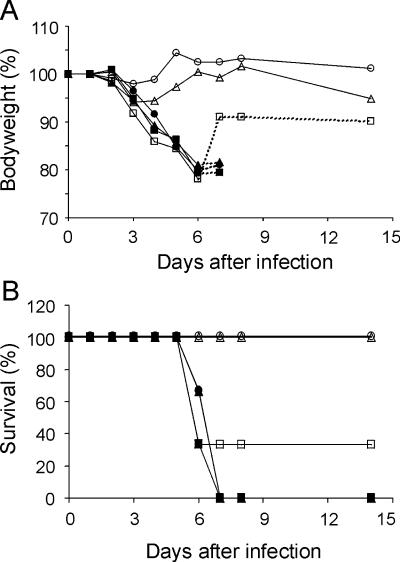
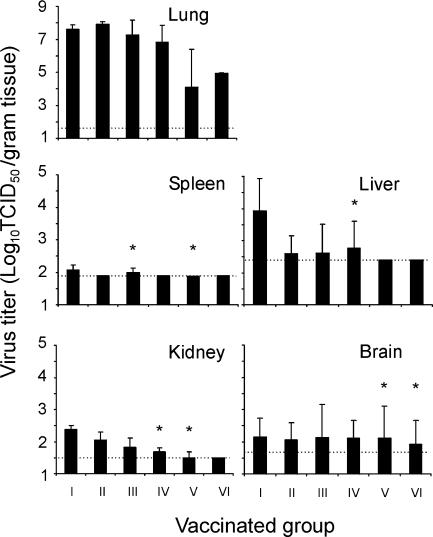
In 2003, an outbreak of highly pathogenic avian influenza occurred in The Netherlands. The avian H7N7 virus causing the outbreak was also detected in 88 humans suffering from conjunctivitis or mild respiratory symptoms and one person who died of pneumonia and acute respiratory distress syndrome. Here we describe a mouse model for lethal infection with A/Netherlands/219/03 isolated from the fatal case. Because of the zoonotic and pathogenic potential of the H7N7 virus, a candidate vaccine carrying the avian hemagglutinin and neuraminidase proteins produced in the context of the high-throughput vaccine strain A/PR/8/34 was generated by reverse genetics and tested in the mouse model. The hemagglutinin gene of the recombinant vaccine strain was derived from a low-pathogenicity virus obtained prior to the outbreak from a wild mallard. The efficacy of a classical nonadjuvanted subunit vaccine and an immune stimulatory complex-adjuvanted vaccine was compared. Mice receiving the nonadjuvanted vaccine revealed low antibody titers, lack of clinical protection, high virus titers in the lungs, and presence of virus in the spleen, liver, kidneys, and brain. In contrast, mice receiving two doses of the immune stimulatory complex-adjuvanted vaccine revealed high antibody titers, clinical protection, approximately 1,000-fold reduction of virus titers in the lungs, and rare detection of the virus in other organs. This is the first report of an H7 vaccine candidate tested in a mammalian model. The data presented suggest that vaccine candidates based on low-pathogenicity avian influenza A viruses, which can be prepared ahead of pandemic threats, can be efficacious if an effective adjuvant is used.
Figures
References
-
- Crouch, C. F., J. Daly, D. Hannant, J. Wilkins, and M. J. Francis. 2004. Immune responses and protective efficacy in ponies immunised with an equine influenza ISCOM vaccine containing an ‘American lineage’ H3N8 virus. Vaccine 23:418-425. - PubMed
-
- de Wit, E., M. I. Spronken, T. M. Bestebroer, G. F. Rimmelzwaan, A. D. Osterhaus, and R. A. Fouchier. 2004. Efficient generation and growth of influenza virus A/PR/8/34 from eight cDNA fragments. Virus Res. 103:155-161. - PubMed
-
- Fouchier, R. A., B. Olsen, T. M. Bestebroer, S. Herfst, L. van der Kemp, G. F. Rimmelzwaan, and A. D. Osterhaus. 2003. Influenza A virus surveillance in wild birds in Northern Europe in 1999 and 2000. Avian Dis. 47:857-860. - PubMed
Publication types
MeSH terms
Substances
LinkOut - more resources
Full Text Sources
Other Literature Sources
Medical
Research Materials
