Tomographic bioluminescence imaging by use of a combined optical-PET (OPET) system: a computer simulation feasibility study
- PMID: 16177541
- PMCID: PMC1317109
- DOI: 10.1088/0031-9155/50/17/021
Tomographic bioluminescence imaging by use of a combined optical-PET (OPET) system: a computer simulation feasibility study
Abstract
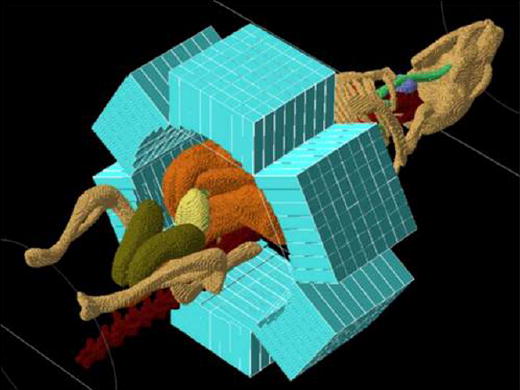
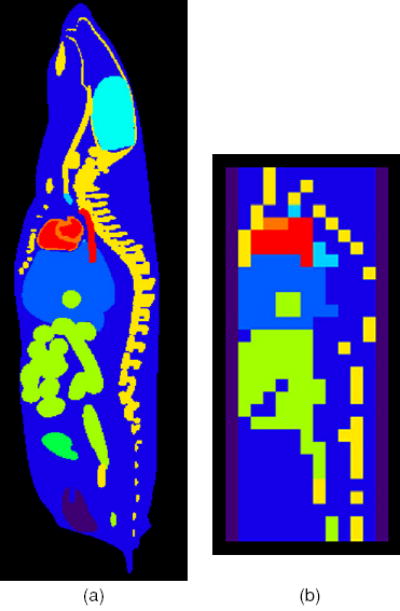
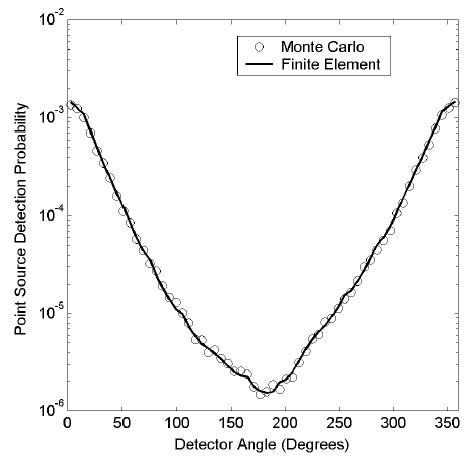
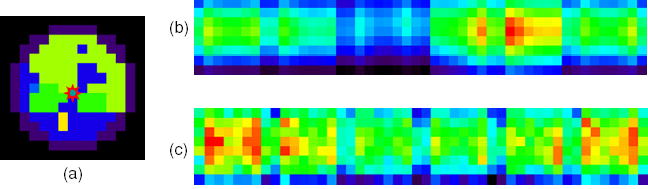
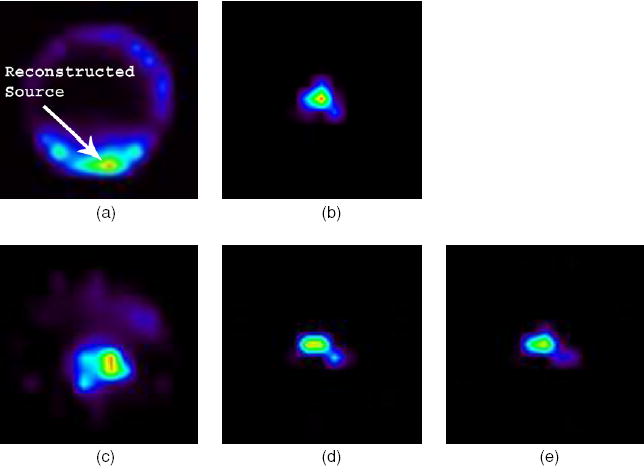
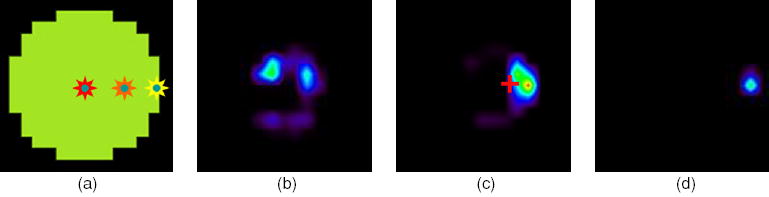
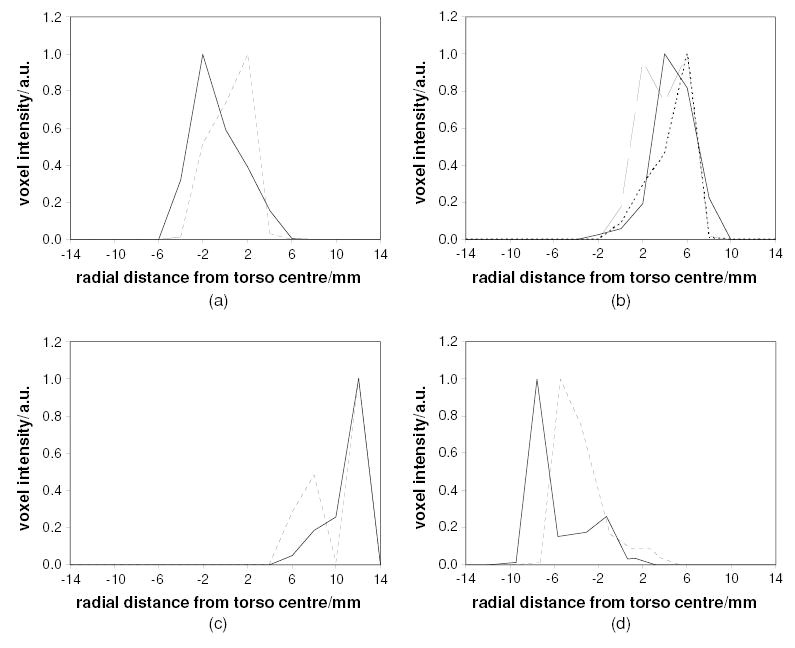
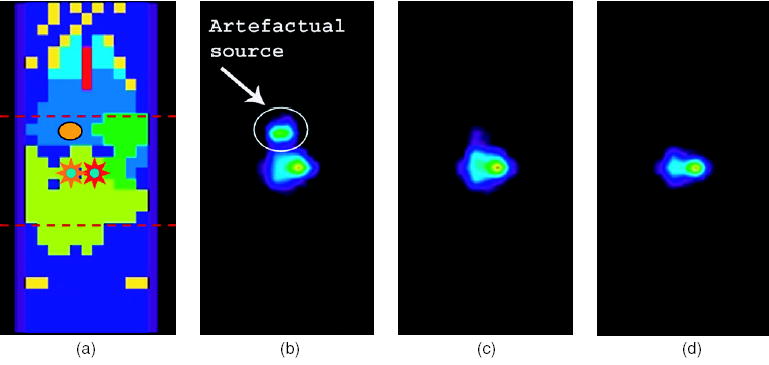
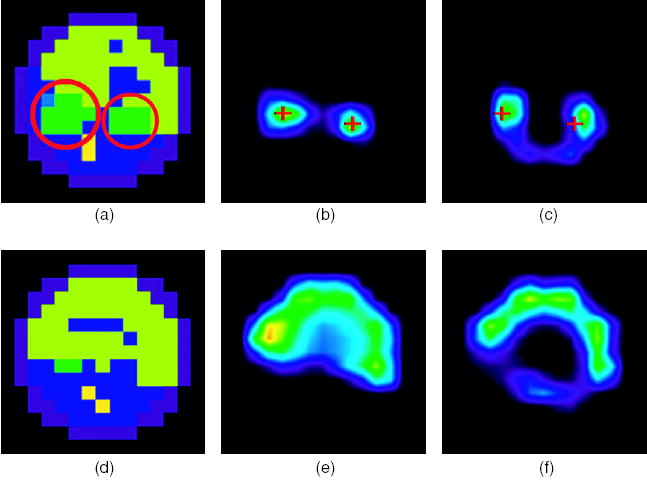
The feasibility and limits in performing tomographic bioluminescence imaging with a combined optical-PET (OPET) system were explored by simulating its image formation process. A micro-MRI based virtual mouse phantom was assigned appropriate tissue optical properties to each of its segmented internal organs at wavelengths spanning the emission spectrum of the firefly luciferase at 37 degrees C. The TOAST finite-element code was employed to simulate the diffuse transport of photons emitted from bioluminescence sources in the mouse. OPET measurements were simulated for single-point, two-point and distributed bioluminescence sources located in different organs such as the liver, the kidneys and the gut. An expectation maximization code was employed to recover the intensity and location of these simulated sources. It was found that spectrally resolved measurements were necessary in order to perform tomographic bioluminescence imaging. The true location of emission sources could be recovered if the mouse background optical properties were known a priori. The assumption of a homogeneous optical property background proved inadequate for describing photon transport in optically heterogeneous tissues and led to inaccurate source localization in the reconstructed images. The simulation results pointed out specific methodological challenges that need to be addressed before a practical implementation of OPET-based bioluminescence tomography is achieved.
Figures
References
-
- Arridge SR, Schweiger M, Hiraoka M, Delpy DT. A finite element approach for modeling photon transport in tissue. 1993;20:299–309. - PubMed
-
- Barnett AH, Culver JP, Sorensen AG, Dale A, Boas DA. Robust inference of baseline optical properties of the human head with three-dimensional segmentation from magnetic resonance imaging. Appl Opt. 2003;42:3095–108. - PubMed
-
- Beek JF, Blokland P, Posthumus P, Aalders M, Pickering JW, Sterenborg HJCM, vanGemert MJC. In vitro double-integrating-sphere optical properties of tissues between 630 and 1064 nm. Phys Med Biol. 1997a;42:2255–61. - PubMed
-
- Beek JF, vanStaveren HJ, Posthumus P, Sterenborg HJCM, vanGemert MJC. The optical properties of lung as a function of respiration. Phys Med Biol. 1997b;42:2263–72. - PubMed
-
- Boas DA, Culver JP, Stott JJ, Dunn AK. Three dimensional Monte Carlo code for photon migration through complex heterogeneous media including the adult human head. Opt Express. 2002;10:159–70. - PubMed
Publication types
MeSH terms
Grants and funding
LinkOut - more resources
Full Text Sources
Other Literature Sources