


Vasopressin-2-receptor antagonism augments water excretion without changes in renal hemodynamics or sodium and potassium excretion in human heart failure
- PMID: 16189291
- PMCID: PMC2647140
- DOI: 10.1152/ajprenal.00195.2005
Vasopressin-2-receptor antagonism augments water excretion without changes in renal hemodynamics or sodium and potassium excretion in human heart failure
Abstract
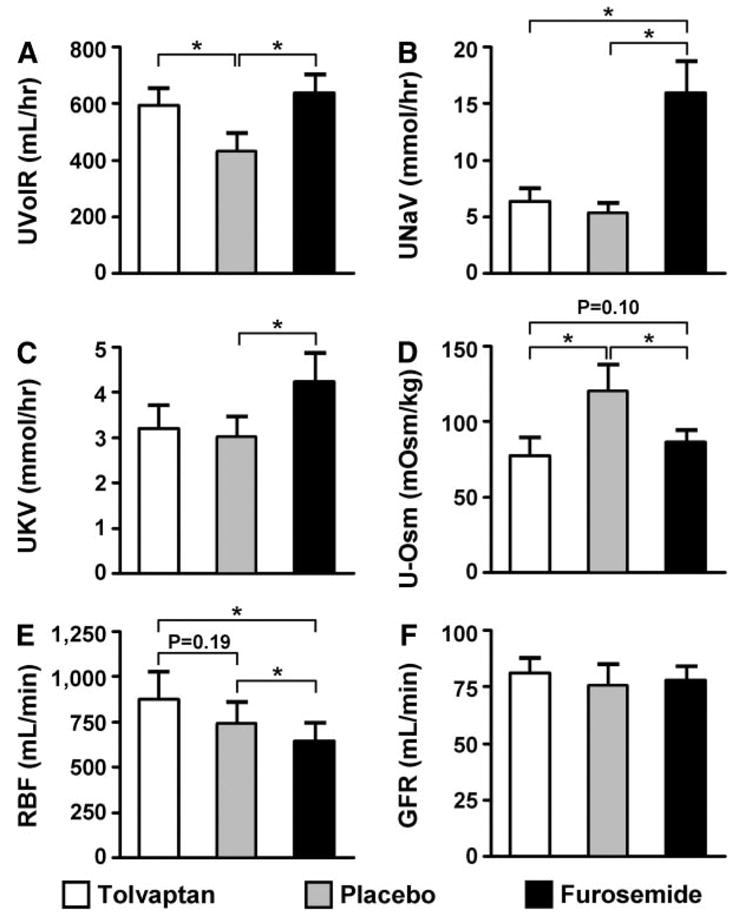
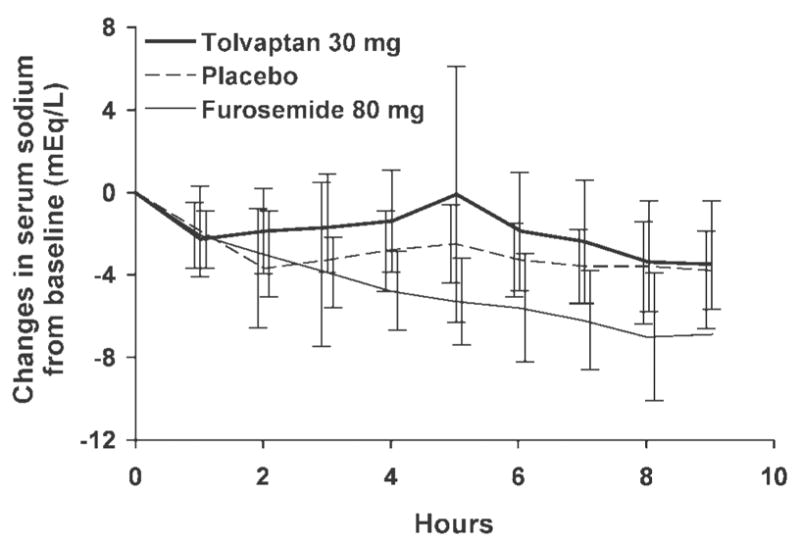
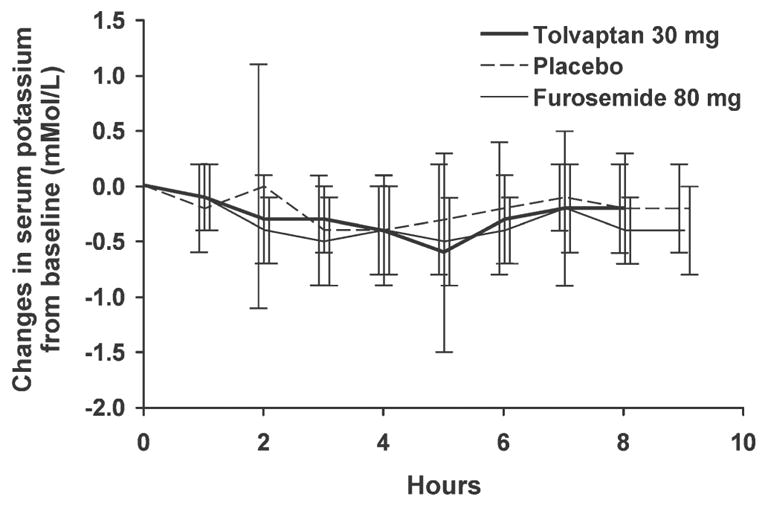
Diuretics are frequently required to treat fluid retention in patients with congestive heart failure (CHF). Unfortunately, they can lead to a decline in renal function, electrolyte depletion, and neurohumoral activation. Arginine vasopressin (AVP) promotes renal water reabsorption via the V2 receptor, and its levels are increased in CHF. This study was designed to assess the effects of a single oral dose of tolvaptan, a selective V2-receptor blocker, in the absence of other medications, on renal function in human CHF and to compare this to the effects of a single oral dose of furosemide. We hypothesized that V2-receptor antagonism would yield a diuresis comparable to furosemide but would not adversely affect renal hemodynamics, plasma electrolyte concentration, or neurohumoral activation in stable human CHF. Renal and neurohumoral effects of tolvaptan and furosemide were assessed in an open-label, randomized, placebo-controlled crossover study in 14 patients with NYHA II-III CHF. Patients received placebo or 30 mg of tolvaptan on day 1 and were crossed over to the other medication on day 3. On day 5, all subjects received 80 mg of furosemide. Tolvaptan and furosemide induced similar diuretic responses. Unlike tolvaptan, furosemide increased urinary sodium and potassium excretion and decreased renal blood flow. Tolvaptan, furosemide, and placebo did not differ with respect to mean arterial pressure, glomerular filtration rate, or serum sodium and potassium. We conclude that tolvaptan is an effective aquaretic with no adverse effects on renal hemodynamics or serum electrolytes in patients with mild to moderate heart failure.
Figures
References
-
- Abdallah JG, Schrier RW, Edelstein C, Jennings SD, Wyse B, Ellison DH. Loop diuretic infusion increases thiazide-sensitive Na+/Cl− cotransporter abundance: role of aldosterone. J Am Soc Nephrol. 2001;12:1335–1341. - PubMed
-
- Burnier M, Fricker AF, Hayoz D, Nussberger J, Brunner HR. Pharmacokinetic and pharmacodynamic effects of YM087, a combined V1/V2 vasopressin receptor antagonist in normal subjects. Eur J Clin Pharmacol. 1999;55:633–637. - PubMed
-
- Chen HH, Redfield MM, Nordstrom LJ, Cataliotti A, Burnett JC., Jr Angiotensin II AT1 receptor antagonism prevents detrimental renal actions of acute diuretic therapy in human heart failure. Am J Physiol Renal Physiol. 2003;284:F1115–F1119. - PubMed
-
- Chen HH, Redfield MM, Nordstrom LJ, Horton DP, Burnett JC., Jr Subcutaneous administration of the cardiac hormone BNP in symptomatic human heart failure. J Card Fail. 2004;10:115–119. - PubMed
-
- Cooper HA, Dries DL, Davis CE, Shen YL, Domanski MJ. Diuretics and risk of arrhythmic death in patients with left ventricular dysfunction. Circulation. 1999;100:1311–1315. - PubMed
Publication types
MeSH terms
Substances
Grants and funding
LinkOut - more resources
Full Text Sources
Other Literature Sources
Medical
Miscellaneous
