


Detection and characterization of Streptococcus thermophilus bacteriophages by use of the antireceptor gene sequence
- PMID: 16204526
- PMCID: PMC1265960
- DOI: 10.1128/AEM.71.10.6096-6103.2005
Detection and characterization of Streptococcus thermophilus bacteriophages by use of the antireceptor gene sequence
Abstract
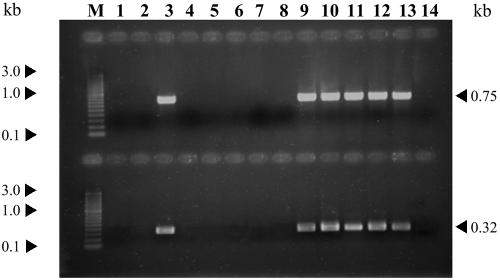
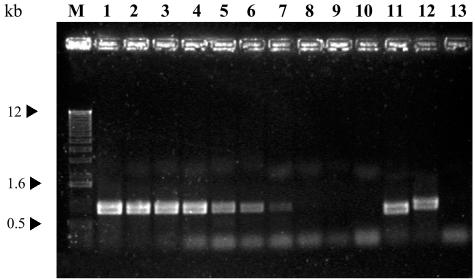
In the dairy industry, the characterization of Streptococcus thermophilus phage types is very important for the selection and use of efficient starter cultures. The aim of this study was to develop a characterization system useful in phage control programs in dairy plants. A comparative study of phages of different origins was initially performed based on their morphology, DNA restriction profiles, DNA homology, structural proteins, packaging mechanisms, and lifestyles and on the presence of a highly conserved DNA fragment of the replication module. However, these traditional criteria were of limited industrial value, mainly because there appeared to be no correlation between these variables and host ranges. We therefore developed a PCR method to amplify VR2, a variable region of the antireceptor gene, which allowed rapid detection of S. thermophilus phages and classification of these phages. This method has a significant advantage over other grouping criteria since our results suggest that there is a correlation between typing profiles and host ranges. This association could be valuable for the dairy industry by allowing a rational starter rotation system to be established and by helping in the selection of more suitable starter culture resistance mechanisms. The method described here is also a useful tool for phage detection, since specific PCR amplification was possible when phage-contaminated milk was used as a template (detection limit, 10(5) PFU ml(-1)).
Figures



References
-
- Benbadis, L., M. Faelen, P. Slos, A. Fazel, and A. Mercenier. 1990. Characterization and comparison of virulent bacteriophages of Streptococcus thermophilus isolated from yoghurt. Biochimie 72:855-862. - PubMed
-
- Binetti, A. G., A. Quiberoni, and J. A. Reinheimer. 2002. Phage adsorption to Streptococcus thermophilus. Influence of environmental factors and characterization of cell-receptors. Food Res. Int. 35:73-83.
-
- Brüssow, H., and A. Bruttin. 1995. Characterization of a temperate Streptococcus thermophilus bacteriophage and its genetic relationship with lytic phages. Virology 212:632-640. - PubMed
-
- Brüssow, H., A. Probst, M. Frémont, and J. Sidoti. 1994. Distinct Streptococcus thermophilus bacteriophages share an extremely conserved DNA fragment. Virology 200:854-857. - PubMed
Publication types
MeSH terms
Substances
LinkOut - more resources
Full Text Sources
Other Literature Sources
