


Molecular characterization of hand flora and environmental isolates in a community setting
- PMID: 16207984
- PMCID: PMC1248454
- DOI: 10.1128/JCM.43.10.5202-5207.2005
Molecular characterization of hand flora and environmental isolates in a community setting
Abstract
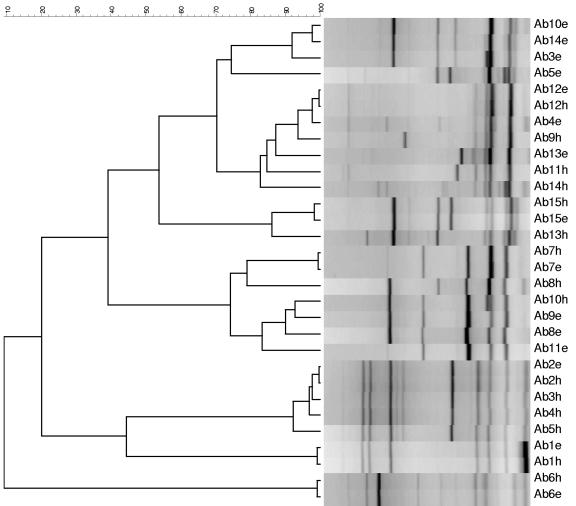
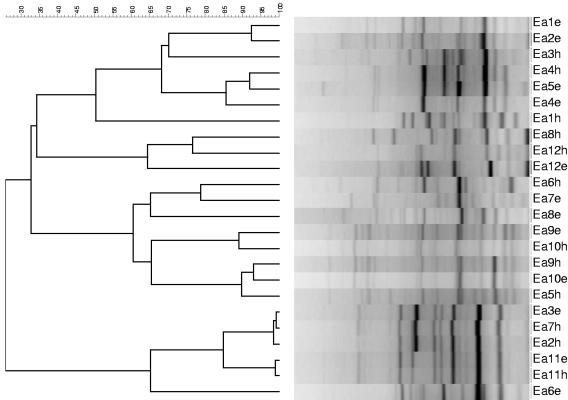
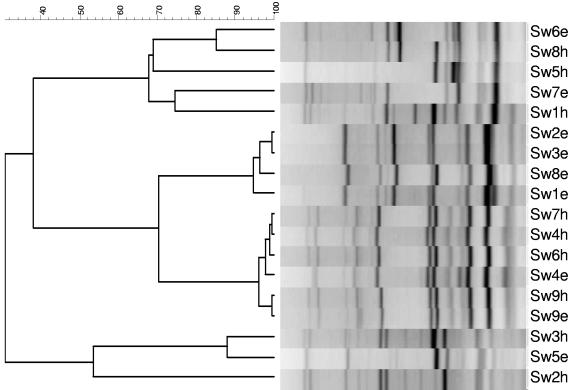
We analyzed 69 bacterial isolates, comprising seven species of gram-negative bacterial rods and three species of coagulase-negative staphylococci, recovered from both the hands of caretakers and their environment in households sampled in upper Manhattan. Repetitive sequence-based PCR and dendrogram analysis were used to determine strain similarity. Greater than 25% of individual species of Acinetobacter, Enterobacter, and coagulase-negative staphylococci recovered from the hands and immediate environment within each household shared the same genotype. This study is the first to demonstrate the frequency of bacteria shared within community households. These strains may serve as potential reservoirs for either community- or hospital-acquired infections.
Figures
References
-
- Berlau, J., H. Aucken, H. Malnick, and T. Pitt. 1999. Distribution of Acinetobacter species on skin of healthy humans. Eur. J. Clin. Microbiol. Infect. Dis. 18:179-183. - PubMed
-
- Bou, G., G. Cervero, M. A. Dominguez, C. Quereda, and J. Martinez-Beltran. 2000. PCR-based DNA fingerprinting (REP-PCR, AP-PCR) and pulsed-field gel electrophoresis characterization of a nosocomial outbreak caused by imipenem- and meropenem-resistant Acinetobacter baumannii. Clin. Microbiol. Infect. 6:635-643. - PubMed
-
- Chmielewski, R., A. Wieliczko, M. Kuczkowski, M. Mazurkiewicz, and M. Ugorski. 2002. Comparison of ITS profiling, REP- and ERIC-PCR of Salmonella enteritidis isolates from Poland. J. Vet. Med. B 49:163-168. - PubMed
Publication types
MeSH terms
Substances
Grants and funding
LinkOut - more resources
Full Text Sources
