In vivo imaging of cerebral "peripheral benzodiazepine binding sites" in patients with hepatic encephalopathy
- PMID: 16210399
- PMCID: PMC1856189
- DOI: 10.1136/gut.2005.075051
In vivo imaging of cerebral "peripheral benzodiazepine binding sites" in patients with hepatic encephalopathy
Abstract
Background and aims: One proposed mechanism whereby hepatic encephalopathy (HE) leads to loss of brain function is dysregulated synthesis of neurosteroids. Mitochondrial synthesis of neurosteroids is regulated by "peripheral benzodiazepine binding sites" (PBBS). Expressed in the brain by activated glial cells, PBBS can be measured in vivo by the specific ligand [11C](R)-PK11195 and positron emission tomography (PET). Recently, it has been suggested that PBBS expressing glial cells may play a role in the general inflammatory responses seen in HE. Therefore, we measured PBBS in vivo in the brains of patients with minimal HE using [11C](R)-PK11195 PET.
Methods: Five patients with minimal HE and biopsy proven cirrhosis of differing aetiology were assessed with a neuropsychometric battery. Regional expression of PBBS in the brain was detected by [11C](R)-PK11195 PET.
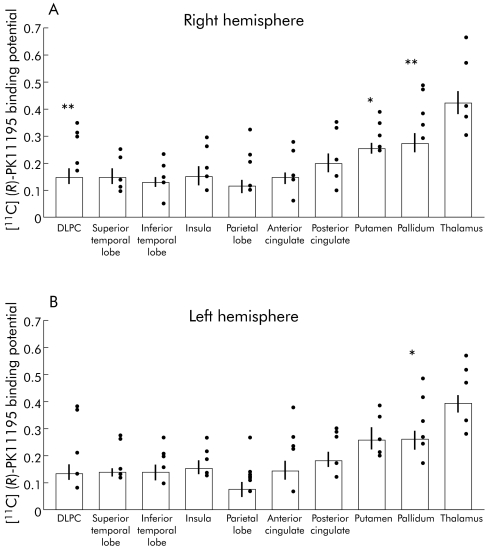
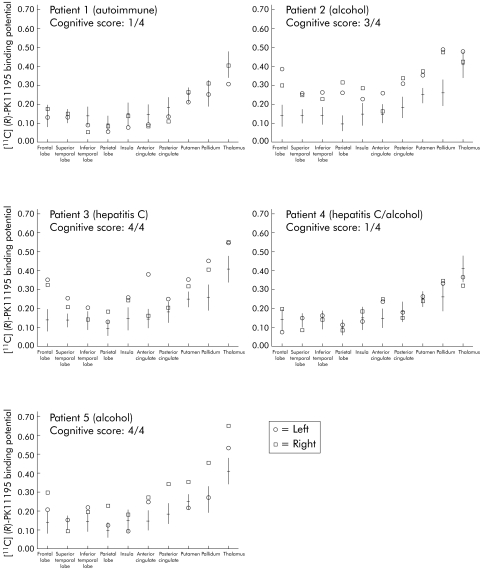
Results: All patients showed brain regions with increased [11C](R)-PK11195 binding. Significant increases in glial [11C](R)-PK11195 binding were found bilaterally in the pallidum, right putamen, and right dorsolateral prefrontal region. The patient with the most severe cognitive impairment had the highest increases in regional [11C](R)-PK11195 binding.
Conclusion: HE is associated with increased cerebral binding of [11C](R)-PK11195 in vivo, reflecting increased expression of PBBS by glial cells. This supports earlier experimental evidence in rodent models of liver failure, suggesting that an altered glial cell state, as evidenced by the increase in cerebral PBBS, might be causally related to impaired brain functioning in HE.
Conflict of interest statement
Conflict of interest: None declared.

References
-
- Schenker S, Brady C E. Pathogenesis of hepatic encephalopathy. In: Conn HO, Bircher , J , eds. Hepatic encephalopathy: syndromes and therapies. Bloomington: Medi‐Ed Press, 199443–61.
-
- Desjardins P, Bandeira P, Rao V L R.et al Portacaval anastomosis causes selective alterations of peripheral‐type benzodiazepine receptor expression in rat brain and peripheral tissues. Neurochem Int 199935293–299. - PubMed
-
- Butterworth R F. The astrocytic (“peripheral‐type”) benzodiazepine receptor: role in the pathogenesis of portal systemic encephalopathy. Neurochem Int 200036411–416. - PubMed
-
- Anholt R R, Pedersen P L, DeSouza E B.et al The peripheral‐type benzodiazepine receptor. Localisation to the mitochondrial outer membrane. J Biol Chem 1986261776–783. - PubMed
-
- Benavides J, Cornu P, Dennis T.et al Imaging of human brain lesions with an omega 3 site radioligand. Ann Neurol 198824708–712. - PubMed
Publication types
MeSH terms
Substances
LinkOut - more resources
Full Text Sources