


Neurodevelopmental implications of "deformational" plagiocephaly
- PMID: 16222180
- PMCID: PMC3393045
- DOI: 10.1097/00004703-200510000-00008
Neurodevelopmental implications of "deformational" plagiocephaly
Abstract
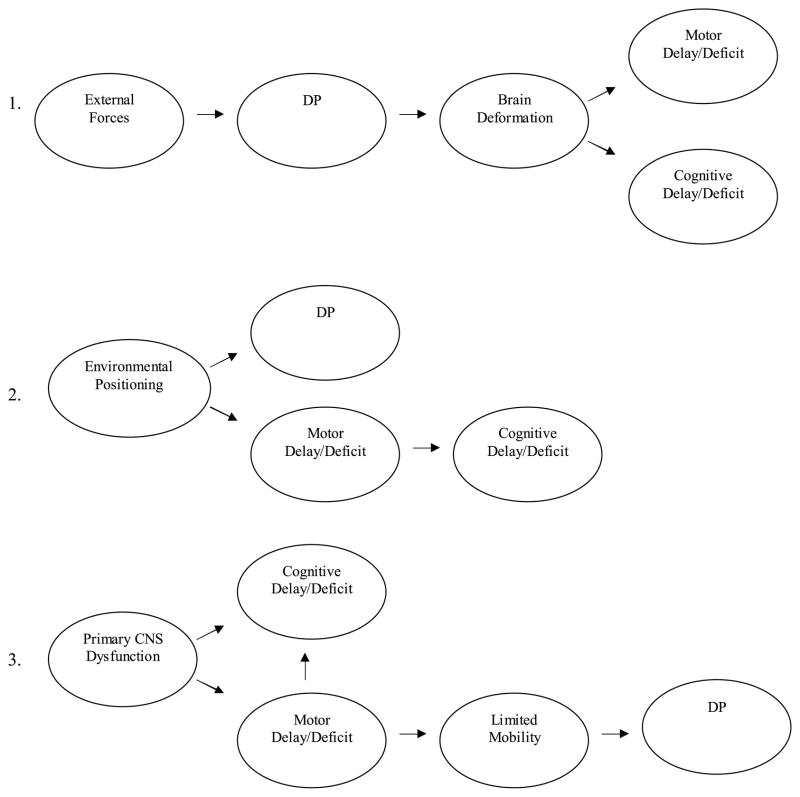
Over the past decade there has been a dramatic increase in referrals to specialty clinics, craniofacial centers, plastic surgeons, and neurosurgeons for assessment and treatment of deformational plagiocephaly (DP). Though considered a medically benign condition, preliminary reports suggest that DP may be associated with developmental problems. However, mechanisms to account for this association have not been hypothesized or empirically tested. Although treatment justifications often center on prevention of atypical appearance, little is known about the cosmetic outcomes of treated and untreated children. In this review we hypothesize different etiological pathways linking DP with neurodevelopment (e.g., environmental positioning limitations with and without underlying CNS pathology). We outline directions for research on incidence and prevalence, developmental outcomes, sex differences, determinants of treatment participation, and craniofacial appearance. Despite the paucity of existing research, preliminary findings suggest that children with this condition should be screened and monitored for developmental delays or deficits, as we await more conclusive information from future studies.
Figures
References
-
- Clarren SK, Smith DW, Hanson JW. Helmet treatment for plagiocephaly and congenital torticollis. J Pediatr. 1979;94:43–46. - PubMed
-
- Clarren SK. Plagiocephaly and torticollis: Etiology, natural history, and helmet treatment. J Pediatr. 1981;98:92–95. - PubMed
-
- Littlefield TR, Kelly KM, Pomatto JK, Beals SP. Multiple-birth infants at higher risk for development of deformational plagiocephaly. Pediatrics. 1999;103:565–569. - PubMed
-
- Pollack IA, Losken HW, Fasick P. Diagnosis and management of posterior plagiocephaly. Pediatrics. 1997;99:180–185. - PubMed
-
- Boere-Boonekamp MM, Linden-Kuiper LT. Positional preference: Prevalence in infants and follow-up after two years. Pediatrics. 2001;107:339–343. - PubMed
Publication types
MeSH terms
Grants and funding
LinkOut - more resources
Full Text Sources
Miscellaneous
