


Single-stranded DNA mimicry in the p53 transactivation domain interaction with replication protein A
- PMID: 16234232
- PMCID: PMC1266094
- DOI: 10.1073/pnas.0504614102
Single-stranded DNA mimicry in the p53 transactivation domain interaction with replication protein A
Abstract
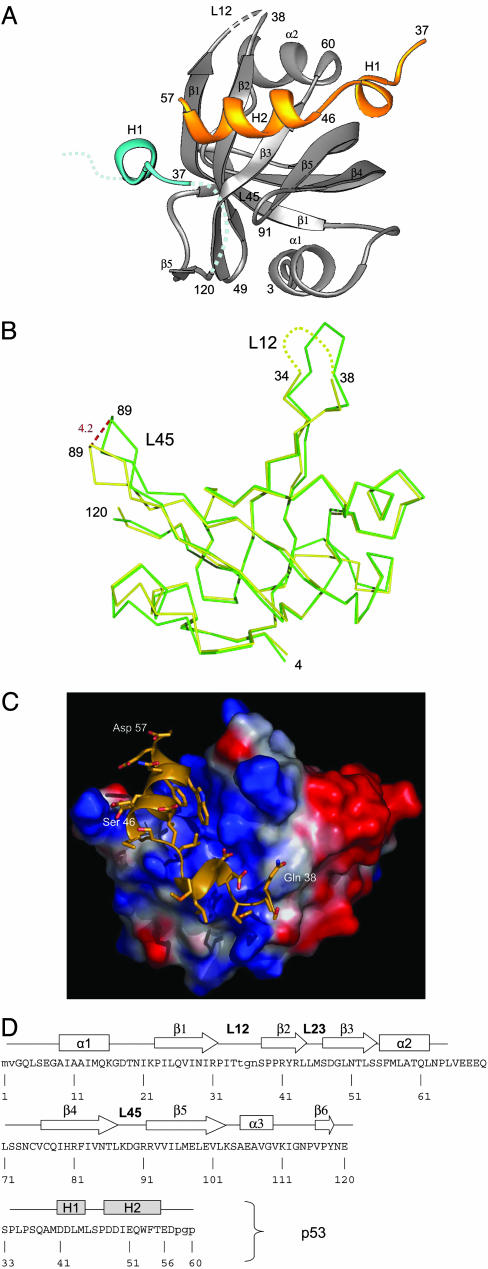
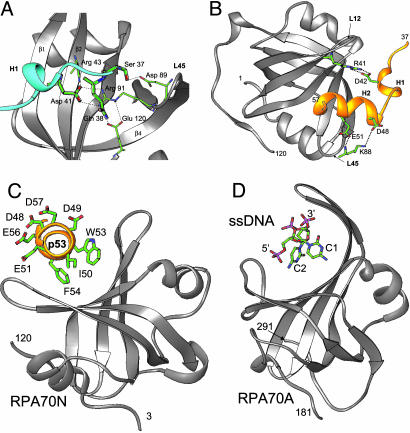
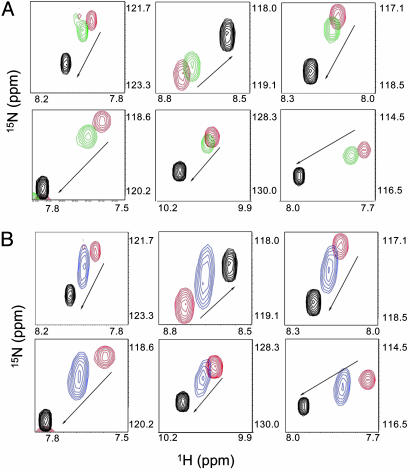
One of many protein-protein interactions modulated upon DNA damage is that of the single-stranded DNA-binding protein, replication protein A (RPA), with the p53 tumor suppressor. Here we report the crystal structure of RPA residues 1-120 (RPA70N) bound to the N-terminal transactivation domain of p53 (residues 37-57; p53N) and, by using NMR spectroscopy, characterize two mechanisms by which the RPA/p53 interaction can be modulated. RPA70N forms an oligonucleotide/oligosaccharide-binding fold, similar to that previously observed for the ssDNA-binding domains of RPA. In contrast, the N-terminal p53 transactivation domain is largely disordered in solution, but residues 37-57 fold into two amphipathic helices, H1 and H2, upon binding with RPA70N. The H2 helix of p53 structurally mimics the binding of ssDNA to the oligonucleotide/oligosaccharide-binding fold. NMR experiments confirmed that both ssDNA and an acidic peptide mimicking a phosphorylated form of RPA32N can independently compete the acidic p53N out of the binding site. Taken together, our data suggest a mechanism for DNA damage signaling that can explain a threshold response to DNA damage.
Figures
References
-
- Ko, L. J. & Prives, C. (1996) Genes Dev. 10, 1054-1072. - PubMed
-
- Levine, A. J. (1997) Cell 88, 323-331. - PubMed
-
- Dutta, A., Ruppert, J. M., Aster, J. C. & Winchester, E. (1993) Nature 365, 79-82. - PubMed
-
- He, Z., Brinton, B. T., Greenblatt, J., Hassell, J. A. & Ingles, C. J. (1993) Cell 73, 1223-1232. - PubMed
-
- Li, R. & Botchan, M. R. (1993) Cell 73, 1207-1221. - PubMed
Publication types
MeSH terms
Substances
Associated data
- Actions
- Actions
LinkOut - more resources
Full Text Sources
Other Literature Sources
Research Materials
Miscellaneous
