The role of c-kit and imatinib mesylate in uveal melanoma
- PMID: 16236162
- PMCID: PMC1282581
- DOI: 10.1186/1477-3163-4-19
The role of c-kit and imatinib mesylate in uveal melanoma
Abstract
Background: Uveal melanoma (UM) is the most common primary intraocular tumor in adults, leading to metastasis in 40% of the cases and ultimately to death in 10 years, despite local and/or systemic treatment. The c-kit protein (CD117) is a membrane-bound tyrosine kinase receptor and its overexpression has been observed in several neoplasms. Imatinib mesylate is a FDA approved compound that inhibits tyrosine quinase receptors, as well as c-kit. Imatinib mesylate controls tumor growth in up to 85% of advanced gastrointestinal stromal tumors, a neoplasia resistant to conventional therapy.
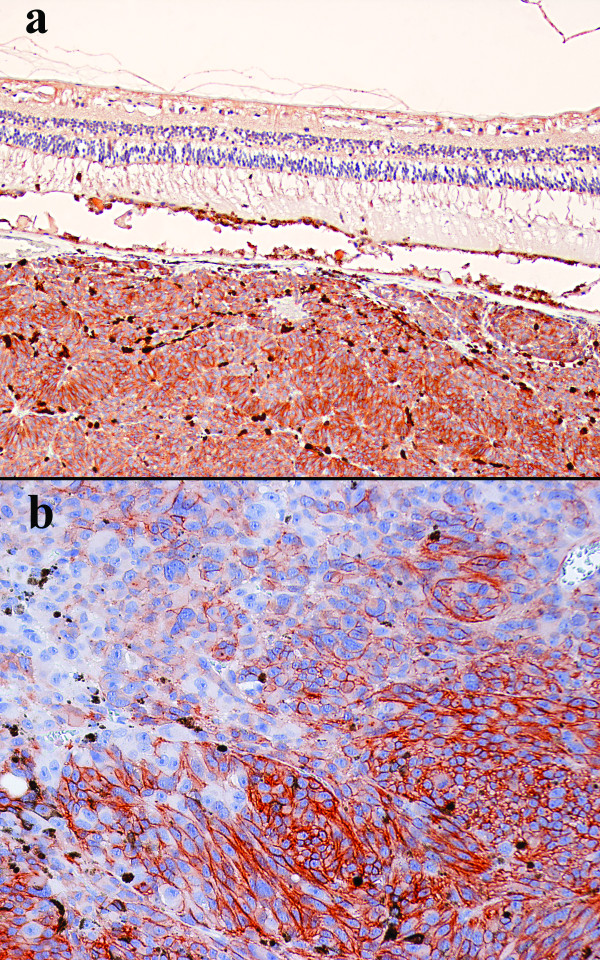
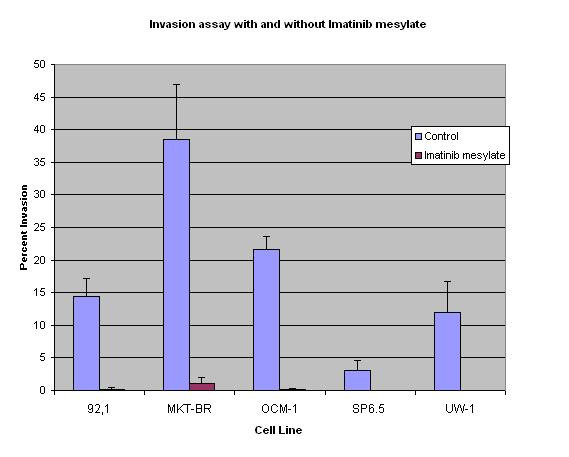
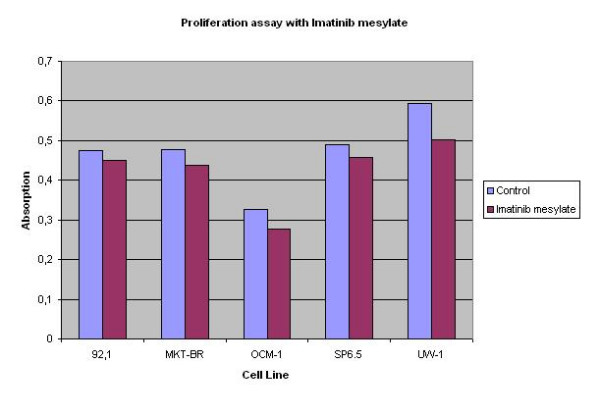
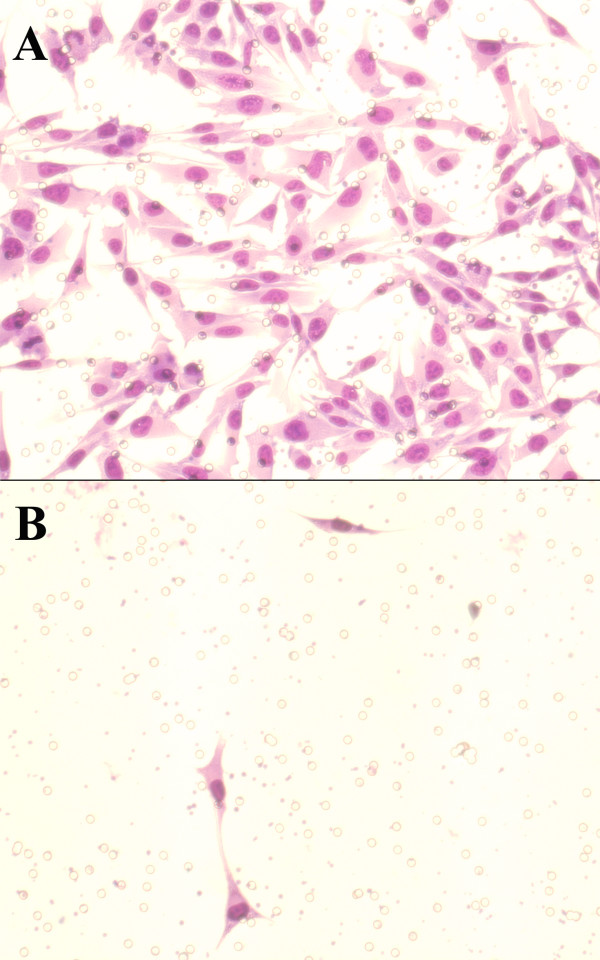
Methods: Fifty-five specimens of primary UM selected from the archives of the Ocular Pathology Laboratory, McGill University, Montreal, Canada, were immunostained for c-kit. All cells displaying distinct immunoreactivity were considered positive. Four human UM cell lines and 1 human uveal transformed melanocyte cell line were tested for in vitro proliferation Assays (TOX-6) and invasion assay with imatinib mesylate (concentration of 10 microM).
Results: The c-kit expression was positive in 78.2% of the UM. There was a statistical significant decrease in the proliferation and invasion rates of all 5 cell lines.
Conclusion: The majority of UM expressed c-kit, and imatinib mesylate does decrease the proliferation and invasion rates of human UM cell lines. These results justify the need for a clinical trial to investigate in vivo the response of UM to imatinib mesylate.
Figures
References
-
- McLean IW, Armed Forces Institute of Pathology (U.S.), Universities Associated for Research and Education in Pathology . Tumors of the eye and ocular adnexa. Washington, D.C. Bethesda, Md.: Armed Forces Institute of Pathology; under the auspices of Universities Associated for Research and Education in Pathology Inc; 1994.
-
- Assessment of metastatic disease status at death in 435 patients with large choroidal melanoma in the Collaborative Ocular Melanoma Study (COMS): COMS report no. 15. Arch Ophthalmol. 2001;119:670–676. - PubMed
-
- Morstyn G, Brown S, Gordon M, Crawford J, Demetri G, Rich W, McGuire B, Foote M, McNiece I. Stem cell factor is a potent synergistic factor in hematopoiesis. Oncology. 1994;51:205–214. - PubMed
LinkOut - more resources
Full Text Sources
Other Literature Sources