


A mycothiol synthase mutant of Mycobacterium smegmatis produces novel thiols and has an altered thiol redox status
- PMID: 16237013
- PMCID: PMC1272995
- DOI: 10.1128/JB.187.21.7309-7316.2005
A mycothiol synthase mutant of Mycobacterium smegmatis produces novel thiols and has an altered thiol redox status
Abstract
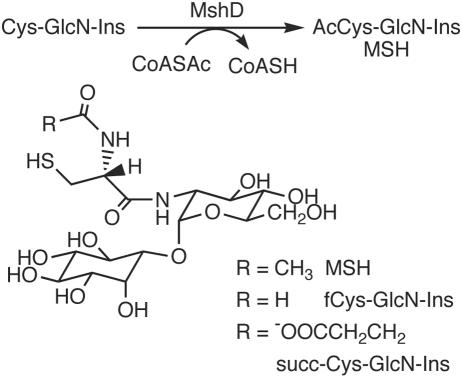
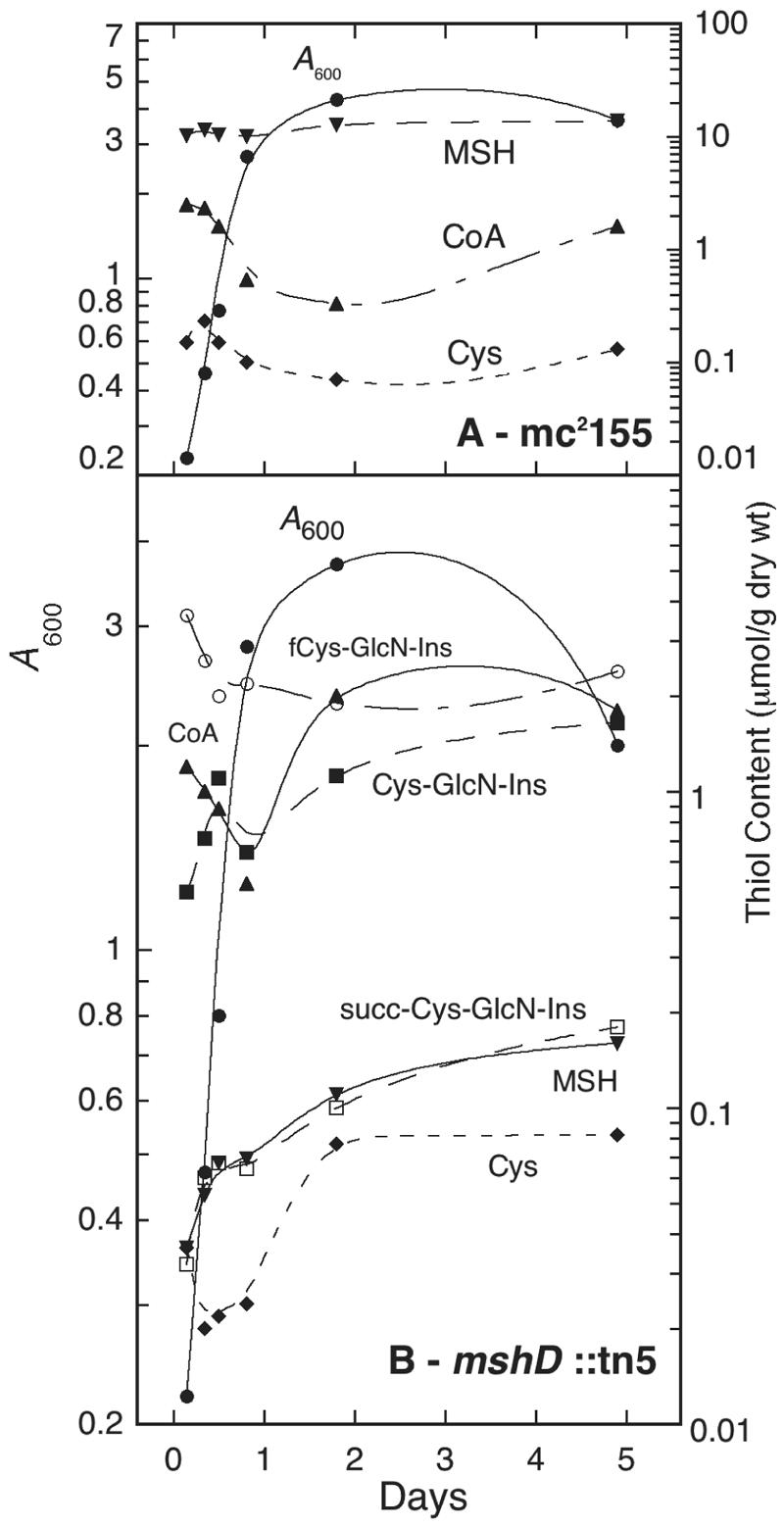
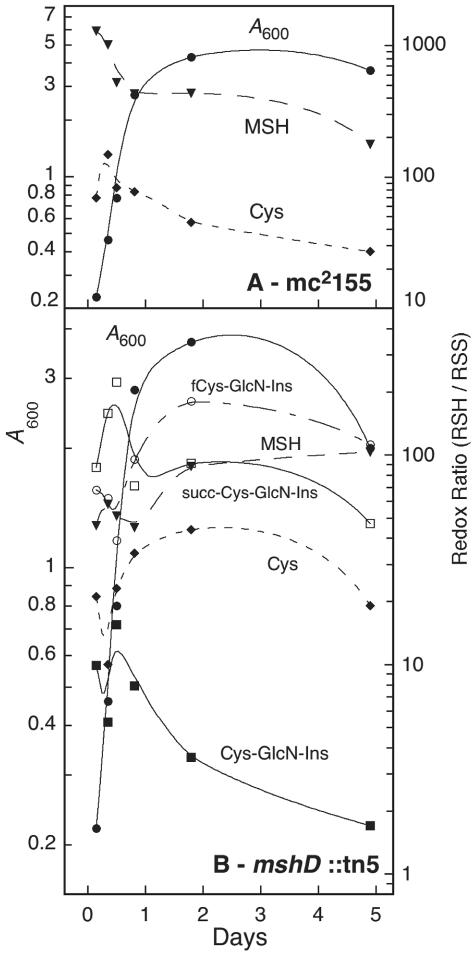
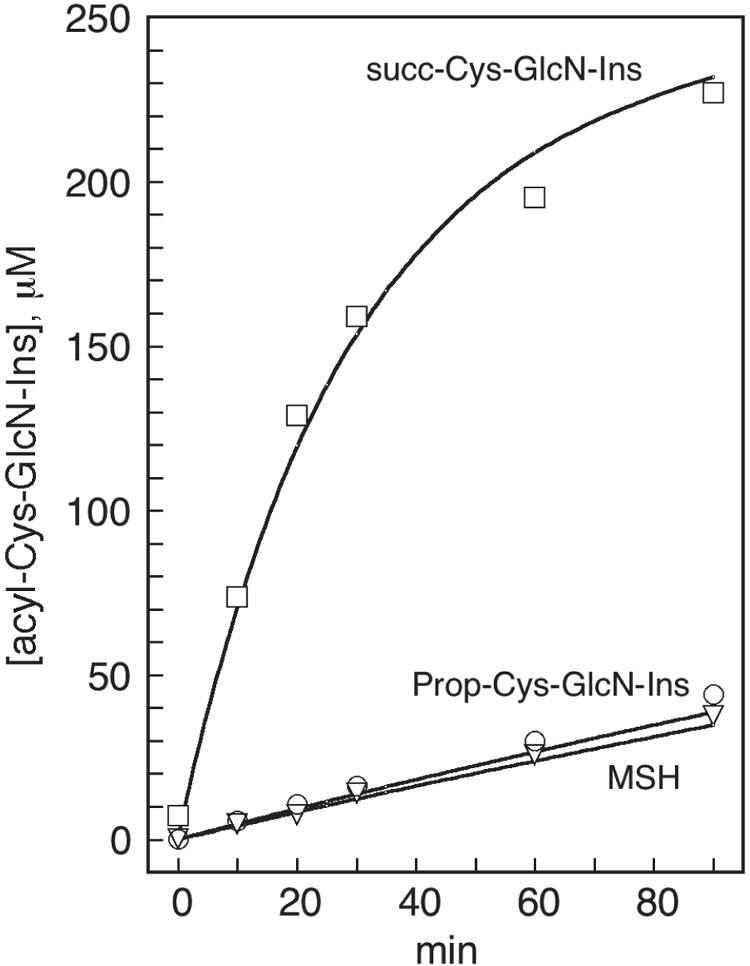
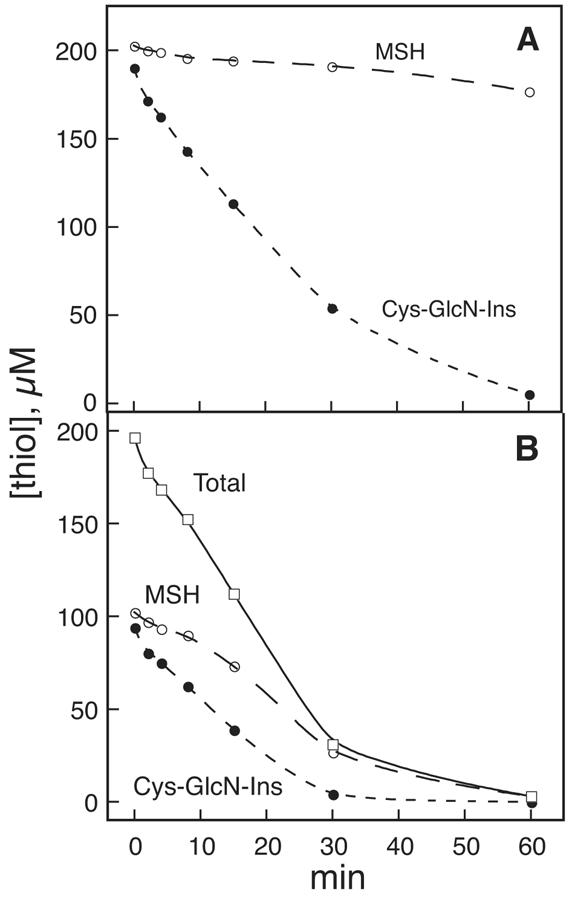
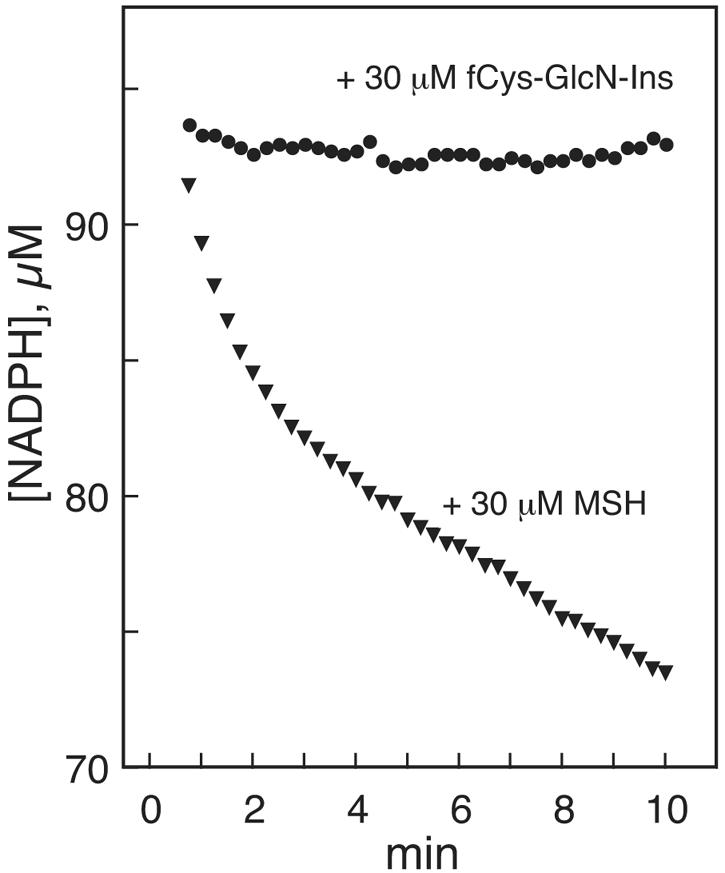
Mycobacteria and other actinomycetes do not produce glutathione but make mycothiol (MSH; AcCys-GlcN-Ins) that has functions similar to those of glutathione and is essential for growth of Mycobacterium tuberculosis. Mycothiol synthase (MshD) catalyzes N acetylation of Cys-GlcN-Ins to produce MSH in Mycobacterium smegmatis mc2155, and Cys-GlcN-Ins is maintained at a low level. The mycothiol synthase mutant, the mshD::Tn5 mutant, produces high levels of Cys-GlcN-Ins along with two novel thiols, N-formyl-Cys-GlcN-Ins and N-succinyl-Cys-GlcN-Ins, and a small amount of MSH. The nonenzymatic reaction of acyl-coenzyme A (CoA) with Cys-GlcN-Ins to produce acyl-Cys-GlcN-Ins is a facile reaction under physiologic conditions, with succinyl-CoA being an order of magnitude more reactive than acetyl-CoA. The uncatalyzed reaction rates are adequate to account for the observed production of N-succinyl-Cys-GlcN-Ins and MSH under physiologic conditions. It was shown that the N-acyl-Cys-GlcN-Ins compounds are maintained in a substantially reduced state in the mutant but that Cys-GlcN-Ins exists in disulfide forms at 5 to 40% at different stages of growth. MSH was able to facilitate reduction of N-succinyl-Cys-GlcN-Ins disulfide through thiol-disulfide exchange, but N-formyl-Cys-GlcN-Ins was ineffective. The oxidized state of Cys-GlcN-Ins in cells appears to result from a high susceptibility to autoxidation and a low capacity of the cell to reduce its disulfide forms. The mutant exhibited no enhanced sensitivity to hydrogen peroxide, tert-butyl hydroperoxide, or cumene hydroperoxide relative to the parent strain, suggesting that the most abundant thiol, N-formyl-Cys-GlcN-Ins, functions as a substitute for MSH.
Figures
References
-
- Beckwith, J., and F. Aslund. 2001. Roles of thiol-redox pathways in bacteria. Annu. Rev. Biochem. 55:21-48. - PubMed
-
- Berges, D. A., W. E. DeWolf, Jr., G. L. Dunn, D. J. Newman, S. J. Schmidt, J. J. Taggart, and C. Gilvarg. 1986. Studies on the active site of succinyl-CoA:tetrahydrodipicolinate N-succinyltransferase. Characterization using analogs of tetrahydrodipicolinate. J. Biol. Chem. 261:6160-6167. - PubMed
-
- Buchmeier, N. A., G. L. Newton, T. Koledin, and R. C. Fahey. 2003. Association of mycothiol with protection of Mycobacterium tuberculosis from toxic oxidants and antibiotics. Mol. Microbiol. 47:1723-1732. - PubMed
-
- Deutsch, J., and H. J. Niclas. 1993. A convenient procedure for the formylation of amines and alcohols using cyanomethylformate. Synthetic Commun. 23:1561-1568.
Publication types
MeSH terms
Substances
Grants and funding
LinkOut - more resources
Full Text Sources
