


Complementary roles of cholecystokinin- and parvalbumin-expressing GABAergic neurons in hippocampal network oscillations
- PMID: 16237182
- PMCID: PMC6725722
- DOI: 10.1523/JNEUROSCI.3269-05.2005
Complementary roles of cholecystokinin- and parvalbumin-expressing GABAergic neurons in hippocampal network oscillations
Abstract
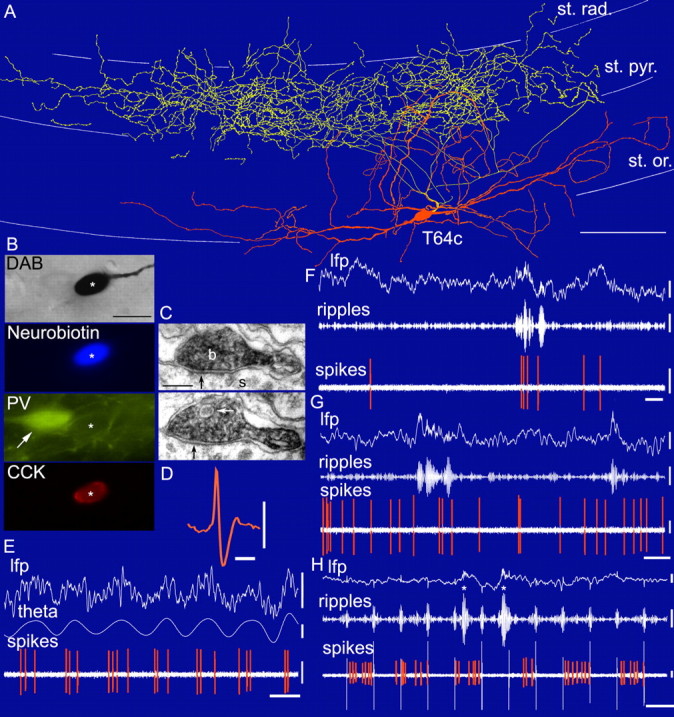
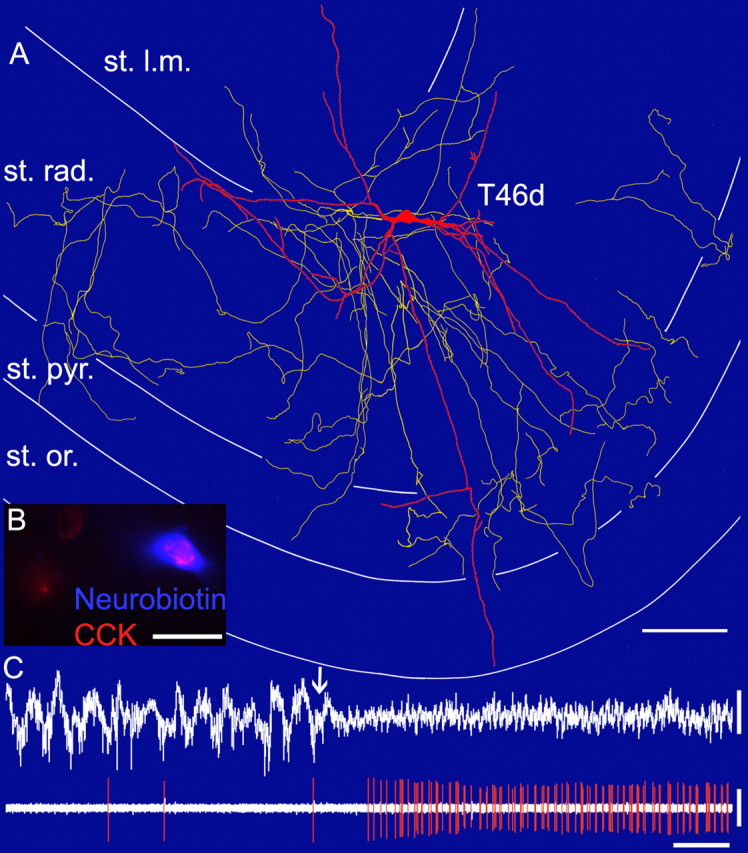
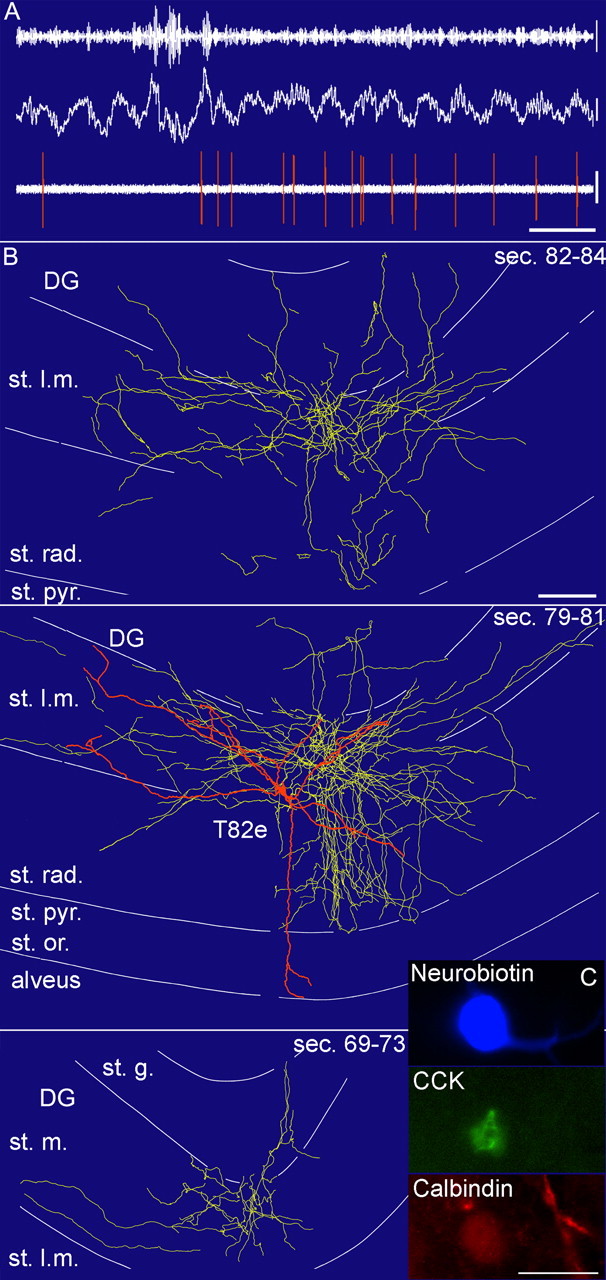
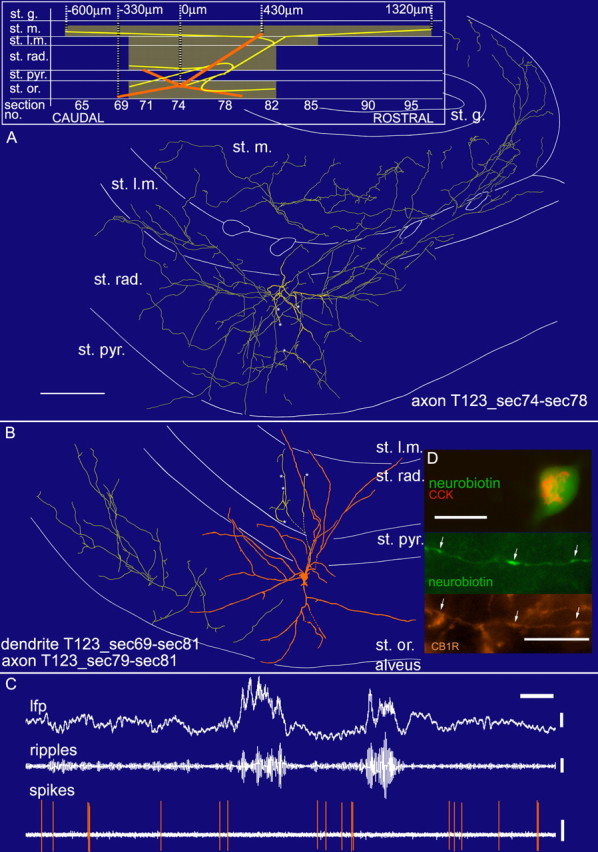
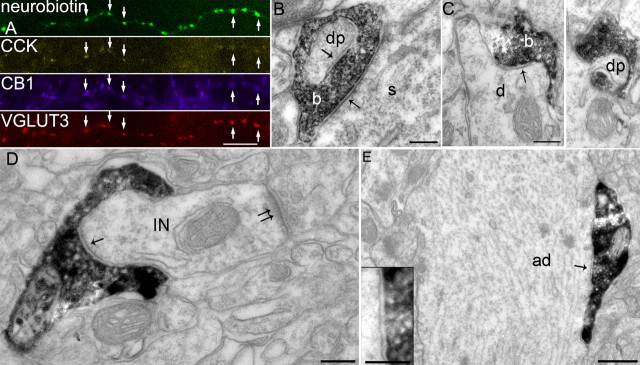
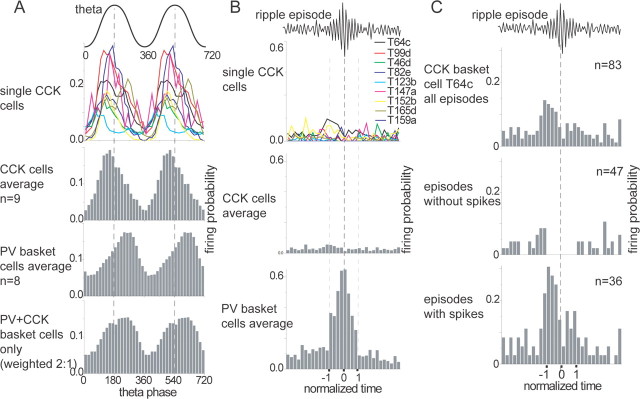
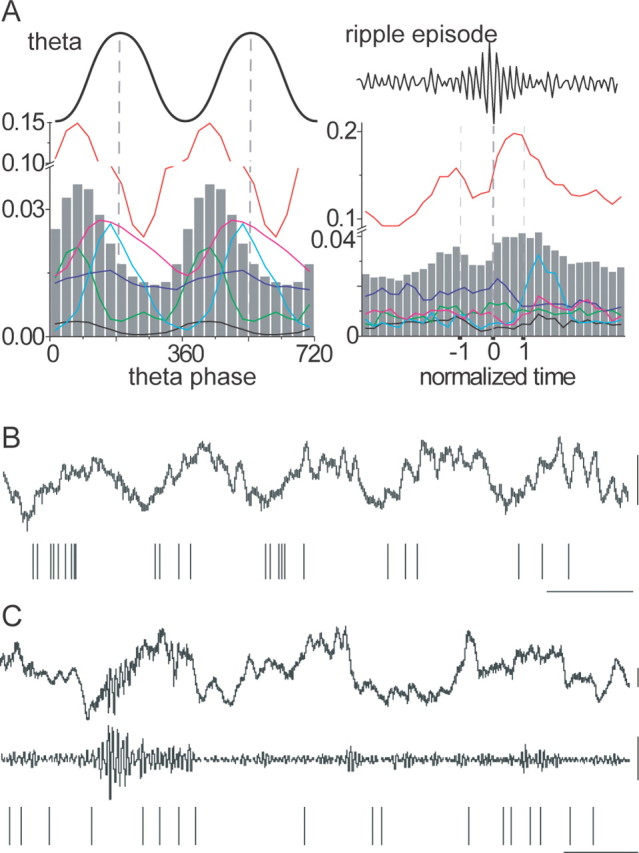
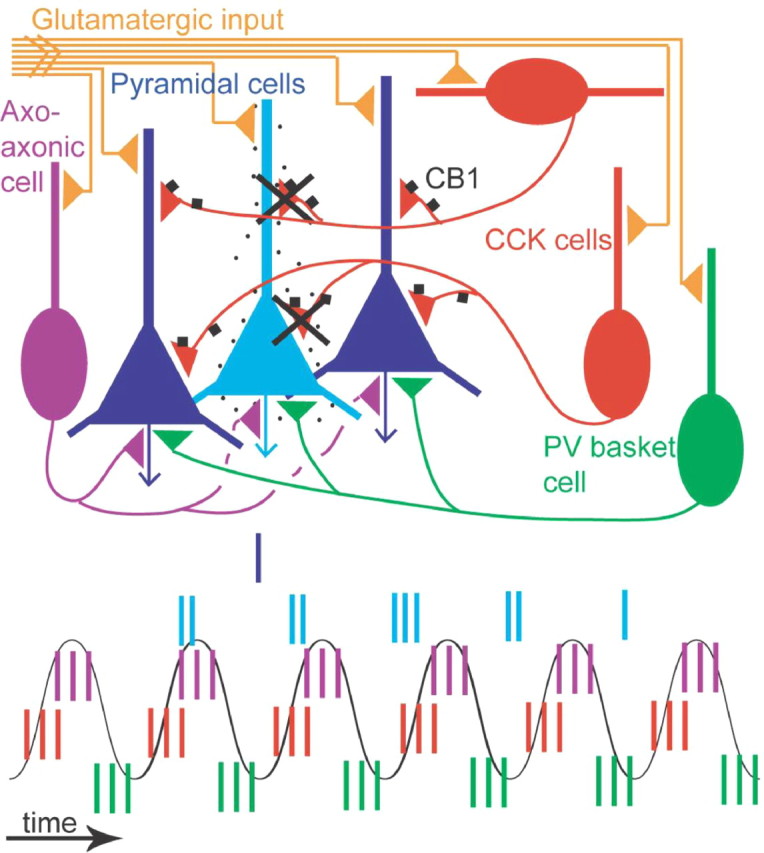
In the hippocampal CA1 area, a relatively homogenous population of pyramidal cells is accompanied by a diversity of GABAergic interneurons. Previously, we found that parvalbumin-expressing basket, axo-axonic, bistratified, and oriens-lacunosum moleculare cells, innervating different domains of pyramidal cells, have distinct firing patterns during network oscillations in vivo. A second family of interneurons, expressing cholecystokinin but not parvalbumin, is known to target the same domains of pyramidal cells as do the parvalbumin cells. To test the temporal activity of these independent and parallel GABAergic inputs, we recorded the precise spike timing of identified cholecystokinin interneurons during hippocampal network oscillations in anesthetized rats and determined their molecular expression profiles and synaptic targets. The cells were cannabinoid receptor type 1 immunopositive. Contrary to the stereotyped firing of parvalbumin interneurons, cholecystokinin-expressing basket and dendrite-innervating cells discharge, on average, with 1.7 +/- 2.0 Hz during high-frequency ripple oscillations in an episode-dependent manner. During theta oscillations, cholecystokinin-expressing interneurons fire with 8.8 +/- 3.3 Hz at a characteristic time on the ascending phase of theta waves (155 +/- 81 degrees), when place cells start firing in freely moving animals. The firing patterns of some interneurons recorded in drug-free behaving rats were similar to cholecystokinin cells in anesthetized animals. Our results demonstrate that cholecystokinin- and parvalbumin-expressing interneurons make different contributions to network oscillations and play distinct roles in different brain states. We suggest that the specific spike timing of cholecystokinin interneurons and their sensitivity to endocannabinoids might contribute to differentiate subgroups of pyramidal cells forming neuronal assemblies, whereas parvalbumin interneurons contribute to synchronizing the entire network.
Figures
References
-
- Acsady L, Arabadzisz D, Freund TF (1996) Correlated morphological and neurochemical features identify different subsets of vasoactive intestinal polypeptide-immunoreactive interneurons in rat hippocampus. Neuroscience 73: 299-315. - PubMed
-
- Buzsaki G, Draguhn A (2004) Neuronal oscillations in cortical networks. Science 304: 1926-1929. - PubMed
-
- Buzsaki G, Leung L-W, Vanderwolf CH (1983) Cellular bases of hippocampal EEG in the behaving rat. Brain Res Brain Res Rev 6: 139-171. - PubMed
-
- Carlson G, Wang Y, Alger BE (2002) Endocannabinoids facilitate the induction of LTP in the hippocampus. Nat Neurosci 5: 723-724. - PubMed
Publication types
MeSH terms
Substances
LinkOut - more resources
Full Text Sources
Miscellaneous
