Characterization of N200 and P300: selected studies of the Event-Related Potential
- PMID: 16239953
- PMCID: PMC1252727
- DOI: 10.7150/ijms.2.147
Characterization of N200 and P300: selected studies of the Event-Related Potential
Abstract
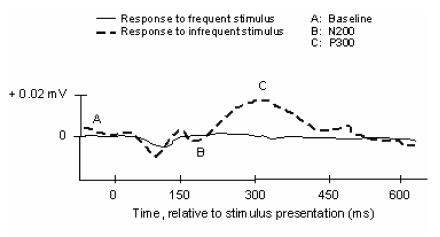
The Event-Related Potential (ERP) is a time-locked measure of electrical activity of the cerebral surface representing a distinct phase of cortical processing. Two components of the ERP which bear special importance to stimulus evaluation, selective attention, and conscious discrimination in humans are the P300 positivity and N200 negativity, appearing 300 ms and 200 ms post-stimulus, respectively. With the rapid proliferation of high-density EEG methods, and interdisciplinary interest in its application as a prognostic, diagnostic, and investigative tool, an understanding of the underpinnings of P300 and N200 physiology may support its application to both the basic neuroscience and clinical medical settings. The authors present a synthesis of current understanding of these two deflections in both normal and pathological states.
Conflict of interest statement
Conflict of interest: The authors have declared that no conflict of interest exists.
Figures
References
-
- Sabatini RME. Mapping the brain. Brain and Mind Magazine. 1997. 3.
-
- Pritchard WS. Psychophysiology of P300. Psychological Bulletin. 1981;89:506–540. - PubMed
-
- Pritchard WS, Shappell SA, Brandt ME. Psychophysiology of N200/N400: A review and classification scheme. Advances in Psychophysiology. 1991;4:43–106.
-
- Hoffman JE. Event-related potentials and automatic and controlled processes. In: Rohrbaugh JW, Parasuraman R, Johnson R Jr, editors. Event Related Brain Potentials. New York: Oxford University Press; 1990. pp. 145–157.
-
- Näätänen R, Picton TW. N2 and automatic versus controlled processes. Electroencephalography and Clinical Neurophysiology. 1986;38:169–186. - PubMed
LinkOut - more resources
Full Text Sources
Other Literature Sources
Miscellaneous