


Will travel for food: spatial discounting in two new world monkeys
- PMID: 16243033
- PMCID: PMC8049090
- DOI: 10.1016/j.cub.2005.09.016
Will travel for food: spatial discounting in two new world monkeys
Abstract
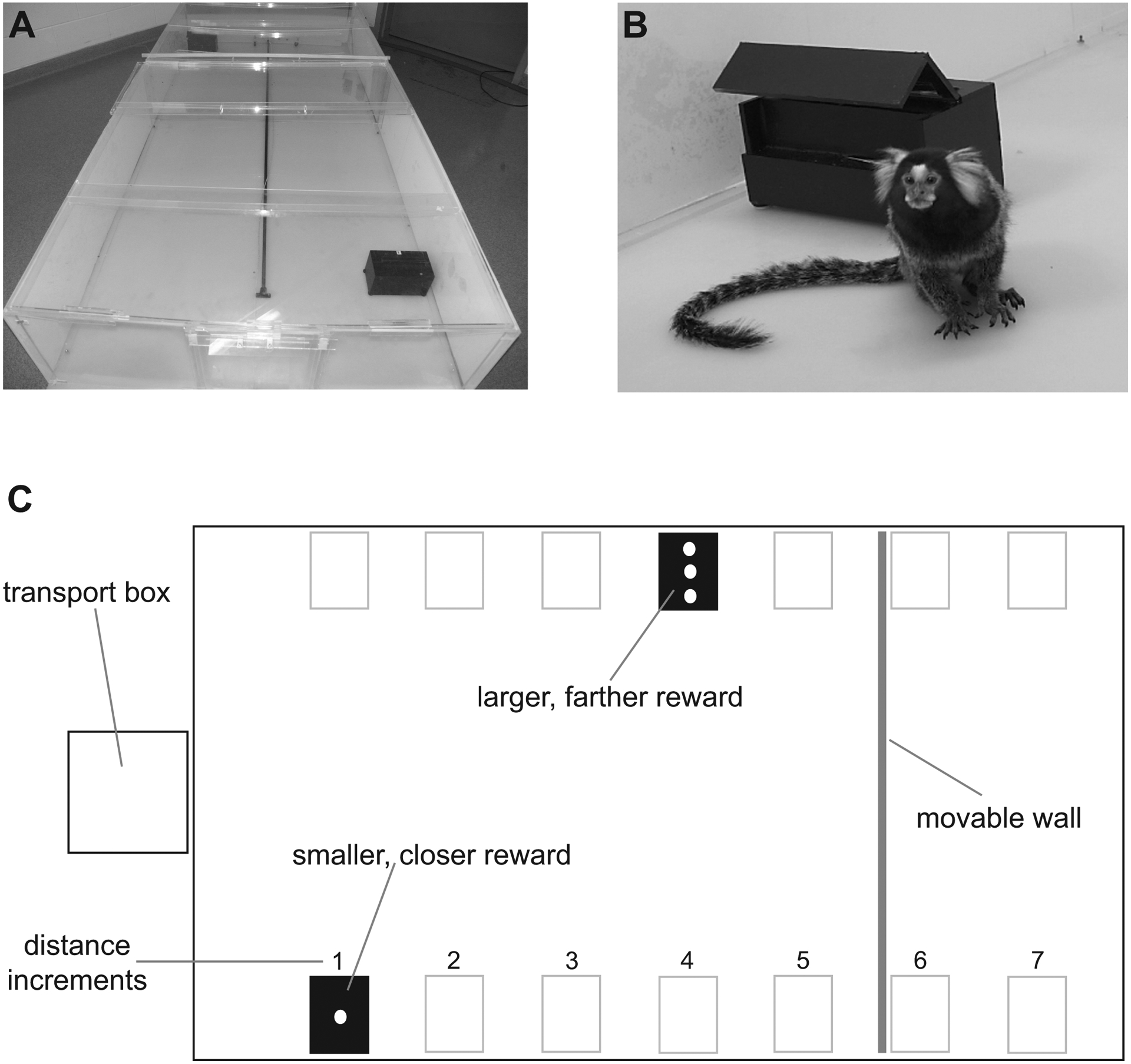
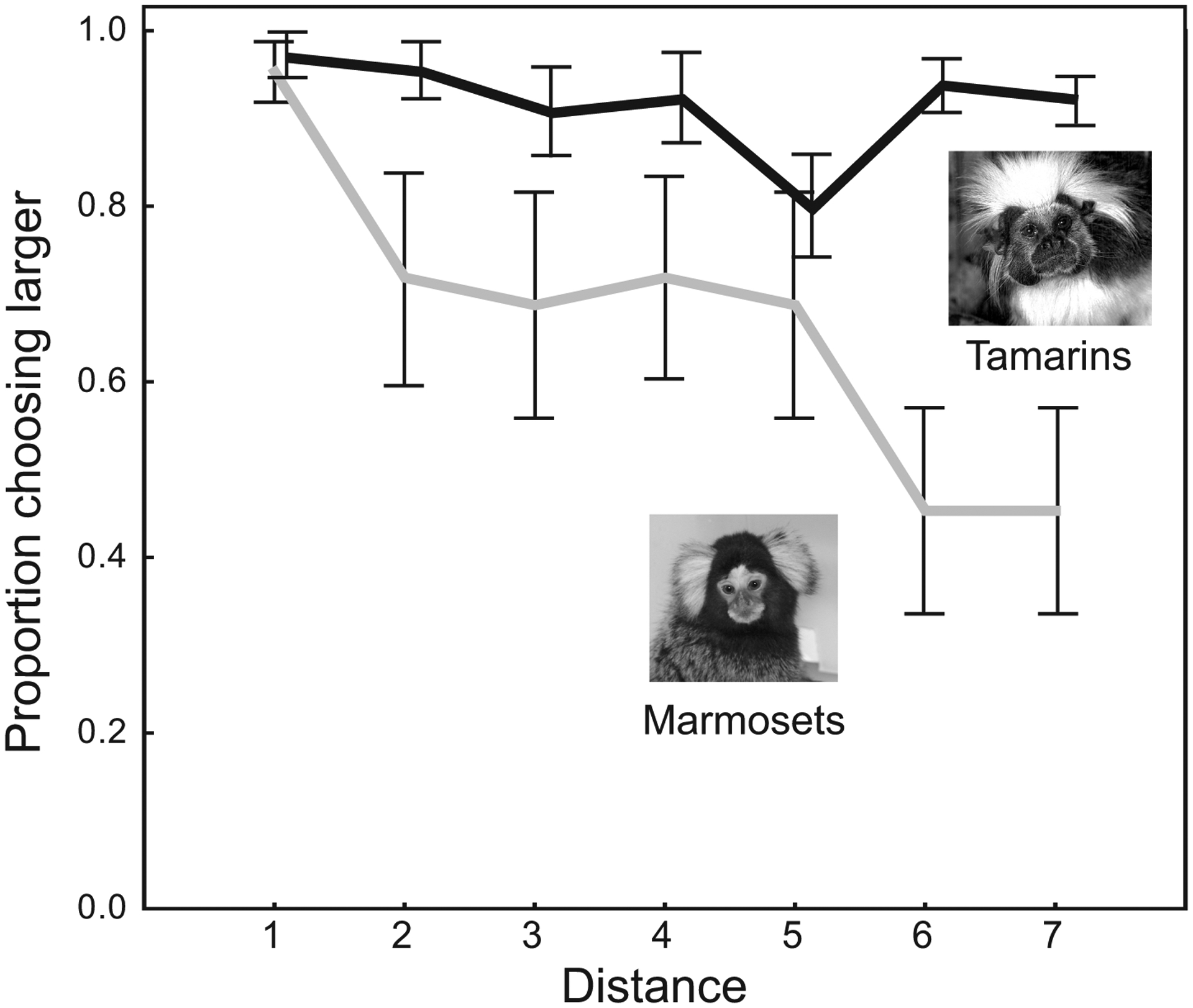
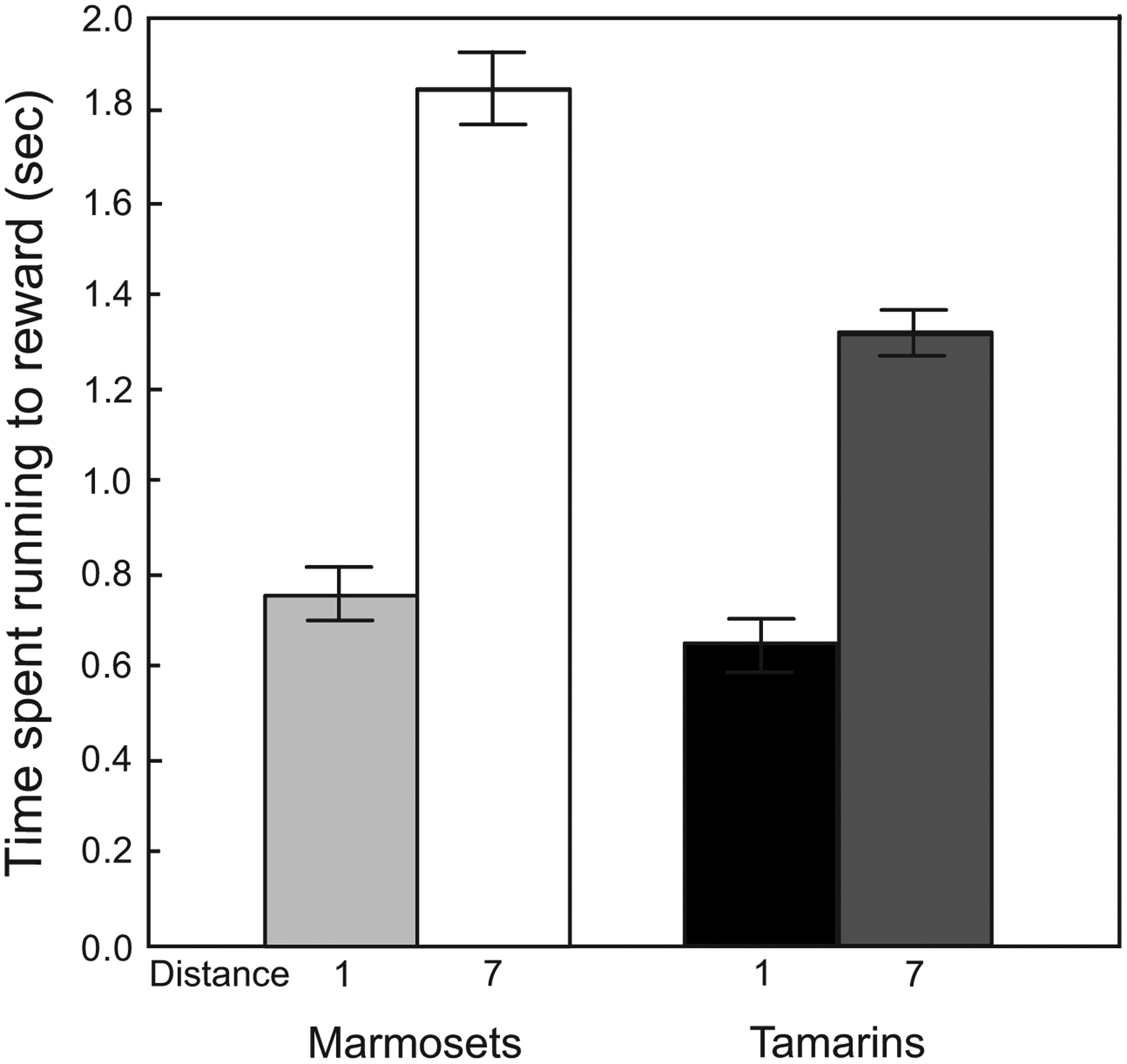
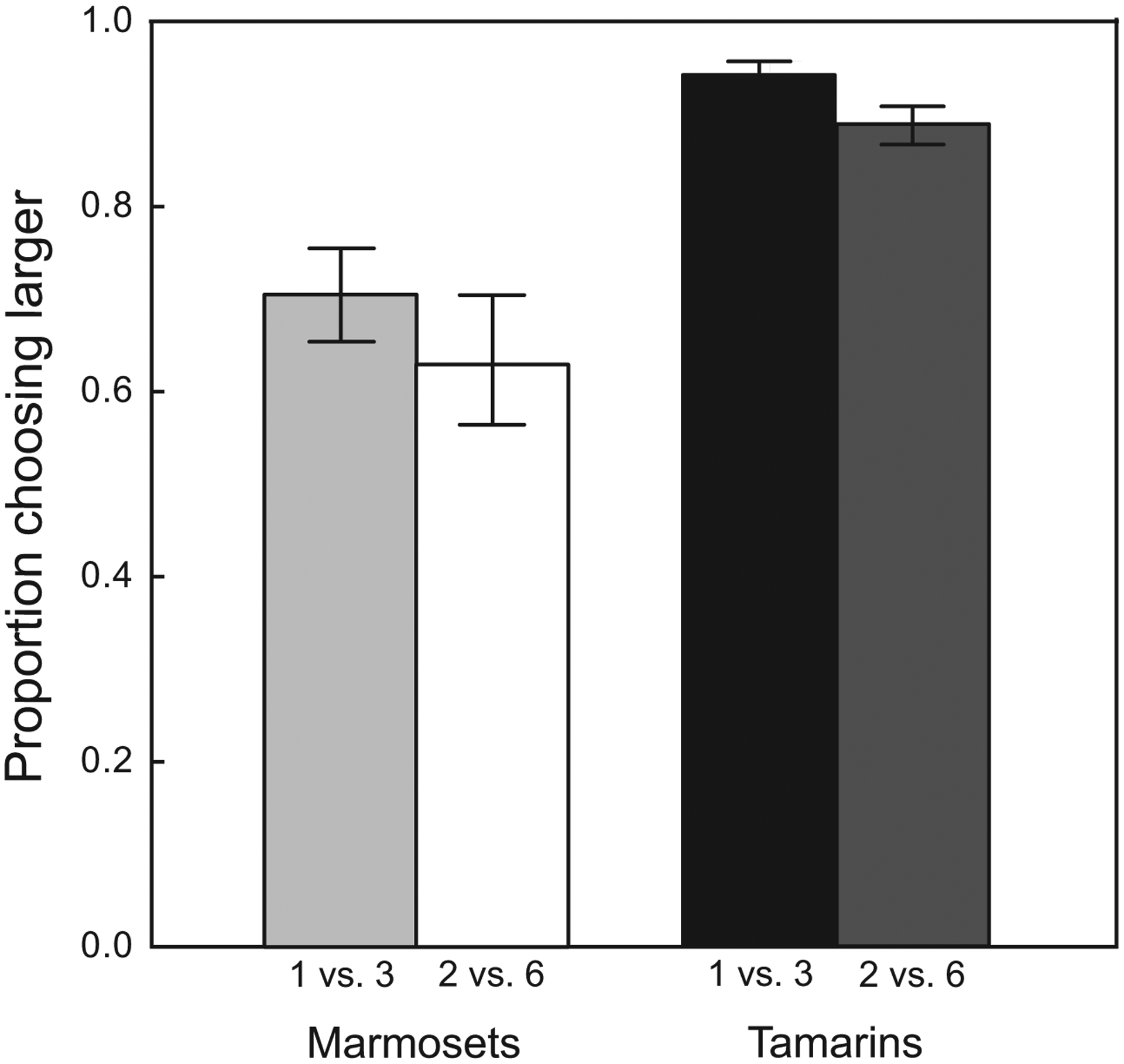
Nonhuman animals steeply discount the future, showing a preference for small, immediate over large, delayed rewards. Currently unclear is whether discounting functions depend on context. Here, we examine the effects of spatial context on discounting in cotton-top tamarins (Saguinus oedipus) and common marmosets (Callithrix jacchus), species known to differ in temporal discounting. We presented subjects with a choice between small, nearby rewards and large, distant rewards. Tamarins traveled farther for the large reward than marmosets, attending to the ratio of reward differences rather than their absolute values. This species difference contrasts with performance on a temporal task in which marmosets waited longer than tamarins for the large reward. These comparative data indicate that context influences choice behavior, with the strongest effect seen in marmosets who discounted more steeply over space than over time. These findings parallel details of each species' feeding ecology. Tamarins range over large distances and feed primarily on insects, which requires using quick, impulsive action. Marmosets range over shorter distances than tamarins and feed primarily on tree exudates, a clumped resource that requires patience to wait for sap to exude. These results show that discounting functions are context specific, shaped by a history of ecological pressures.
Figures
References
-
- Mazur JE (1987). An adjusting procedure for studying delayed reinforcement. In Quantitative Analyses of Behavior: The Effect of Delay and of Intervening Events on Reinforcement Value, Volume 5,Commons ML,Mazur JE,Nevin JA andRachlin H, eds. (Hillsdale, NJ: Lawrence Erlbaum Associates; ), pp. 55–73.
-
- Bateson M, and Kacelnik A (1996). Rate currencies and the foraging starling: the fallacy of the averages revisited. Behav. Ecol 7, 341–352.
-
- Stephens DW, and Anderson D (2001). The adaptive value of preference for immediacy: when shortsighted rules have farsighted consequences. Behav. Ecol 12, 330–339.
Publication types
MeSH terms
Grants and funding
LinkOut - more resources
Full Text Sources
Miscellaneous
