


Laser-capture microdissection: refining estimates of the quantity and distribution of latent herpes simplex virus 1 and varicella-zoster virus DNA in human trigeminal Ganglia at the single-cell level
- PMID: 16254342
- PMCID: PMC1280223
- DOI: 10.1128/JVI.79.22.14079-14087.2005
Laser-capture microdissection: refining estimates of the quantity and distribution of latent herpes simplex virus 1 and varicella-zoster virus DNA in human trigeminal Ganglia at the single-cell level
Abstract
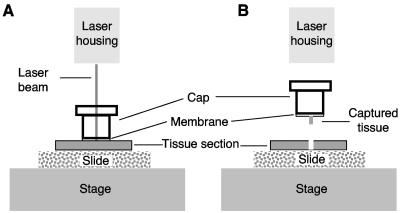
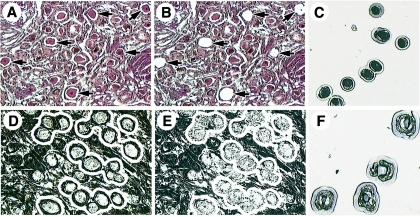
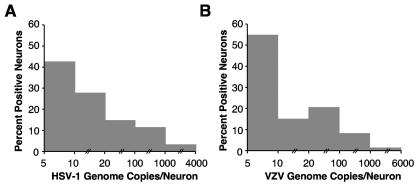
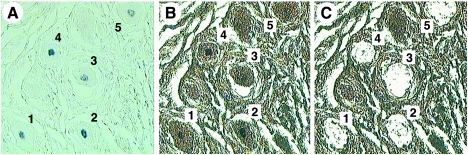
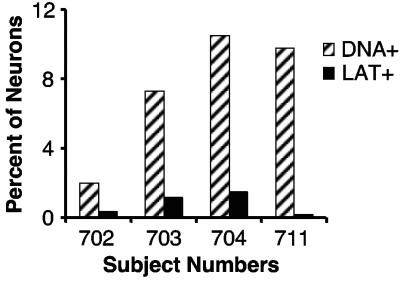
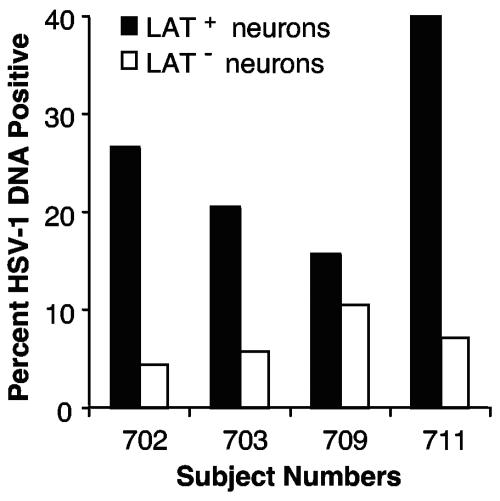
There remains uncertainty and some controversy about the percentages and types of cells in human sensory nerve ganglia that harbor latent herpes simplex virus 1 (HSV-1) and varicella-zoster virus (VZV) DNA. We developed and validated laser-capture microdissection and real-time PCR (LCM/PCR) assays for the presence and copy numbers of HSV-1 gG and VZV gene 62 sequences in single cells recovered from sections of human trigeminal ganglia (TG) obtained at autopsy. Among 970 individual sensory neurons from five subjects, 2.0 to 10.5% were positive for HSV-1 DNA, with a median of 11.3 copies/positive cell, compared with 0.2 to 1.5% of neurons found to be positive by in situ hybridization (ISH) for HSV-1 latency-associated transcripts (LAT), the classical surrogate marker for HSV latency. This indicates a more pervasive latent HSV-1 infection of human TG neurons than originally thought. Combined ISH/LCM/PCR assays revealed that the majority of the latently infected neurons do not accumulate LAT to detectable levels. We detected VZV DNA in 1.0 to 6.9% of individual neurons from 10 subjects. Of the total 1,722 neurons tested, 4.1% were VZV DNA positive, with a median of 6.9 viral genomes/positive cell. After removal by LCM of all visible neurons on a slide, all surrounding nonneuronal cells were harvested and assayed: 21 copies of HSV-1 DNA were detected in approximately 5,200 nonneuronal cells, while nine VZV genomes were detected in approximately 14,200 nonneuronal cells. These data indicate that both HSV-1 and VZV DNAs persist in human TG primarily, if not exclusively, in a moderate percentage of neuronal cells.
Figures
References
-
- Burke, R. L., K. Hartog, K. D. Croen, and J. M. Ostrove. 1991. Detection and characterization of latent HSV RNA by in situ and Northern blot hybridization in guinea pigs. Virology 181:793-797. - PubMed
-
- Cai, G. Y., L. I. Pizer, and M. J. Levin. 2002. Fractionation of neurons and satellite cells from human sensory ganglia in order to study herpesvirus latency. J. Virol. Methods 104:21-32. - PubMed
Publication types
MeSH terms
Substances
Grants and funding
LinkOut - more resources
Full Text Sources
Other Literature Sources
Research Materials
Miscellaneous
