


Predicted inactivation of viruses of relevance to biodefense by solar radiation
- PMID: 16254359
- PMCID: PMC1280232
- DOI: 10.1128/JVI.79.22.14244-14252.2005
Predicted inactivation of viruses of relevance to biodefense by solar radiation
Abstract
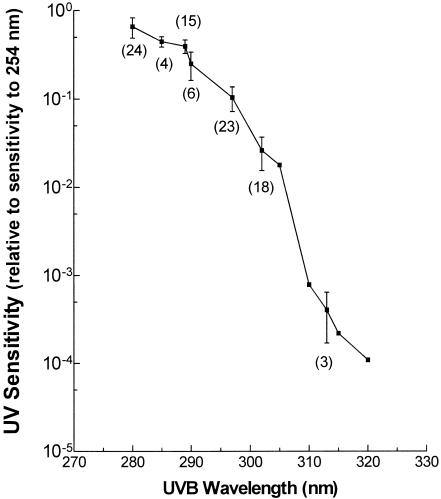
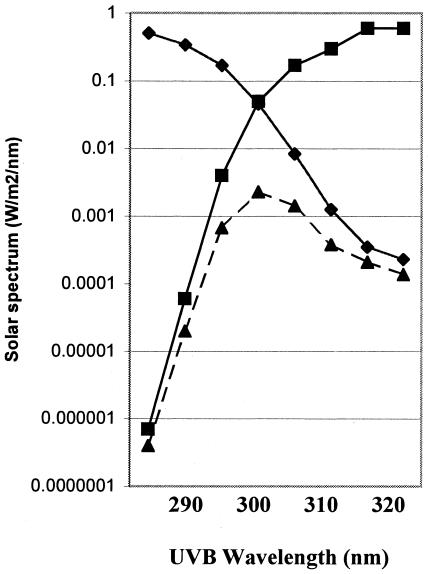
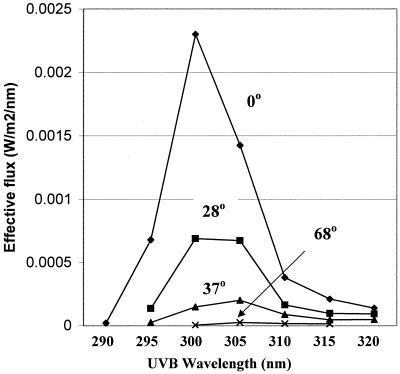
UV radiation from the sun is the primary germicide in the environment. The goal of this study was to estimate inactivation of viruses by solar exposure. We reviewed published reports on 254-nm UV inactivation and tabulated the sensitivities of a wide variety of viruses, including those with double-stranded DNA, single-stranded DNA, double-stranded RNA, or single-stranded RNA genomes. We calculated D(37) values (fluence producing on average one lethal hit per virion and reducing viable virus to 37%) from all available data. We defined "size-normalized sensitivity" (SnS) by multiplying UV(254) sensitivities (D(37) values) by the genome size, and SnS values were relatively constant for viruses with similar genetic composition. In addition, SnS values were similar for complete virions and their defective particles, even when the corresponding D(37) values were significantly different. We used SnS to estimate the UV(254) sensitivities of viruses for which the genome composition and size were known but no UV inactivation data were available, including smallpox virus, Ebola, Marburg, Crimean-Congo, Junin, and other hemorrhagic viruses, and Venezuelan equine encephalitis and other encephalitis viruses. We compiled available data on virus inactivation as a function of wavelength and calculated a composite action spectrum that allowed extrapolation from the 254-nm data to solar UV. We combined our estimates of virus sensitivity with solar measurements at different geographical locations to predict virus inactivation. Our predictions agreed with the available experimental data. This work should be a useful step to understanding and eventually predicting the survival of viruses after their release in the environment.
Figures
References
-
- Albrecht, T., S. C. Jeor, F. D. Funk, and F. Rapp. 1974. Multiplicity reactivation of human cytomegalovirus inactivated by ultra-violet light. Int. J. Radiat. Biol. Relat. Stud. Phys. Chem. Med. 26:445-454. - PubMed
-
- Anderson, R., M. Daya, and J. Reeve. 1987. An evaluation of the contribution of membrane lipids to protection against ultraviolet radiation. Biochim. Biophys. Acta 905:227-230. - PubMed
-
- Battigelli, D. A., M. D. Sobsey, and D. C. Lobe. 1993. The inactivation of hepatitis A virus and other model viruses by UV irradiation. Water Sci. Technol. 27:339-342.
-
- Bister, K., H. E. Varmus, E. Stavnezer, E. Hunter, and P. K. Vogt. 1977. Biological and biochemical studies on the inactivation of avian oncoviruses by ultraviolet irradiation. Virology 77:689-704. - PubMed
Publication types
MeSH terms
Substances
LinkOut - more resources
Full Text Sources
Other Literature Sources
