Cancer disparities research partnership in Lakota Country: clinical trials, patient services, and community education for the Oglala, Rosebud, and Cheyenne River Sioux tribes
- PMID: 16257946
- PMCID: PMC1449496
- DOI: 10.2105/AJPH.2004.053645
Cancer disparities research partnership in Lakota Country: clinical trials, patient services, and community education for the Oglala, Rosebud, and Cheyenne River Sioux tribes
Abstract
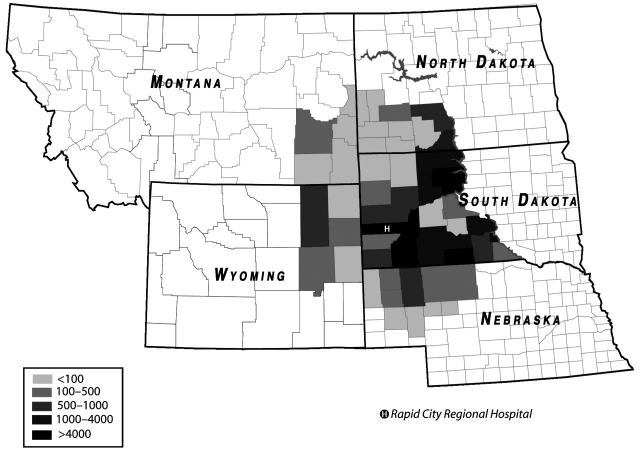
Native Americans served by the Aberdeen, Billings, and Bemidji areas of the Indian Health Service (IHS) have a cancer mortality rate approximately 40% higher than that of the overall US population. The National Cancer Institute has funded Rapid City Regional Hospital to provide clinical trials, behavioral research, a genetic protocol, patient navigator services (assisting patients with health care coordination and financial issues and helping them to understand their options), and community education for members of 3 western South Dakota tribes. Challenges faced by the project included obtaining multiple approvals from 3 tribes, 4 IHS facilities, and 5 institutional review boards; travel distances; lack of screening; red tape of referrals; and refusal by some payers to cover clinical trials. Building trust through ongoing communication and community presence is key to a successful project.
Figures
References
-
- Bobinski MA. Health disparities and the law: wrongs in search of a right. Am J Law Med. 2003;29: 363–380. - PubMed
-
- Geiger HJ. Racial and ethnic disparities in diagnosis and treatment: a review of the evidence and a consideration of causes. In: Smedley BD, Smith AY, Nelson AR, eds. Unequal Treatment: Confronting Racial and Ethnic Disparities in Health Care. Washington, DC: Institute of Medicine, National Academies Press; 2003:415–454. - PubMed
-
- Sateren WB, Trimble EL, Abrams J, et al. How sociodemographics, presence of oncology specialists, and hospital cancer programs affect accrual to cancer treatment trials. J Clin Oncol. 2002;20:2109–2117. - PubMed
-
- Hayes MA, Smedley BD. The Unequal Burden of Cancer: An Assessment of NIH Research and Programs for Ethnic Minorities and the Medically Underserved. Washington, DC: Institute of Medicine, National Academies Press; 1999. - PubMed
-
- Espey DK, Paisano RE, Cobb N. Cancer Mortality Among American Indians and Alaska Natives: Regional Differences, 1994–1998. Rockville, Md: Indian Health Service; 2003. IHS publication 97-615-28.
Publication types
MeSH terms
Grants and funding
LinkOut - more resources
Full Text Sources
Medical