


The effect of ultralow-dose transdermal estradiol on urinary incontinence in postmenopausal women
- PMID: 16260511
- PMCID: PMC1557395
- DOI: 10.1097/01.AOG.0000182576.48290.6d
The effect of ultralow-dose transdermal estradiol on urinary incontinence in postmenopausal women
Abstract
Objective: To estimate the effect of 2 years of treatment with ultralow-dose transdermal estradiol (E2) on incontinence in postmenopausal women.
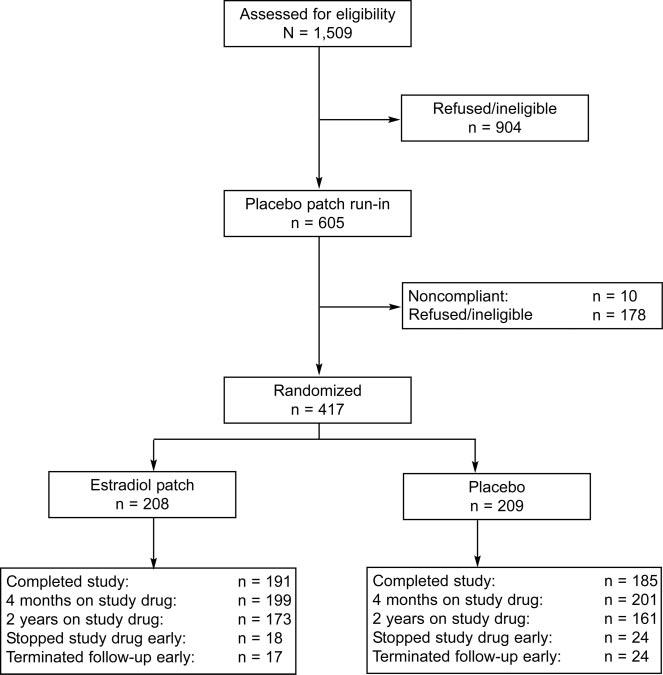
Methods: Ultra Low Dose Transdermal estRogen Assessment (ULTRA) was a multicenter, randomized, double-blinded, placebo-controlled trial of unopposed ultralow-dose (0.014 mg/d) transdermal E2 for prevention of osteoporosis in 417 postmenopausal women aged 60 to 80 years. Frequency of incontinence episodes was assessed at baseline and after 4 months and 2 years of treatment using a self-reported questionnaire. We used an intention-to-treat analysis to compare change in incontinence frequency, improved (decreased 2 or more episodes per week), unchanged (increased or decreased no more than 1 episode per week), or worsened (increased 2 or more episodes per week) between the E2 and placebo groups among women with and without at least weekly incontinence at baseline.
Results: At baseline, the prevalence of at least weekly incontinence was similar between E2 and placebo groups (43%). After 2 years, there was no difference between groups in the proportions of women with incontinence at baseline whose incontinence improved, worsened, or was unchanged. The odds ratio for worsening incontinence in the E2 compared with placebo group was 1.35 (95% confidence interval 0.75-2.42. In women without incontinence at baseline, the odds of developing at least weekly incontinence after 2 years in the E2 compared with placebo group was not significant (odds ratio 1.2, 95% confidence interval 0.7-2.2).
Conclusion: Two years of treatment with unopposed ultralow-dose transdermal E2 did not substantially change the frequency of incontinence symptoms or alter the risk of developing at least weekly incontinence.
Level of evidence: I.
Figures
References
-
- Fantl JA, Cardozo L, McClish DK. Estrogen therapy in the management of urinary incontinence in postmenopausal women: a meta-analysis. First report of the Hormones and Urogenital Therapy Committee. Obstet Gynecol. 1994;83:12–8. - PubMed
-
- Elia G, Bergman A. Estrogen effects on the urethra: beneficial effects in women with genuine stress incontinence. Obstet Gynecol Surv. 1993;48:509–17. - PubMed
-
- Sacco F, Rigon G, Carbone A, Sacchini D. Transvaginal estrogen therapy in urinary stress incontinence [in Italian] Minerva Ginecol. 1990;42:539–44. - PubMed
-
- Jarmy-Di Bella ZI, Girao MJ, Sartori MF, Di Bella V, Junior, Lederman HM, Baracat EC, et al. Power Doppler of the urethra in continent or incontinent, pre- and postmenopausal women. Int Urogynecol J Pelvic Floor Dysfunct. 2000;11:148–54. - PubMed
-
- Beisland HO, Fossberg E, Moer A, Sander S. Urethral sphincteric insufficiency in postmenopausal females: treatment with phenylpropanolamine and estriol separately and in combination. A urodynamic and clinical evaluation. Urol Int. 1984;39:211–6. - PubMed
Publication types
MeSH terms
Substances
Grants and funding
LinkOut - more resources
Full Text Sources
Medical
Research Materials
