


Effect of intravenous amino acids on glutamine and protein kinetics in low-birth-weight preterm infants during the immediate neonatal period
- PMID: 16263773
- PMCID: PMC1783930
- DOI: 10.1152/ajpendo.00274.2005
Effect of intravenous amino acids on glutamine and protein kinetics in low-birth-weight preterm infants during the immediate neonatal period
Abstract
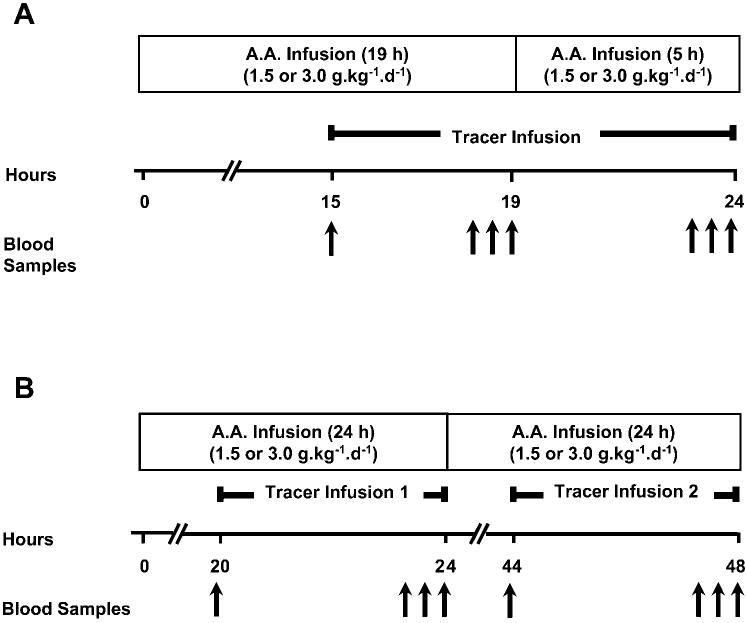
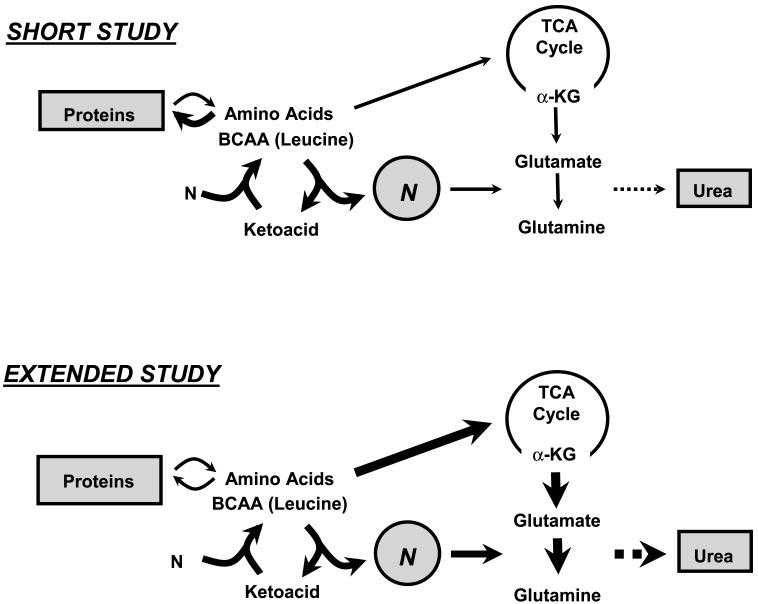
Glutamine may be a conditionally essential amino acid in low-birth-weight (LBW) preterm neonates. Exogenously administered amino acids, by providing anaplerotic carbon into the tricarboxylic acid cycle, could result in greater cataplerotic efflux and glutamine de novo synthesis. The effect of dose and duration of amino acid infusion on glutamine and nitrogen (N) kinetics was examined in LBW infants in the period immediately after birth. Preterm neonates (<32 weeks gestation, birth weights 809-1,755 g) were randomized to initially receive either 480 or 960 micromol x kg(-1) x h(-1) of an intravenous amino acid solution for 19-24 hours, followed by a higher or lower amino acid load for either 5 h or 24 h. Glutamine de novo synthesis, leucine N, phenylalanine, and urea kinetics were determined using stable isotopic tracers. An increase in amino acid infusion from 480 to 960 micromol x kg(-1) x h(-1) for 5 h resulted in decreased glutamine de novo synthesis in every neonate (384.4 +/- 38.0 to 368.9 +/- 38.2 micromol x kg(-1) x h(-1), P < 0.01) and a lower whole body rate of proteolysis (P < 0.001) and urea synthesis (P < 0.001). However, when the increased amino acid infusion was extended for 24 h, glutamine de novo synthesis increased (369.7 +/- 92.6 to 483.4 +/- 97.5 micromol x kg(-1) x h(-1), P < 0.001), whole body rate of proteolysis did not change, and urea production increased. Decreasing the amino acid load resulted in a decrease in glutamine rate of appearance (R(a)) and leucine N R(a), but had no effect on phenylalanine R(a). Acutely stressed LBW infants responded to an increase in amino acid load by transiently suppressing whole body rate of glutamine synthesis, proteolysis, and oxidation of protein. The mechanisms of this transient effect on whole body protein/nitrogen metabolism remain unknown.
Figures
References
-
- Bennet WM, Connacher AA, Scrimgeour CM, Rennie MJ. The effect of amino acid infusion on leg protein turnover assessed by L-[15N]phenylalanine and L-[1-13C]leucine exchange. Eur J Clin Invest. 1990;20:41–50. - PubMed
-
- Bennet WM, Connacher AA, Scrimgeour CM, Smith K, Rennie MJ. Increase in anterior tibialis muscle protein synthesis in healthy man during mixed amino acid infusion: studies of incorporation of [1-13C]leucine. Clin Sci (Lond) 1989;76:447–454. - PubMed
-
- Biolo G, Fleming RY, Maggi SP, Nguyen TT, Herndon DN, Wolfe RR. Inhibition of muscle glutamine formation in hypercatabolic patients. Clin Sci (Lond) 2000;99:189–194. - PubMed
-
- Blomqvist BI, Hammarqvist F, von der Decken A, Wernerman J. Glutamine and α-ketoglutarate prevent the decrease in muscle free glutamine concentration and influence protein synthesis after total hip replacement. Metabolism. 1995;44:1215–1222. - PubMed
Publication types
MeSH terms
Substances
Grants and funding
LinkOut - more resources
Full Text Sources
Other Literature Sources
Medical
